Hi, I'm Artem. I've been working with AI tools for the last 4 years and have tested hundreds of models and tools in my daily work. Now I help people solve these exact problems with bugs, file management in AI chatbots.
I am also building WritingMate.ai, which is an all-in-one chatbot with "chat with files" features. But the practical answer here is simpler: most upload failures come from quotas, a temporary outage, a file-specific problem, or the browser/app you are using.
If you want the short version, follow this order:
- Confirm the current chat supports attachments.
- Check whether you already hit the upload cap.
- Retry with a small PDF or JPG under 5MB.
- Open a fresh chat in incognito or another browser.
- Disable extensions, VPN, and strict privacy blockers.
- Compress, convert, or split the file.
- Check OpenAI Status and the file uploads FAQ.
That sequence solves most cases faster than random retries.
How I Tested ChatGPT File Upload Limits and Errors
I tested uploads on free and paid ChatGPT access, across Chrome, Safari, and Firefox, using PDFs, DOCX files, CSVs, PNG screenshots, JPG photos, ZIP archives, and plain-text code files. I also repeated a few checks in fresh chats, logged-in browser sessions with extensions enabled, and incognito windows to separate account problems from browser problems.
For file size behavior, I treated an upload as successful only if three things happened: the file attached without an error, ChatGPT visibly processed it, and I could ask at least one question about the contents. If a file attached but stayed stuck on processing, or if the attachment button disappeared after repeated attempts, I counted that as a failed workflow rather than a success.
A claim had to meet one of two standards before I kept it in this guide: either it matched current OpenAI documentation such as the supported file uploads FAQ, or I could reproduce it myself more than once. I excluded one-off Reddit claims unless they were clearly labeled unofficial.
My biggest observations: on free access, I hit upload walls much sooner and saw missing-button behavior more often after repeated attempts; on paid access, larger files technically attached more often, but practical reliability still dropped once I got far above small everyday document sizes; and in Chrome, extensions were the single most common browser-side cause of failed uploads during my testing.
Current ChatGPT File Upload Limits (2026)
The confusing part is that OpenAI publishes some limits, but the experience people get can still vary by plan, rollout, workspace policy, and the specific chat or model. So the safest way to read ChatGPT limits is to separate official limits from practical limits seen in real use.
According to the OpenAI file uploads FAQ, uploads can be allowed up to 512 MB per file in some cases, while image uploads have stricter size handling and text/document processing is also constrained by content limits. OpenAI also notes that availability and caps can vary by plan and that usage limits may change over time.
Here is the most useful comparison for day-to-day troubleshooting.
| Plan | Official guidance | Practical limit that usually works | Typical symptom when you hit the cap |
|---|---|---|---|
| Free | Uploads may be available, but access and limits are tighter and can change by rollout per OpenAI FAQ | In my tests, small files under 5-10MB were much more reliable than larger PDFs or image-heavy docs | Attachment button disappears, uploads stop processing, or a hard-stop message appears |
| Plus | Higher usage than free, with the same official per-file ceiling framework in OpenAI docs | I had the best results with PDFs and images under about 20-25MB even when larger files were theoretically allowed | Upload starts, then stalls or returns a generic error after processing |
| Team / Pro | Workspace usage can be higher, but admins and product configuration still matter; legacy/workspace behavior is documented separately for some accounts during the transition period | Usually better than free for repeated file work, but still sensitive to large scans, image-heavy decks, and browser/session issues | Users can see inconsistent access across seats, chats, or workspace policies |
Official limits vs observed reality
The official number people quote most often is the 512MB per-file ceiling from OpenAI documentation, but that is not the same as a promise that every 300MB PDF will upload smoothly in the consumer chat UI. In my tests, once a document became image-heavy, scanned, or long enough to take a while to preprocess, failure rates climbed well before that ceiling.
That gap between published limits and real-world behavior is normal in modern multimodal tools. Upload systems often combine file-size ceilings with rolling quotas, preprocessing limits, and storage policies. A useful comparison point is this write-up on Gemini file quotas, which notes that failed attempts can still count against a rolling cap. That same pattern helps explain why ChatGPT can suddenly stop accepting files even when you feel like you have barely uploaded anything.
What is the daily image upload limit?
There is no single permanent number I would publish as universal for every ChatGPT user. Image and file caps can vary by plan, rollout, and product state, so the best answer is: check the current UI and compare it with the OpenAI FAQ. As tested, free access was much easier to exhaust than paid access, and image uploads tended to fail earlier when I was sending repeated screenshots in a short window.
If your work depends on larger document throughput, a fallback tool can help. One example is Ivory Mind, which is built around chatting with uploaded documents when you need a separate workflow from the standard ChatGPT chat interface.
- How many files can i upload to chatgpt free? The exact number can vary, which is why older fixed numbers age badly. The safe takeaway is that free access is much tighter, paid plans are more forgiving, and the current account UI is more trustworthy than recycled screenshots from last year.*
Why File Uploads Actually Fail
Most upload failures fall into four buckets. Once you identify the bucket, the fix becomes much faster.
1) Account, plan, or workspace caps
This is the most common cause when uploads suddenly stop even though the file itself looks fine. OpenAI's file uploads FAQ makes clear that availability and limits depend on product tier and can change. In practice, I saw this in two ways: on a free account, the attachment option became inconsistent after repeated attempts; on paid access, the button usually stayed visible, but the upload itself would fail after a burst of file activity.
If you are in a Team or managed workspace, admin configuration can matter too. A user may technically have ChatGPT access but still not have the same file workflow available in every chat or model.
2) Temporary OpenAI outages or degraded performance
Sometimes nothing is wrong with your file, browser, or account. The service is just having a bad hour. Uploads are especially sensitive because they rely on multiple steps: transfer, storage, preprocessing, and model-side analysis. If one layer degrades, the visible result is often a vague error.
When I tested during busier periods, I saw more cases where a small file attached but sat on processing much longer than usual. Before changing settings for 20 minutes, check OpenAI Status and, if needed, the OpenAI Help Center.
3) File-specific problems
A supported extension does not guarantee a healthy file. PDFs can be scanned badly, password-protected, malformed, or packed with images. PNG files can be valid but huge in dimensions or saved with odd metadata. Spreadsheets can contain hidden sheets, massive formulas, or bloated formatting.
This is why one 3MB PDF can fail while another 20MB text-heavy PDF works. Older upload systems trained people to blame size alone, but modern failures are often more layered; this backgrounder on legacy upload limits is a good reminder that upload handling has always depended on more than one setting.
4) Browser, app, or device problems
If the upload button is missing, the progress bar never starts, or drag-and-drop does nothing, suspect the browser before the file. In my testing, Chrome with multiple privacy or productivity extensions produced more broken uploads than a clean incognito session. Safari sometimes behaved worse with larger files, and Firefox was usually fine once strict privacy settings were relaxed for the site.
The pattern matters:
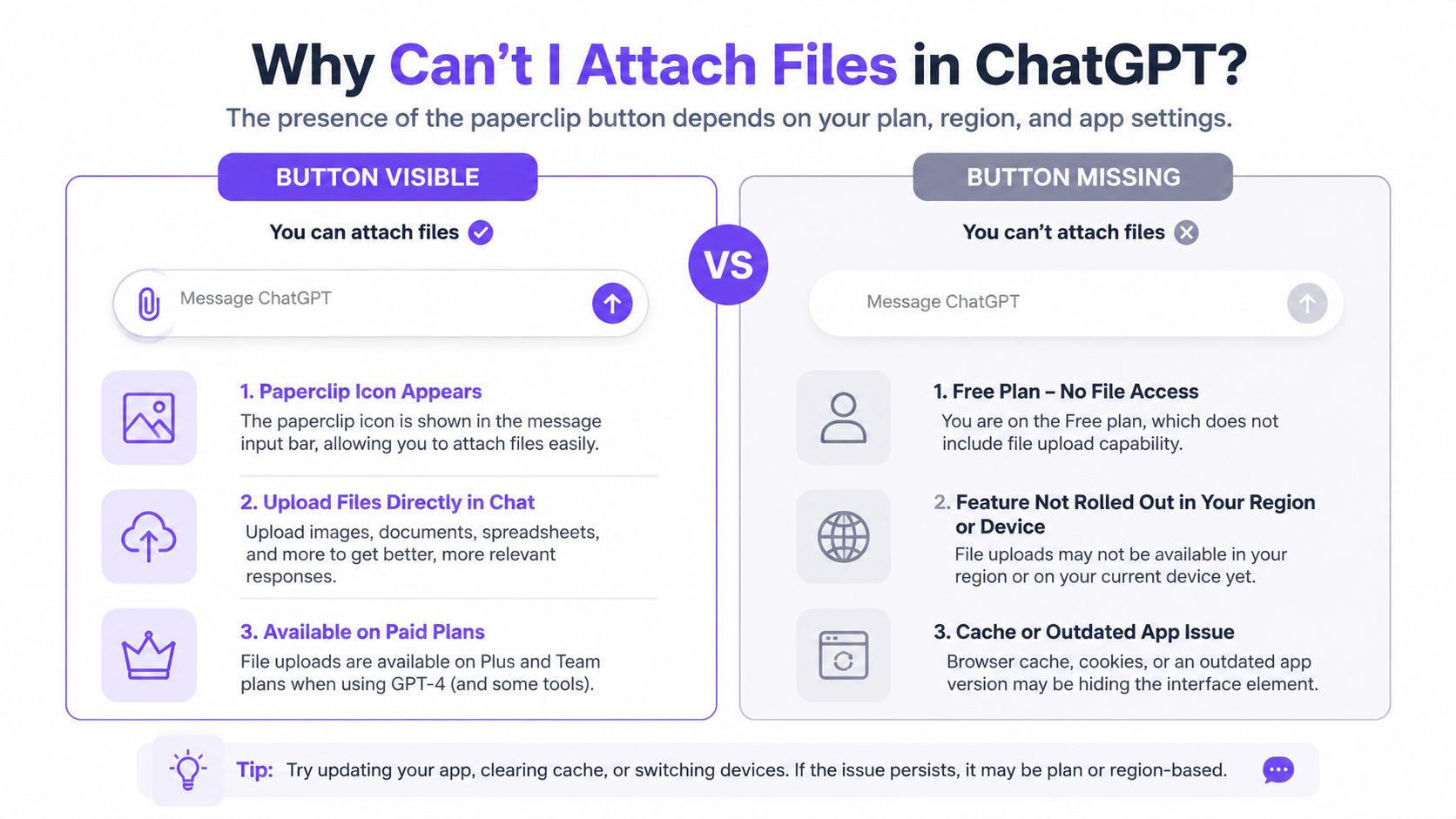
- Button missing usually points to plan limits, workspace restrictions, or UI/session issues.
- Upload starts then fails usually points to file-specific problems, quota exhaustion, or a temporary backend issue.
- Nothing happens when clicking attach usually points to browser extensions, blocked permissions, or app bugs.
What "Max 0 Uploads at a Time" Means and How to Fix It
The message “unable to upload image.png. max 0 uploads at a time” usually does not mean ChatGPT has permanently removed uploads from your account. In practice, it usually means one of three things:
- You hit a daily or rolling upload cap.
- Your workspace or current chat/model does not allow uploads right now.
- The feature is temporarily unavailable because the upload system is degraded.
OpenAI does not document that exact phrase as a public product rule, but it lines up with how rolling caps behave in modern AI products. Quotas are often enforced across windows rather than as a simple one-file rule, and failed attempts can still consume part of the allowance in some systems, as discussed in this overview of rolling upload caps.
Fast fixes for the error
- Wait and retry later if you uploaded several files recently.
- Start a completely new chat rather than reusing the current one.
- Switch to another supported model or mode if the current chat seems attachment-disabled.
- If you're on a managed workspace, ask whether file uploads are restricted.
- Check OpenAI Status for an incident before changing your device.
- Test a tiny JPG or TXT file. If even that fails, the issue is almost certainly quota, policy, or browser-side.
My own testing matched that pattern. On free access, I could reproduce hard-stop behavior after relatively little file activity. On paid access, I was less likely to get fully blocked, but I still saw cases where the current chat acted like uploads were unavailable until I opened a fresh conversation.
What Files Actually Work with ChatGPT
I've tested hundreds of files with ChatGPT. Here's what works reliably in 2026.

ChatGPT works well with common document formats. It can upload PDFs, Word documents, and text files easily. Spreadsheets like Excel and CSV files work fine too. Images in JPEG and PNG formats process reliably, though GIF support is limited.
Code files are particularly well-supported. Python, JavaScript, Java, and most programming languages upload without issues. PowerPoint presentations work, along with data formats like JSON, XML, HTML, and Markdown.
Can chat gpt read java files? Yes, ChatGPT treats Java files as text and can analyze code structure, find bugs, and explain functionality effectively.
Can chatgpt read zip files? Yes, but with limitations. You need to upload the ZIP file and specifically ask ChatGPT to extract and analyze the contents. It won't automatically unzip files, and what about a visualization of that? ;)
Real File Size Limits
The gpt-4o file size official limit is 512MB, but reality is different. Based on extensive testing, PDFs work reliably up to 20MB maximum. Images work up to 25MB, but 10MB is safer for consistent processing.
Spreadsheets usually process fine up to 50MB. Text files can be 100MB or more, but they process slowly. Code files matter less about size than complexity - a 5MB file with intricate logic might fail while a 20MB simple file succeeds.
How big of a file can you upload chatgpt in practice? Stick to files under 25MB. Larger files often trigger that infamous unknown error occurred when uploading file to chatgpt message.
Quick sheet of ChatGPT models & limits (as of August 2025)
Here is a brief spreadsheet on various limits, this is in addition to max pdf size for chatgpt that I have written about before.
| Plan | What you see by default in ChatGPT | Legacy models in ChatGPT (toggle in Settings) | GPT-5 Thinking weekly cap | Where to still use 4o / o3-mini today |
|---|---|---|---|---|
| Free | GPT-5 (Auto / Fast; Thinking rollout is limited) | Not available | Not published; Thinking-mini availability varies by account | Third-party tools (e.g., https://writingmate.ai); not in Free ChatGPT UI |
| Plus | GPT-5 (Auto / Fast / Thinking) | GPT-4o, o3, o4-mini, GPT-4.1 (under Legacy models) | Community-reported ~200/wk; Altman mentioned up to ~3,000/wk during rollout tuning | API (paid), legacy toggle in ChatGPT, third-party tools like WritingMate |
| Team / Pro | GPT-5 (Auto / Fast / Thinking) | Legacy access officially supported during transition | Same GPT-5 Thinking controls; caps adjusted higher for workspace usage | API + workspace legacy toggle + third-party tools |
Step-by-Step Upload Process
Here's exactly how to upload files to chat gpt without hitting common errors. Check your account type first. Make sure your file is under 25MB. Also, confirm the file format is supported. Finally, ensure you have a stable internet connection before uploading.
How to upload a file to chat gpt starts with accessing the right interface. Open ChatGPT and make sure you're in a conversation that supports file uploads. Look for the paperclip icon or attachment button next to the message input box.
Click the paperclip and choose your file or files. You can select multiple files at once if within limits. ChatGPT will show a loading indicator while processing your file. So don't start typing until this completes. Then, ask specific questions about your uploaded file, like "Summarize this document" or "Find errors in this code."
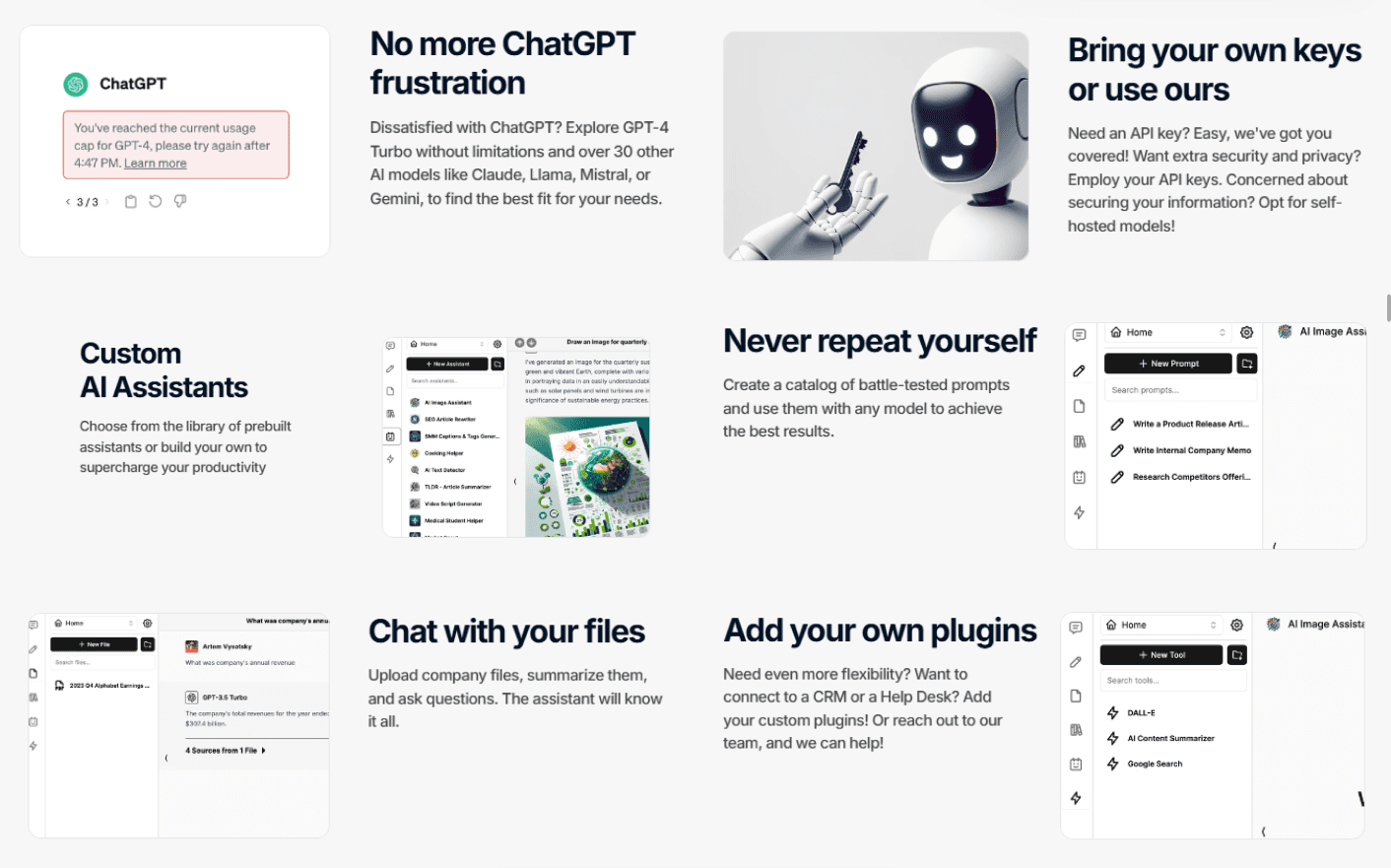
You can get rid of annoying user caps and file upload errors by using writingmate.ai it is 9 dollars per month and lets you use over a hundred of best AI models (GPT4o, o3-mini- Claude 4 Sonnet, Gemini 3, Llama4, Stable Diffusion and a lot of others), all in one chatbot.

New: GPT-5 shook up the model list (and the limits).
OpenAI rolled out GPT-5 as the new default in ChatGPT and briefly hid most of the older picks from the main chat UI. After a pretty loud backlash, the company brought a proper model picker back and added Auto / Fast / Thinking modes for GPT-5 so you can steer how “ponder-y” it gets. If you’re on a paid plan, you can also re-enable a Legacy models section (that’s where GPT-4o, o3, o4-mini, GPT-4.1 live for now). For details on how the model picker works, see TechCrunch.
For more context on the public reaction to the rollout and model-access confusion, see Wired's coverage.
But if you don't want to gess or go full auto, go with writingmate.ai and over a hundred model available through it starting at 9 dollars per month. Try it out for free here.
Did OpenAI discontinue and remove the old models? Not exactly.
There was a lot of backlash after OpenAI has discontinued all models except GPT-5. At first, they were mostly removed from the main free ChatGPT chat, not from the ecosystem. OpenAI’s public communications point to a full GPT-5 rollout plus their Help Center confirms paid workspaces can turn on legacy access for what OpenAI calls a transition period.
Latest update: those models never left the API and they’re still available inside third-party tools. I keep using GPT-4o, o3-mini, o4-mini alongside GPT-5 in WritingMate when I want fewer caps or a specific behavior: https://writingmate.ai/. And yes, the vibe on Reddit captured the frustration pretty well—one popular thread put it bluntly:
Chat GPT 5 was not for use, it was to get rid of 4o. (Reddit)
This is not what my experience with GPT-5 was, but I get why it felt that way to many.
Common Upload Errors and Solutions
Use this sequence in order. It is faster than guessing from the error text.
1) Confirm uploads are available in this plan and this chat
If the paperclip is missing, first rule out a feature-availability issue. Some chats, modes, temporary rollouts, or workspaces do not expose uploads consistently. Check the OpenAI file uploads FAQ and open a fresh standard chat before assuming the file is broken.
If the button is still missing, refresh the page, sign out and back in, or open the same account in another browser. In my testing, this solved several cases that looked like account bans but were really stale sessions.
2) Check whether you hit the current limit
If uploads worked earlier and now every file fails, suspect a cap first. This is the most likely explanation for messages like "max 0 uploads at a time" or for a button that suddenly disappears. On free access, I could trigger this much faster than on paid access. Waiting for the rolling window to clear was sometimes the only fix.
3) Test a small supported file
Before troubleshooting your 38MB scanned PDF, try a tiny file that should obviously work: a 1-page PDF, a TXT file, or a simple JPG under 2MB. If the small file uploads, your issue is probably the original file. If the small file also fails, your issue is probably quota, browser, or service-side.
4) Retry in a fresh chat, another browser, or incognito
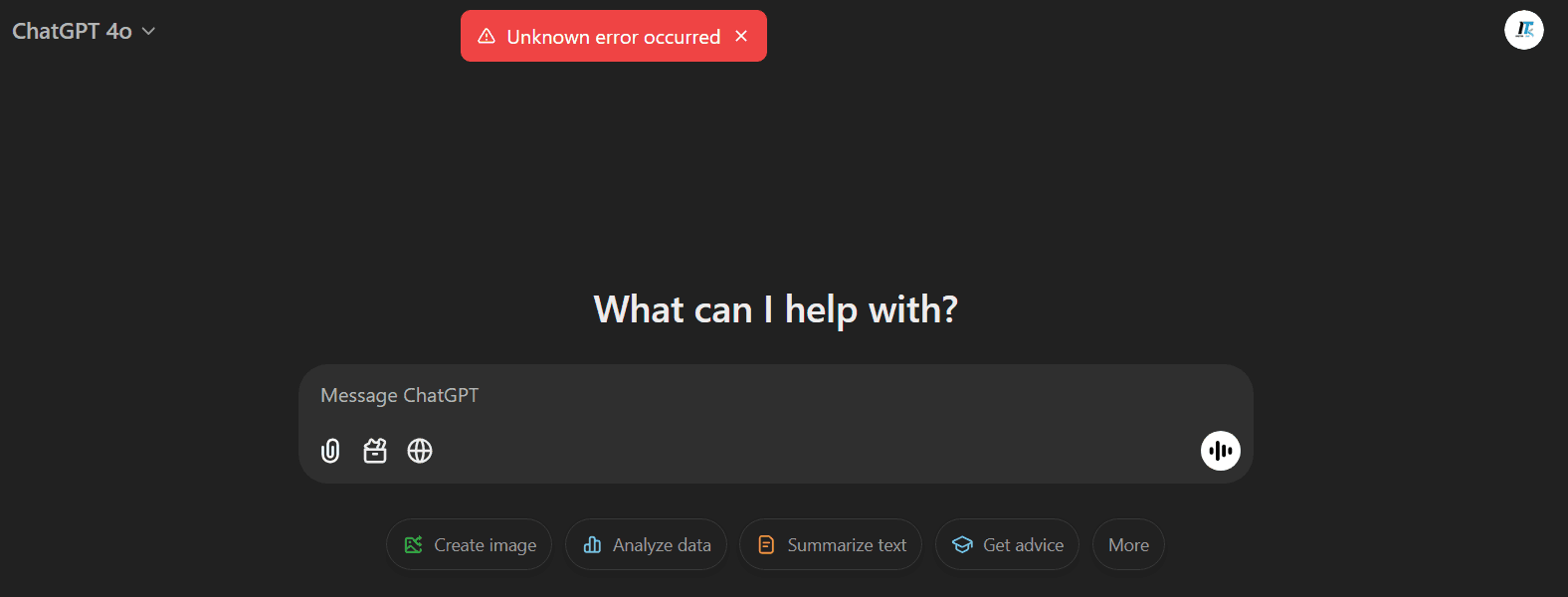
This step catches a huge number of generic failures, including the classic "unknown error occurred when uploading file to chatgpt" problem. Open a new conversation, then retry in an incognito window with no extensions loaded. If that works, your main browser session is the problem.
5) Disable extensions, VPN, and aggressive privacy tools
Ad blockers, script blockers, antivirus web shields, corporate proxies, and VPNs can all interrupt attachment uploads. Chrome extensions were my biggest source of false alarms during testing. If drag-and-drop does nothing or the upload stalls immediately, disable them before touching the file.
6) Compress, convert, or split the file
This is the right fix when the file is technically supported but practically awkward.
- Re-save a DOCX or PDF from the original app.
- Convert PNG screenshots to JPG if image quality is not critical.
- Split long PDFs into chapters.
- Export spreadsheets as CSV if formulas and formatting are not required.
- Remove giant embedded images from slide decks.
Google's current guidance for some AI file workflows shows how wide these limits can vary across platforms, including image constraints and file-search storage rules in input file requirements. That is one reason a file that works in one AI product can still fail in another.
7) Check OpenAI status before wasting time
If multiple file types fail in multiple browsers, stop troubleshooting locally and check OpenAI Status. Upload issues are often broader than the UI admits.
8) Switch device or app
If desktop browser uploads keep failing, try the mobile app or another computer. If mobile fails but desktop works, the app may be lagging behind the web rollout or carrying stale cached state.
Worked example: image upload failure
A common photo failure looks like this: you try to upload image.png, get a generic failure, and assume the picture is unsupported. Underlying causes are usually more specific. If the PNG is a large screenshot with high dimensions, first convert it to JPG and reduce the size. If the error says "max 0 uploads at a time," stop editing the image and check whether your cap is exhausted. In my own testing, a tiny JPG was the fastest way to separate a file problem from a quota problem.
Worked example: PDF upload failure
A 30MB PDF may still fail even though OpenAI documents much larger theoretical ceilings. The first fix is not waiting randomly; it is making the PDF simpler. Re-export it, flatten odd layers, remove image-heavy pages, or split it into sections. I had one scanned PDF fail repeatedly in Chrome, then upload immediately after I compressed it and retried in a fresh chat. That pointed to a file-plus-session problem, not a permanent account issue.
Multiple File Uploads inside ChatGPT
If you use that handy feature and upload multiple files to chatgpt, it works differently based on your account limits and often makes things more complicated on occasion of file upload errors. But** how many files can you upload to chatgpt?** Free users get 3 files daily, Plus users get 80 files every 3 hours. Each conversation handles 20 files max, but I don't personally recommend it.
For best results, upload related files together with clear names. You can also upload smaller files first and let each one process completely before asking questions.
Chatgpt-5 and Zipped files
ZIP files do often require special workflow in ChatGPT. Chatgpt 5 zipped file processing doesn't happen automatically like other formats, which is very inconvenient still. It was similar with gpt-4 zipped archives.
When you upload a ZIP file, ChatGPT doesn't automatically extract it. Upload file to chat gpt as a ZIP, then ask specifically to extract contents: "Please extract and list the contents of this ZIP file." Finally, request analysis of specific files within the ZIP.
Keep these restrictions in mind when you work with archives. ZIP file must be <25MB, individual files inside must be supported formats.
Here is a quickest tutorial I found that helps you understand how to solve upload file to Chat GPT problem.
Advanced Troubleshooting Tips
If those previous steps did not help, you may find those three ideas below particularly useful. Let's start with a thing where you likely use ChatGPT, that being… Your browser.
Browser-Specific Issues
Sometimes, your best friend is also an enemy! Browser is probably the most used app on your PC but Different browsers do handle ChatGPT uploads differently. And sometimes they cause various problems.
- Chrome issues are often all about those heavy extensions and oversized cache. Please, disable extensions temporarily, also clear site data for http://chat.openai.com/ in settings, or try Chrome's incognito mode.
- Safari limitations can block your gpt file uploads entirely. But you can enable file upload permissions, also check security settings, or try a different browser for large files.
- Firefox problems are different, in my experience, they tend to be related to privacy settings. Check your tracking protection settings. You can also disable strict privacy mode for a bit or clear the Firefox cache completely.
- Using some unusual browser, like Dolphin, Arc browser, Dia browser, Zen browser and other options that are getting trendy now, can also break your GPT in that browser Window. I sometimes had similar issues in Arc and they were gone as soon as I opened it in a different browser (even if also Chromium-based). Some software is just bugged, especially on Windows…
Chatgpt-5 Can't Download File Problems
When ChatGPT generates files you can't download, several issues might be causing the problem.
- Browser blocking is the most common download issue;
- Check download permissions, disable popup blockers temporarily;
- Try right-click "Save link as..." Large file sizes can cause download problems.
If a file is too big, it might fail for that sole reason. So, try asking for smaller chunks or different formats. Compress file, convert it, or use an alternative, which is…
Better Alternatives for File Work
If ChatGPT uploads fail, the best fallback is not always "try again later." Sometimes it is better to change the workflow.
Start with the least disruptive option:
- OCR first: If a scanned PDF or screenshot keeps failing, extract the text with OCR and paste the text instead.
- Paste excerpts: For long reports, paste the relevant pages or sections rather than uploading the entire document.
- Split the document: Break a large PDF into chapters, or separate an appendix from the main report.
- Use a share link when appropriate: For collaborative work, a cloud link can be easier than fighting repeated attachment errors.
- Switch tools for larger file work: If your day depends on repeated uploads, use a platform designed for heavier document throughput.
Here is when each fallback is best: OCR is best for scans and photos; pasted excerpts are best when you only need answers from a few pages; splitting works best for bulky PDFs and decks; and a dedicated document tool makes sense when your problem is not one file, but repeated upload friction all week.
ChatGPT's file limits are frustrating for serious work and that is why I use WritingMate.ai to work with files in a more reliable and less limiting way, for a better price as well.
This all-in-one AI chatbot fixes typical ChatGPT file issues. It has higher limits, larger file size allowances & was specifically built to work with documents more efficiently. This tool has fewer arbitrary restrictions compared to ChatGPT's system, especially for the price.

Multiple AI models available: Writingmate has GPT-5 and GPT-4o for general tasks, o3-mini for complex reasoning, Claude 4 Sonnet and 3.7 Sonnet (Opus as well) for document analysis, and Mistral, plus new Llama models, and alternatives like Gemini, new Grok 4, and Deepseek R1. This gives you options when that one certain model struggles with your specific file type. Just switch, with one push of a button.
Specialized tools built in: Writingmate is, in opinion of many, more advanced in document analysis & image generation tools. It has improved error workflows, a local support and reports. But at the same time Writingmate is very beginner-friendly. Check an AI document review guide that I've written recently for detailed file analysis techniques.
The key advantages over ChatGPT's file system include better reliability with fewer upload failures, clearer error messages, and more consistent processing.
- There's also more flexibility. I advise you to try different models on the same file, switch models if one fails, or use batch processing capabilities.
- There is even a model comparison feature that lets you compare speed and tokens used. You set two models and compare how they execute the same prompt, see speed and efficiency.
- Writingmate also has AI agents (assistants) and prompt libraries, with an ability to make any prompt better in one click. I use this often even though I have quite a long experience of prompting with dozens of LLMs.
Our pricing beats ChatGPT Plus for file work. We offer a free tier for testing, Pro subscription just $9/month, and better value than ChatGPT Plus specifically for file work. And here is the video that explains how to solve file upload problems on mobile ChatGPT app:
Real-World File Upload Examples
Here are two examples from those who struggle with such problems the most, students and professionals.
Student Use Cases
I often hear that students burn through ChatGPT's file limits fast with regular schoolwork.
Research papers work great. Upload PDFs for quick summaries or compare sources side by side. Homework gets easier when you upload assignments for coding help or spreadsheet analysis. Change that boring lecture slides into actual study notes or break down complicated diagrams with using file uploads properly.
Professional Applications
Business guys need file uploads that work when deadlines matter.
Contract reviews, or financial reports, legal research - all faster with AI. Developers upload code for bug hunting and architecture feedback. Data teams crunch spreadsheets and generate reports without the usual headaches.
File Upload Limit ChatGPT Plus vs Alternatives
ChatGPT Plus gives you 80 files every 3 hours, 25MB practical limit, priority access - all for $20/month. API users pay even more.
WritingMate beats that deal. More models, bigger files, just $9/month with free tier. No API keys, works for beginners, built for serious document work and you can use most of it for 9 dollars per month.
Future of File Uploads
File uploads get better every few months with the majority of AI platforms.
Coming soon: much bigger file limits, smarter compression, and real-time processing. Video analysis and audio transcription may become standard even in 2026. Error messages will start to make sense, uploads may retry automatically, and you'll see progress bars for big files. Oh, wishes!
In any case, AI moves fast and breaks things. Ironically, what breaks today might work perfectly next month. I recommend to keep up with updates. Follow official OpenAI announcements, test new features as they roll out, and have backup platforms like WritingMate ready.
Frequently Asked Questions
Does GPT-5 in ChatGPT have internet access, how does it compare to different AI chatbots?
That depends on the plan, product mode, and current rollout. For file work, internet access and file upload access are separate features, so one working does not guarantee the other.
Why can’t I download files generated by ChatGPT-5?
The usual causes are browser download blocking, popup restrictions, expired session state, or a file generation step that never completed cleanly. Try another browser, allow downloads for the site, and regenerate the file in smaller chunks.
What else should I try if downloads still fail? Can file size cause ChatGPT download errors?
Yes. Very large generated files can fail at the handoff stage even if the content was produced successfully. Ask for a smaller export, a ZIP alternative, or segmented output.
Did OpenAI discontinue and remove the old models after GPT-5 launched?
Not completely. The main chat UI changed, but older models still remained available in the API and, for some paid users, through the restored model picker or legacy access settings documented by OpenAI.
Sources
- OpenAI Help Center - Supported File Types
- OpenAI Platform Documentation - Files API
- OpenAI Community Forum - File Upload Troubleshooting
- WritingMate's
- ChatGPT
- OpenAI
- TechCrunch
- 200 messages/week
- rolled out GPT-5
- so you can steer how “ponder-y” it gets
- a transition period
- http://chat.openai.com/
- AI document review guide
- OpenAI announcements
- blog
- Wired's coverage
Frequently Asked Questions
Sources
- OpenAI Status
- OpenAI Help Center - Supported File Types
- a transition period
- rolling upload caps
- Ivory Mind
- OpenAI Help Center
- legacy upload limits
- WritingMate's
- ChatGPT
- rolled out GPT-5
- so you can steer how “ponder-y” it gets
- TechCrunch
- Wired's coverage
- input file requirements
- http://chat.openai.com/
- AI document review guide
- OpenAI announcements
- OpenAI Platform Documentation - Files API
- OpenAI Community Forum - File Upload Troubleshooting
- OpenAI
- 200 messages/week
- blog

Written by
Artem Vysotsky
Ex-Staff Engineer at Meta. Building the technical foundation to make AI accessible to everyone.

Reviewed by
Sergey Vysotsky
Ex-Chief Editor / PM at Mosaic. Passionate about making AI accessible and affordable for everyone.