Hello, I'm Artem, I test dozens of AI tools and models and have been using DeepSeek R1 right since it became available. The short version: DeepSeek R1 is excellent at reasoning about images and writing prompts for them, but the standard DeepSeek chat experience is not a one-click image generator. The actual image-capable model in DeepSeek’s ecosystem is Janus-Pro, which is why so many people get mixed answers.
This is the workflow I use when I want DeepSeek involved in an image project.
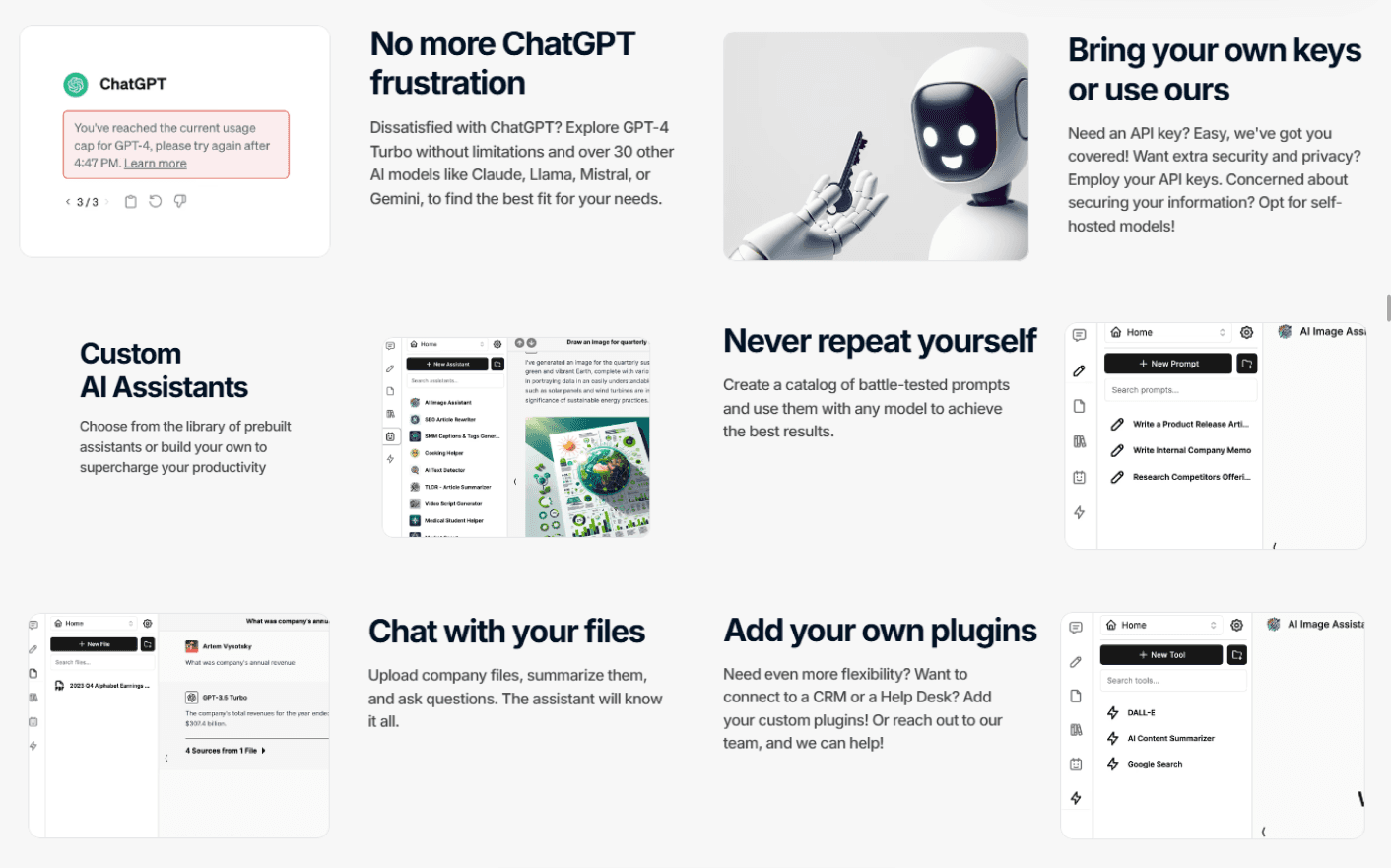
- I use Deepseek mostly on WritingMate.ai now as it has much less limits, a very affordable pricing and a dozen of features that neither ChatGPT nor Claude AI chatbot or even DeepSeek chatbot have.
- Examples of such features: prompt libraries, use of AI agents and assistants, one-click prompt enhancement, tool builders and much more.
- And of course, the main feature is that you can use over a hundred top AI models within one chatbot, with no API keys needed, starting at 9 dollars per mont, or even for free.
Deepseek is also free if you are not on API. But what about its abilities of vision and image generation? What makes it finally able to do it?
How I Tested DeepSeek R1 and Janus-Pro for Image Tasks
I spent time with DeepSeek in two different roles: first as a reasoning model that helps write and refine prompts, and second as a vision-capable tool for reading screenshots, diagrams, photos, and text inside images. I also checked Janus-Pro availability through public documentation, community demos, and deployment guidance to separate what the DeepSeek brand promises from what an everyday user can access.
My test set was simple on purpose: screenshots with small UI text, charts with labels, street photos, scanned receipts, and a handful of vague image ideas that needed to become usable prompts. A result counted as a success if it was accurate enough to save me time. A failure was anything that needed so much cleanup that I would rather switch tools immediately.
After using R1 this way, my own conclusion was consistent: it is strong at explaining what is in an image and even stronger at turning loose creative ideas into structured prompts. Where it fell short was direct image creation inside the normal chat flow. That was the key disqualifier for anyone expecting a DALL·E-style button.
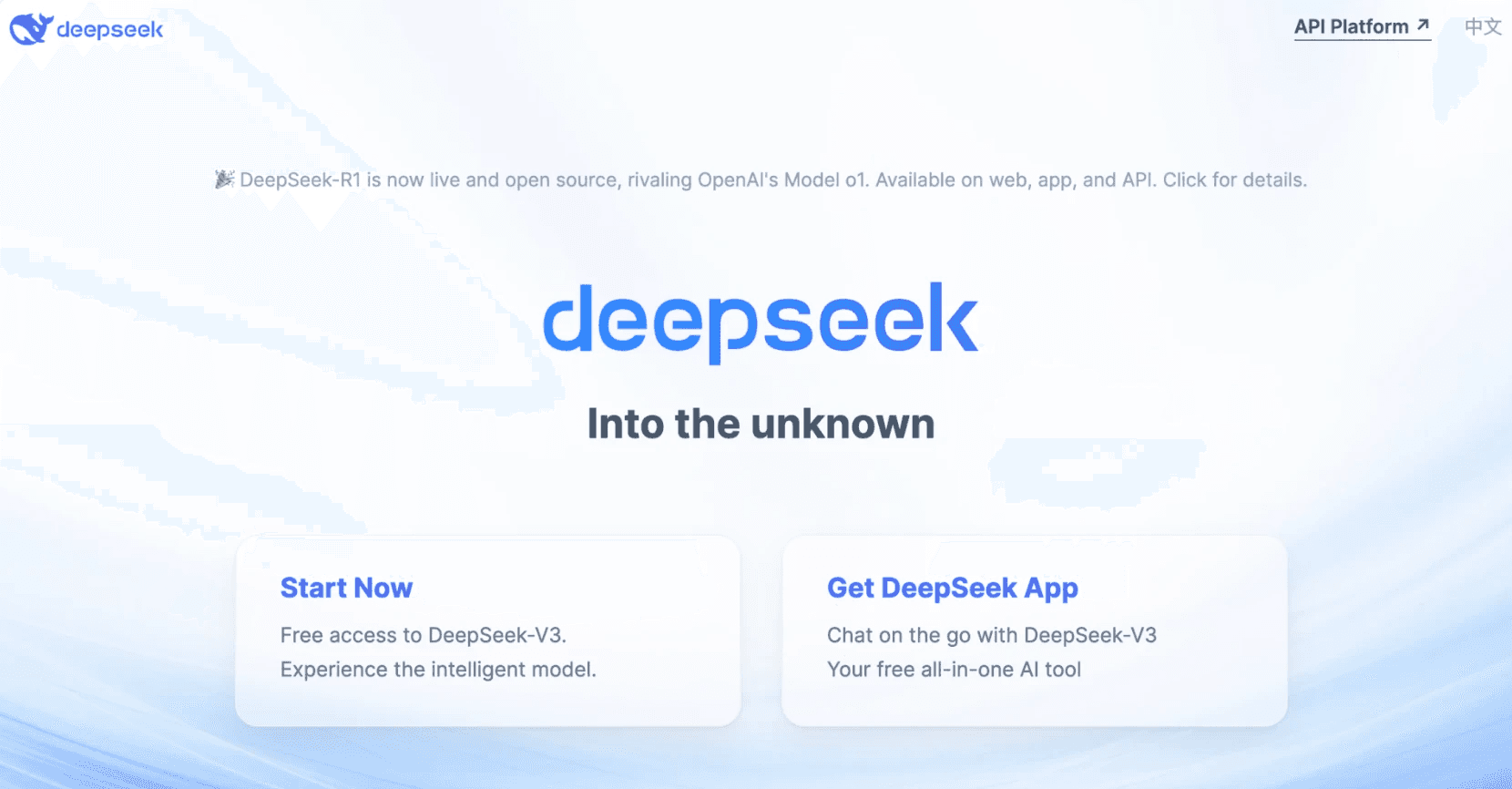
DeepSeek’s own public positioning still centers its chat products around reasoning and text, while the image-capable branch sits in the Janus family rather than the main consumer chat experience, as reflected on DeepSeek’s official site. That distinction matters more than the branding suggests.
Does DeepSeek Actually Make Images?
Yes, but not through DeepSeek R1 or V3 in the normal chat experience. If you open the standard DeepSeek chatbot and ask for a picture, you are not using a native image generator in the same way you would with DALL·E, Midjourney, or Flux. The image-capable model in DeepSeek’s lineup is Janus-Pro, while R1 and V3 are primarily text and reasoning models.
Here’s the practical breakdown:
| Model | Text reasoning | Image analysis | Native image generation | Typical interface availability | Best for |
|---|---|---|---|---|---|
| DeepSeek R1 | Excellent | Yes, on supported platforms | No | Common in chat products and aggregators | Reasoning, prompt writing, OCR-style help, screenshot explanation |
| DeepSeek V3 | Strong | Varies by platform | No | Common in text/chat deployments | Fast general chat and writing tasks |
| Janus-Pro | Basic-to-strong multimodal | Yes | Yes | Demos, Hugging Face, local deployment, some third-party tools | Text-to-image experiments and multimodal workflows |
What each one can and cannot do
- DeepSeek R1: can analyze an uploaded image, explain a chart, extract visible text, and turn a rough idea into a much better image prompt. It does not natively return generated images in the default DeepSeek chat flow.
- DeepSeek V3: similar story. Useful for text and some platform-dependent vision tasks, but not the model people should rely on for direct image creation.
- Janus-Pro: the model family to look at if your goal is actual image output. Community documentation around the January 2025 launch window consistently points to Janus-Pro as DeepSeek’s image-capable multimodal release, with public demos, model weights on Hugging Face, and self-hosted setups discussed in sources like this release discussion.
The confusion comes from branding. People hear “DeepSeek” and assume every DeepSeek model inside the chatbot can also paint, edit, and render images. In practice, the brand covers different model families. R1 is the reasoning specialist; Janus-Pro is the image-capable branch. That split is why one person says “DeepSeek can generate images” and another says “no, it can’t” — both are talking about different parts of the same ecosystem.
I also tested this from the user side rather than just reading docs: with R1, I could reliably get strong image prompts and useful analysis, but I could not treat it like a native image generator unless the platform paired it with a separate image model. That difference is the whole answer.
For many daily R1 users, this creates a practical problem. At first glance, you seem to have two main options:
Option 1: Run Janus-Pro yourself
- Download the model from GitHub or Hugging Face
- Then take time and set up all that technical environment (Docker much recommended!)
- Need decent hardware (GPU preferred for a better speed)
- Free to use but requires technical skills
Option 2: Use third-party platforms
- Services like WritingMate.ai integrate multiple AI models
- Get DeepSeek's reasoning + professional image generation
- No technical setup required
- Access to multiple image models for comparison and use image generation with most models
The resolution is now limited to about 384x384 pixels during processing, which means fine details can, unfortunantely, get lost. Use images with large texts, or without a lot of such fine details, or just switch the model. DeepSeek is not quite at the level of commercial services yet, but for an open-source solution, it's impressive progress even in 2025.
This opens up entirely new creative workflows and that excites me. You could have DeepSeek analyze your photos, then suggest improvements, and only after that use Janus-Pro to generate variations. Or start with a text idea, have DeepSeek refine the concept, then visualize it through the image model.
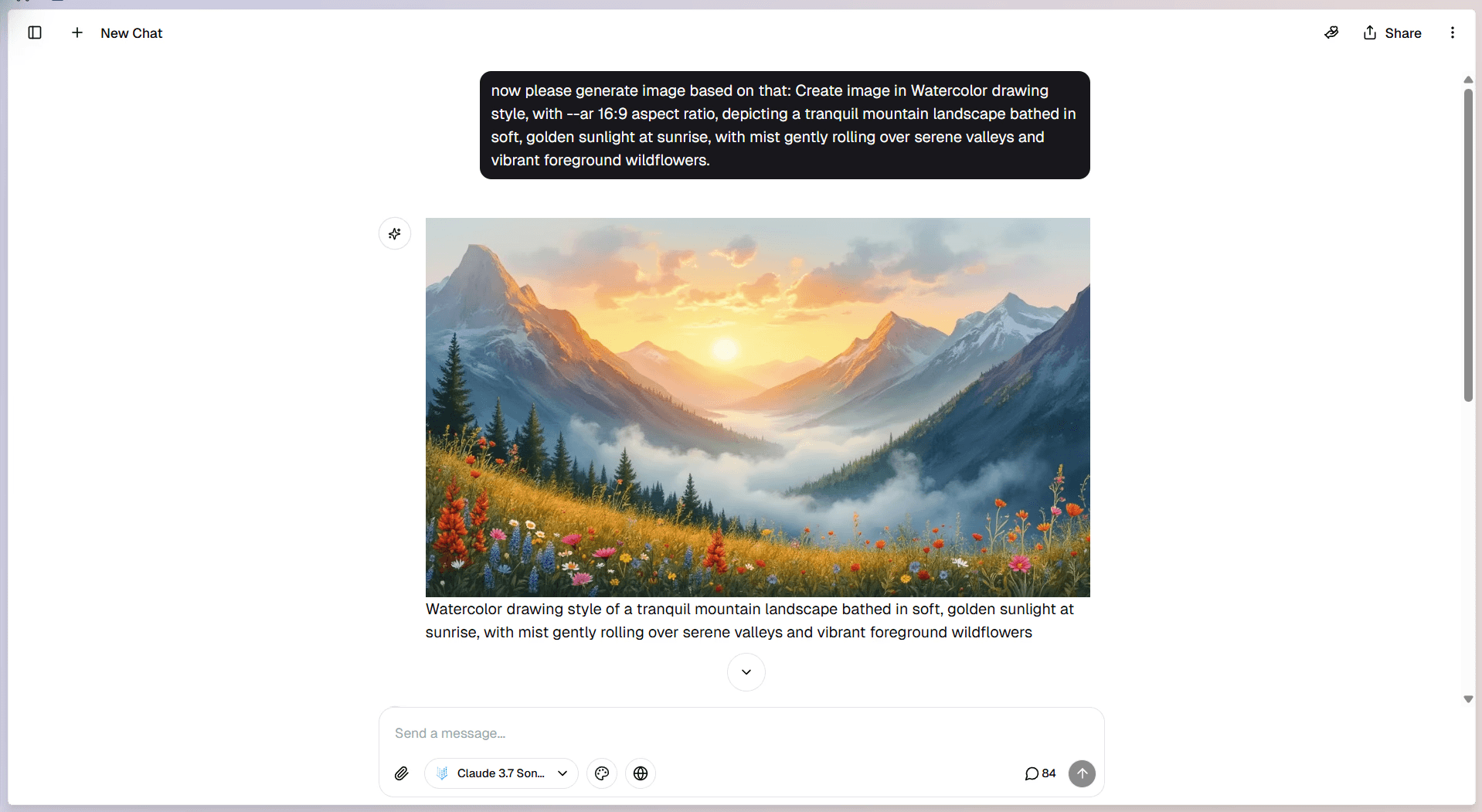
With Writingmate, it is much moe easier than that and you don't have to be any kind of advanced user, you just click a button and set image preferences. Below, you see the process of making images with Claude + flux. Claude is also not a model you think of when googling ai images :)
Which DeepSeek Models Work with Images?
Here's where it gets confusing. And there comes my second answer. Again, can Deepseek r1 generate images? In its original chatbot, no, it can't. DeepSeek R1 is text-only. Same with DeepSeek V3.
- Only Janus-Pro handles images, or image generation plugin on Writingmate when you use DeepSeek. The regular models on DeepSeek's own chatbot focus on text and reasoning. So when people ask about image generation, they often think of the wrong model.
How to Actually Use DeepSeek for Images
There are two workflows that make sense in real use. One uses Janus-Pro directly. The other uses DeepSeek as the brain that writes better prompts before you send them to a dedicated image model.
Workflow 1: Use Janus-Pro directly
What you need before starting
- Access to a Janus-Pro demo, Hugging Face space, or local deployment
- Patience for a more experimental workflow than mainstream image apps
- Realistic expectations about output size and polish
Step by step
- Open a Janus-Pro interface or set up a local environment.
- Write a prompt that includes subject, composition, style, lighting, and constraints.
- Generate a first batch.
- Compare outputs for structure, readability, and visual coherence.
- Revise the prompt instead of just hitting regenerate repeatedly.
- If the image looks soft or muddled, simplify the scene and reduce tiny detail requests.
Expected output quality
Usable for concepting, rough ideation, and testing compositions. Less reliable than top commercial image models for polished final assets.
Setup difficulty
Medium to high. The technical burden is the biggest barrier.
Tradeoff
You get direct access to DeepSeek’s image-capable model family, but the workflow is less convenient and often less polished than dedicated consumer image generators.
Workflow 2: Use DeepSeek as the reasoning and prompting layer
This is the one I would recommend.
What you need before starting
- Access to DeepSeek R1
- Any image generator you already like, such as DALL·E / GPT Image, Flux, or Stable Diffusion
- A rough idea, even if it is messy
Step by step
- Start with your vague idea in DeepSeek.
- Ask it to turn that idea into a prompt with subject, camera angle, lighting, mood, style, color palette, and negatives.
- Ask for two or three variants optimized for different looks.
- Send the best version to your image model.
- Review the output and paste the weak points back into DeepSeek for a revision.
- Iterate until the prompt stops being the bottleneck.
Expected output quality
Usually better than writing the prompt yourself from scratch, because R1 is very good at making instructions more specific and internally consistent.
Setup difficulty
Low. No special hardware required.
Tradeoff
You are not generating the image inside DeepSeek itself; you are using it to improve the thinking behind the image.
Example: how DeepSeek improves a weak prompt
Vague request:
Make me a futuristic city at night.
Prompt I asked DeepSeek to expand:
Turn this into a production-ready image prompt for a cinematic AI image model. Include composition, lighting, materials, atmosphere, and a short negative prompt.
Improved prompt DeepSeek produced in my test style:
A wide cinematic view of a futuristic megacity at night, seen from an elevated street-level angle, with layered neon signage, reflective rain-soaked pavement, elevated transit lines, dense holographic advertisements, and distant towers fading into blue fog. Lighting should mix magenta, cyan, and amber highlights with realistic reflections on glass and metal surfaces. The scene feels busy but believable, with small human silhouettes for scale, soft mist in the air, and a moody cyberpunk atmosphere. Highly detailed environmental design, realistic perspective, balanced contrast, crisp architecture, and subtle depth of field. Negative prompt: blurry buildings, warped perspective, unreadable signage, duplicate people, oversaturated glow.
That is exactly where DeepSeek shines. In my own testing, it was much better at turning a weak creative sentence into something an image model could use than it was at producing final images by itself.
If you want a prompt starting point before refining it in DeepSeek, a free generator over at Bulk Image Generation is also useful for rough structure.

Image Analysis: What DeepSeek Can Actually See
This is the part where DeepSeek is easier to recommend. On supported platforms, it can read and reason about images well enough to be useful for everyday tasks, especially when the question is specific.
OCR and text extraction
DeepSeek can pull text out of screenshots, receipts, slides, labels, and photos of signs. In my tests, it handled large, high-contrast text well. It struggled more with tiny interface labels, angled photos, and compressed screenshots.
Best use cases:
- Receipts and invoices with clean formatting
- Slides with readable headings
- Street signs and posters
Chart and diagram explanation
This is one of its stronger categories. If you upload a simple chart or textbook diagram and ask what it shows, it usually gives a sensible explanation in plain language.
Best use cases:
- Bar and line charts
- Basic science diagrams
- Process flows with labeled arrows
Screenshot interpretation
DeepSeek can explain what is happening in a screenshot, summarize visible UI elements, and point out likely errors or next steps. I found it helpful for product dashboards and app screens, but weaker on dense layouts with many tiny elements.
Best use cases:
- Error messages
- Dashboard summaries
- Explaining what a settings screen is doing
Photo description
It can describe scenes, identify obvious objects, and comment on composition or mood. That makes it useful for alt-text drafts, quick cataloging, and creative brainstorming.
Best use cases:
- General scene description
- Object identification
- Turning a photo into a writing or design prompt
Works best / struggles with
Works best
- Clean images with good contrast
- One main task at a time
- Large readable text
- Simple charts and uncluttered screenshots
Struggles with
- Low-resolution uploads
- Tiny text and dense UI layouts
- Very busy infographics
- Fine-grained visual details at small scale
That weakness lines up with the lower-resolution processing people often report around Janus-related workflows. I saw the same pattern: once the image got cluttered or text became small, confidence stayed high but accuracy slipped.
Upload limits and file constraints vary by platform, so I would not treat one number as universal. The official DeepSeek app, a hosted demo, and a third-party interface may all impose different caps on file size, image count, or supported formats.
Real-World Examples
- I tested DeepSeek with different types of images to see how it reads images:
Street signs: It could read most text correctly…
Diagrams: Good at explaining simple charts and finds great wording to do it.
Photos: Decent descriptions but sometimes missed details. Good for the price but may be better.
Screenshots: Could read text but layout understanding was basic, also some high-res screenshots don't read well often.
Practical Use Cases
Here's how people use DeepSeek (found across reddit + offline communication):
Students mostly upload confusing diagrams from textbooks and ask "what's this thing?" DeepSeek reads charts, also explains science diagrams, can change messy lecture slides into notes for you to study from. My acquaintance in med school uploads anatomy pictures and gets explanations that make way more sense than the textbook. He also uses AI agent for medical student that we have on WritingMate.ai and combines it with DeepSeek on that same chatbot.
Work folks use it differently. Engineers show it technical drawings to spot problems. Marketing people feed it spreadsheet screenshots and ask for presentation ideas. One accountant I know scans receipts and invoices - DeepSeek pulls out the important numbers faster than doing it manually.
Artists and designers found a weird trick - they chat with DeepSeek about their ideas, then copy those descriptions into image generators like DALL-E. Works way better than trying to write prompts yourself. Some upload artwork and ask DeepSeek to explain the style, then use that info for their own projects. Writers do this too - describe a scene to DeepSeek, get a detailed prompt, then make concept art on WritingMate.ai.
Is DeepSeek Image Generation Free?
Sometimes yes, but only if you are comfortable with the limitations.
If you use Janus-Pro through an open demo or a self-hosted setup, the model itself can be free to access in the open-source sense. The primary costs are time, hardware, setup effort, and inconsistency between interfaces. Free access often means experimental availability rather than polished product usability.
If you use DeepSeek R1 just to write prompts or analyze images, there are also free entry points depending on the platform. But once you want a smoother workflow, higher usage limits, or access to premium image models alongside DeepSeek, paid tools become the practical option.
My rule of thumb is simple:
- Free makes sense if you are testing ideas, learning the workflow, or comfortable troubleshooting.
- Paid makes sense if you need convenience, multiple models, and predictable output quality.
In other words, “free” is real, but it usually applies to the model or a limited demo, not to the full easy-button experience people imagine.
Creative Workarounds with WritingMate
The better question is not whether DeepSeek alone can act as your image generator. It is whether a DeepSeek-plus-image-model workflow is better for your specific job than using a dedicated generator by itself.
Here is the practical comparison I use:
| Option | Ease of use | Setup | Image quality | Best use case |
|---|---|---|---|---|
| DeepSeek + Janus-Pro | Low to medium | Medium to high | Experimental to decent | Open-source testing, multimodal experiments |
| DeepSeek + external generator | High | Low | Strong, depends on the generator | Turning rough ideas into better prompts, then rendering polished images |
| DALL·E / GPT Image alone | Very high | Very low | Strong and consistent | Fast consumer-friendly generation without extra workflow steps |
| Flux / Stable Diffusion | Medium | Low to high | Very strong with tuning | Creators who want more style control or local workflows |
What stood out in my own use was this: DeepSeek often improved the thinking behind the image more than it improved the image output directly. If I already knew exactly what I wanted visually, going straight into a dedicated generator was faster. But if the concept was fuzzy, technical, or needed iteration, DeepSeek as a reasoning layer saved time.
That is where WritingMate.ai earns its place. It lets you stay in one conversation, use DeepSeek to shape the concept, then switch to an image model without rebuilding context from scratch. For someone comparing tools rather than buying into one ecosystem, that convenience is the strongest argument.
A few common scenarios:
- Use DeepSeek + Janus-Pro if you want to experiment with DeepSeek’s own image-capable family.
- Use DeepSeek + external generator if your prompt is weak but your quality bar is high.
- Use DALL·E / GPT Image alone if speed and simplicity matter more than workflow flexibility.
- Use Flux or Stable Diffusion if you care about style control, model tuning, or advanced creator workflows.

What Else Can DeepSeek Do?
What can deepseek do beyond images? Quite a lot. I have also written an article comparing DeepSeek to o3 mini in coding, reasoning and other aspects. You can read it here: OpenAI o3 Mini vs DeepSeek R1: Comparison.
Coding Help
DeepSeek is very decent at both basic and advanced programming tasks. In my experience, it can:
- Write code in multiple languages
- Debug all kinds of errors
- Explain complex algorithms
- Review code quality
And do that quite well. But many people also use DeepSeek for its…
Writing and Content
Like other AI chatbots, DeepSeek handles:
- Essays and articles
- Creative writing
- Translations
- Summaries of long documents
Math and Logic
The R1 model (DeepThink mode) is great for:
- Complex math problems
- Step-by-step reasoning
- Logical puzzles
- Data analysis
Research Tasks
DeepSeek is also capable of:
- Summarize long PDFs with a simplest prompt possible: "Summarize!"
- Answer questions about documents
- Search the web for current info
- Analyze research papers
Here is how model switch shows on Writingmate and it can help you implement all of those tips easily.

Geographic and Technical Limits
People on Twitter often ask me something in line of: "Can i use deepseek in the US?" Yes, but with some caveats. DeepSeek works in the US for regular users. It even hit #1 on the App Store.
But… some government agencies banned it due to privacy concerns. On one hand, the data goes to Chinese servers, which worries some people. And there are known issues with censorship, which also are not a big issue for many. On the other hand, DeepSeek works in many regions where GPT does not. And Writingmate is the place where hundreds of top AI models meet and are usable from almost everywhere in the world.
As for Deepseek privacy. For personal use, it's quite fine. Just be aware of where your data goes. And be careful when using it for corporate stuff or even some government-related tasks. Maybe, don't give it too much info.
What DeepSeek Can't Do
Can deepseek generate videos? No, like, absolutely no. There's no video creation feature (yet). It's not Kling AI. Other limitations you should have in mind:
- No audio generation
- No voice mode (unlike GPT or Writingmate all-in-one AI that also works with DeepSeek)
- Sometimes refuses sensitive topics
- Can and will hallucinate (like other AI models)
My Set of DeepSeek Tips for Better Results
Here is a quick list of tips that I use and you may find useful as well. It works for other models too, but is particularly useful inside of DeepSeek.
For Image Analysis
First, be sure that you use clear, high-quality images. Also:
- Ask specific questions
- Try different angles if it misses something
- Keep images under the size limits
For Image Creation (via prompts)
You can just ask chatbot to be very detailed. Some must-do's also include:
- Request multiple variations
- Specify style preferences
- Include technical details
For General Tasks
I advise you to try using the R1 model for complex reasoning. It compares well to how OpenAI's models reason, or what Llama 4 can do. I have written an article on this one, as well:
- Break big tasks into smaller steps
- Provide context and examples
- Ask for explanations of the reasoning
What can you do with Deepseek, a Quick Summary
DeepSeek is not full of clout or hype, in many areas it remains a complete AI assistant that can:
- Analyze and read images
- Create detailed prompts for image generation
- Write code, debug various problems
- Work with complex reasoning tasks
- Process long and enormous documents
- Search the web for current up-to-date info
- Support multiple languages
In my opinion, the key is understanding lies in which model to use for which task. For that, you may want to use multiple, compare them, try and play around. Different models suit different use cases.
WritingMate for Multiple AI Models Use
When you need serious AI power, WritingMate.ai gives you access to:
- DeepSeek R1, all its models
- GPT-4o and GPT-4o mini
- O3-mini that does reasoning well
- Claude 4 Sonnet and Claude 4 Opus
- The Latest Mistral
- New Llama models
- Gemini 3
Plus you can have miraculous image generation with any of those:
- Stable Diffusion 3
- FLUX.1 AI
- DALL-E / GPT Image Generation
- Other top models for images coming soon!
You can use all of those in one interface, switch models in the middle of the chat and also have no switching between apps and trying to provide them context or figure out where they work best. No complex setup and it all starts at 9 dollars per month. Try it for free, here: writingmate.ai

MyFinal Thoughts
DeepSeek can work with images, but its image workflow differs from typical expectations. It performs well at analyzing pictures, generating effective prompts, and getting the most out of prompts you already have. For actual image generation, you will need workarounds, such as the Janus Pro workflow or a tool like Writingmate to switch chats and models while preserving context and minimizing cost.
In my opinion, the power really comes from combining DeepSeek with other best tools. Use it for thinking and reasoning. Use specialized models for creating. Such approach can give you far better results than any single AI alone, and it already helps thousands of people.
- Everyone says that AI world changes fast and what is written now may not be up-to-date tomorrow.
- Even so, I believe that AI does not limit itself to OpenAI, MetaAI or Google AI projects.
- DeepSeek has already proven it can compete with the best American AI models, and has its place both on the market and in many people's daily workflow.
Try it yourself, mix models, compare them, use AI models for what they were developed for. Find what works for you and then you can also scale it if you wish.
For detailed articles on AI, visit our useful blog that we make with a love of technology, people and their needs.
See you in the next articles!
Artem
Frequently Asked Questions
Sources
Written by
Artem Vysotsky
Ex-Staff Engineer at Meta. Building the technical foundation to make AI accessible to everyone.
Reviewed by
Sergey Vysotsky
Ex-Chief Editor / PM at Mosaic. Passionate about making AI accessible and affordable for everyone.