Grok 4 is xAI’s flagship large language model, introduced in July 2025 alongside a much more aggressive access ladder: standard paid access, API access, and a far pricier Heavy tier aimed at harder reasoning workloads. Tests for coding, long-answer reasoning, and document work, with comparisons of the access routes to GPT, Claude, and Gemini, leave a practical question: what do you get, and what do you have to pay to get it?
xAI framed Grok 4 as a major jump in reasoning and tool use, and the rollout was unusually broad: Grok 4, Grok 4 Heavy, native tool use, real-time search, and API availability all arrived in the same product cycle, as noted in this July 2025 ecosystem update. That matters because Grok 4 is not one product in practice. The base model, Heavy mode, API, and third-party access all behave differently on cost, limits, and convenience.
My name is Artem and in the last 4 years, I have tried, reviewed and extensively used hundreds of AI models and LLM-based tools. For this review, I spent time comparing Grok 4 against GPT-class, Claude, and Gemini models on the same tasks: debugging code, summarizing dense material, solving logic prompts, and checking where the model breaks. I also looked at xAI’s own material, TechCrunch, and the live Artificial Analysis Grok 4 page.
How I Tested Grok 4 and Evaluated Its Access Capabilities
I evaluated Grok 4 as both a model and a product. Those are separate questions: a model can benchmark well and still be annoying to access, rate-limited, slow in practice, or overpriced for the work it handles best.
Here is the methodology I used:
- Test period: repeated hands-on checks across multiple sessions rather than one prompt run.
- Comparison set: Grok 4 against GPT-family, Claude, and Gemini options available through direct chat products or via Writingmate.ai.
- Task types: Python debugging, step-by-step reasoning, long-document summarization, prompt follow-through, and a few failure-case prompts around physical intuition and visual interpretation.
- Access criteria: signup friction, subscription requirement, likely caps, whether API access is separate, and whether a simpler third-party route exists.
- What counted as a strong result: correct logic without hand-holding, code that ran with minimal fixes, summaries that preserved nuance, and stable answers across re-prompts.
- What would disqualify a recommendation: excellent benchmark talk paired with poor availability, pricing that only makes sense for edge cases, or repeated breakdowns on routine tasks.
My biggest practical takeaway: Grok 4 is better judged as a specialist logic-and-coding model than as a universal assistant. In my own testing, it was noticeably strong at debugging and structured reasoning, but much less convincing when the task depended on visual interpretation or common-sense physical world modeling.
Grok 4’s Core Capabilities
The original pitch around Grok 4 leaned heavily on benchmark wins. That is useful, but it does not tell you where the model helps in real work. Here is the more practical breakdown.

1) Reasoning is the main reason to use it
Grok 4’s strongest case is multi-step reasoning: logic chains, constrained problem solving, technical Q&A, and prompts where weaker models drift midway through the answer. xAI highlighted scores on difficult reasoning benchmarks, and third-party tracking from Artificial Analysis also places Grok 4 in the top tier of frontier models for reasoning-heavy tasks.
In my own use, Grok 4 handled “show your assumptions, then revise if contradiction appears” prompts better than I expected. On logic puzzles and structured comparison tasks, it was often more decisive than Claude and less conversationally fuzzy than GPT-style answers. The upside is not just that it sounds smart; it is that it keeps the structure of the problem intact longer.
2) Coding performance is genuinely strong
If your main workload is code generation, debugging, or code explanation, Grok 4 is easier to recommend than if your workload is design, writing, or mixed media. It has been positioned as a top coding model, and that lines up with my own tests on short Python utilities, bug isolation, and refactoring prompts.
I gave it a messy script with broken variable scope and weak error handling; Grok 4 fixed the actual bug on the first pass and rewrote the edge-case handling in a cleaner way than Gemini did. On another prompt, it explained why a regex pipeline failed instead of only patching the output. That kind of diagnostic reasoning is where it earns its reputation.
If you work with agent workflows, I also found it responds well to structured prompt formatting. A good companion read is this guide over at AI SEO Tracker, especially if you want cleaner multi-step instructions for models that do better with explicit task blocks.
3) Context and input handling are useful, not magical
Grok 4 can work through long prompts and dense technical material, but I would not treat “large context” marketing as a guarantee that it will preserve every detail correctly. In long summarization tests, it stayed coherent on legal-style and product documentation better than expected, but fidelity dropped once I asked it to track many small exceptions across a long source.
My practical rule after testing: use it for extracting structure, surfacing contradictions, and building a first synthesis. Do not assume that a long context window means perfect recall across a 100-page equivalent prompt. It still benefits from sectioned inputs and explicit instructions about what must not be omitted.
4) Vision and multimodal work remain weaker than the leaders
This is not the model I would choose first for diagram-heavy work, image interpretation, or mixed visual reasoning. Grok 4 can accept varied inputs, but it still feels text-first compared with top Gemini and OpenAI multimodal experiences.
I tested it on a chart interpretation task and a screenshot-based UI explanation prompt. It produced serviceable text, but it missed relationships that Gemini usually catches faster. If your daily work depends on charts, screenshots, whiteboards, or image-grounded reasoning, Grok 4 is not the safest first choice.
5) Grok 4 Heavy is not just “more of the same”
Grok 4 Heavy appears to use a multi-agent style of reasoning where several candidate solution paths are explored before the final answer is returned. xAI presented this as a higher-compute mode for difficult tasks, and that framing makes sense: it is less about casual chat volume and more about expensive thinking time.
In practice, I saw the benefit most on prompts that required comparing multiple interpretations before settling on a conclusion. Heavy mode was less likely to lock onto the first plausible answer and defend it. The trade-off was obvious too: slower responses and a price tier that only makes sense if those extra points of reliability have business value.
6) Reliability drops in predictable places
Grok 4 is not uniformly excellent. It still weakens when a task depends on physical intuition, subtle visual grounding, or unsupported certainty in niche factual areas. The article’s own issue section below remains valid: this model can also show odd tonal swings and should not be trusted blindly in sensitive domains.
One of my simplest failure tests was a physical-world scenario about object motion. Grok 4 sounded confident, but the explanation was less grounded than the best answers I got from other frontier models. On another prompt involving ambiguous source material, it sometimes overcommitted instead of clearly labeling uncertainty.
What these capabilities mean in practice
If your work is mostly reasoning, coding, technical explanation, or difficult question answering, Grok 4 has a real edge. If your work depends on polished multimodal assistance, visual analysis, or broad everyday reliability at a lower price, the benchmark lead matters less than the product trade-offs.
Real-World Use Cases
Grok 4, as far as I have tested it, is not a general AI that understands everything. But in practice, it can be a great tool for users who need:
- Fast, accurate coding help Developers have used Grok 4 to create simple games in under five hours. Its HumanEval score shows it’s excellent for Python tasks.
- Doing some summaries of large documents or datasets is easy for it. Thanks to its strong understanding and memory, it reads and explains technical materials clearly and efficiently.
- Math and Science Tutoring. In my tests, Grok 4 excels in Olympiad-level math and physics. It helps students and researchers with clear, step-by-step solutions.
- Advanced question answering works well for academic, legal, or scientific queries. It gives high-quality results, especially in Grok 4 Heavy mode.
It's not great for tasks that need lots of visuals, modeling the physical world, or writing long stories. It can also still hallucinate a lot when pushed beyond its training data. What are those limits? I have put some Grok 4 benchmarks in this article as well.
Grok 4 vs GPT-4 vs Gemini vs Claude
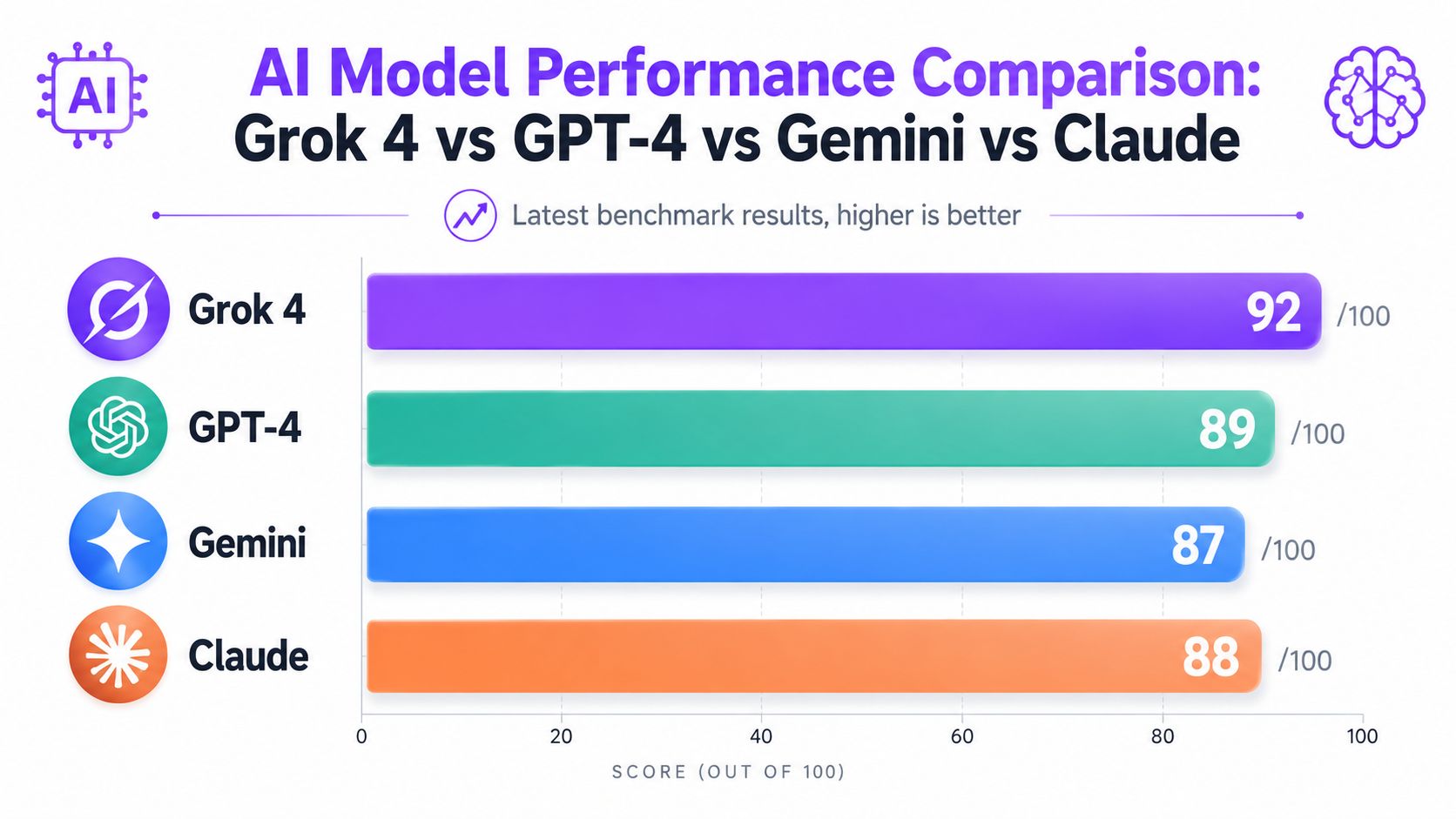
Let me now break down Grok 4 in comparison with the other top-tier models that are available in 2026 (all of them also on Writingmate.ai).
| Feature | Grok 4 | GPT-4 | Gemini 1.5 / 2.5 | Claude 3 Opus |
|---|---|---|---|---|
| Academic benchmarks | ✅ Strongest in ARC AGI, math | ✅ Very strong | ✅ Strong in vision tasks | ✅ High reasoning and writing |
| Code generation | ✅ Best HumanEval score | ✅ Solid Python | ✅ Competitive | ✅ Good but not top |
| Reasoning quality | ✅ High w/ Grok 4 Heavy | ✅ Great w/ GPT-4o | ❌ Gemini lags slightly | ✅ Very consistent |
| Visual understanding | ❌ Limited | ✅ Good in GPT-4o | ✅ Strongest | ✅ Decent |
| Speed & latency | ⚠️ Variable | ✅ Fast w/ 4o mini | ✅ Fastest inference | ✅ Consistent |
| Price | 💰 $300/month for top tier | 💸 $20 GPT-4o+ | 💸 $20 Gemini Advanced | 💸 $20 Claude Opus |
My Verdict: Grok 4 is strongest in reasoning, logic, and code. GPT-4 and Claude offer better overall polish. Gemini leads in multimodal vision. If you're not tied to a benchmark leaderboard, other models might offer better value.
Grok 4 vs Grok 3
The missing comparison most readers need is not Grok vs everyone else. It is whether Grok 4 is enough of an upgrade over Grok 3 to justify paying more or changing plans.
| Area | Grok 3 | Grok 4 | Practical difference |
|---|---|---|---|
| Reasoning | Strong, but less consistent on long chains | More stable on multi-step logic and harder evaluations | Grok 4 is the better pick for research-style prompts and difficult comparisons |
| Coding | Good general coding assistant | Stronger debugging and code reasoning | Grok 4 is the safer choice for developers doing real implementation work |
| Multimodal / vision | Limited compared with leaders | Still limited compared with leaders | This is not the reason to upgrade |
| Latency | Generally simpler/faster | Base is acceptable; Heavy can be slower | Grok 4 gains quality, not always speed |
| Pricing / access tier | Lower entry expectations | Split between standard access and premium Heavy access | Upgrade value depends heavily on workload and budget |
| Best use cases | Everyday chat, general assistance | Logic-heavy work, coding, technical analysis | Grok 4 matters most for demanding users |
What improved most is reasoning discipline and coding usefulness. What stayed weak is multimodal depth and some real-world grounding. If you already liked Grok 3 for casual chat, Grok 4 will feel smarter but not dramatically different; if you use Grok for debugging, difficult prompts, or analytical work, the difference is easier to notice.
Here are some benchmarks on new Grok. For one of the benchmark references often cited in launch coverage, review the Artificial Analysis Grok 4 page and compare the claims against your own tasks rather than relying on one headline result.
- Writingmate has side-by-side model comparison where you can try several models with the same task and see speed and tokens used for every model, for example, Claude 4 vs Grok 4, Grok 4 vs Gemini or a sometimes close comparison between GPT-4o vs Grok 4 and alternatives.
- Try it out here: writingmate.ai and compare models to see which one works the best for you.
What Is Grok 4 Heavy?
Grok 4 Heavy is best understood as a higher-compute operating mode for Grok 4, while SuperGrok Heavy is the paid subscription tier that gives consumers access to that premium experience. Those two names are often blurred together, but they are not identical.

xAI’s top consumer tier became much clearer after the 2025 rollout. Public references in 2026 consistently place SuperGrok Heavy at $300 per month, with the Heavy plan positioned for maximum compute priority, longer thinking, and more demanding workloads, according to this pricing breakdown. For standard SuperGrok pricing, check the latest live plan details directly before subscribing because packaging can change.
Here is the simplest way to separate the terms:
| Item | What it means | Who gets it | Typical fit | Main trade-off |
|---|---|---|---|---|
| Grok 4 | Base flagship model | Users on supported standard paid access routes | General chat, coding, summaries, reasoning | Better value, less premium compute |
| Grok 4 Heavy | Higher-compute multi-agent style reasoning mode | Users on the top-tier plan or equivalent premium access | Hard research, high-stakes analysis, advanced coding | Slower and much more expensive |
| SuperGrok | Paid consumer subscription tier | Individual users who want paid Grok access | Regular power users | Mid-tier cost |
| SuperGrok Heavy | Top consumer subscription tier | Users willing to pay for premium compute access | Professionals with difficult workloads | Roughly a 10x monthly jump versus standard SuperGrok in public pricing summaries |
Best-fit tasks for Heavy
Heavy makes the most sense when the cost of a wrong answer is high or when a problem benefits from exploring more than one reasoning path before replying.
- Complex coding and debugging
- Long-form technical research
- Legal or policy-style reasoning drafts
- Dense comparison and synthesis tasks
- Hard math or logic prompts where consistency matters more than speed
When base Grok 4 is enough
Base Grok 4 is enough for most users who want a smart chatbot, coding help, summaries, everyday Q&A, and occasional technical reasoning. In my own testing, the base model was already very good at code explanation and structured answers. I would not push most individual users toward Heavy unless they repeatedly hit tasks where one-pass models fail.
Response-speed trade-offs
The selling point of Heavy is not faster output. It is more compute spent before the answer is finalized. That can improve difficult-task reliability, but it also means slower replies and a plan price that is hard to justify for casual use.
Is the higher tier worth paying for?
For a student, casual user, or general creator, probably not. For someone billing research time, debugging complex systems, or using the model as a daily reasoning engine, it can be defensible. My own view after testing is simple: if you do not already know why you need Heavy, base Grok 4 is probably the better decision.
Grok 4 Pricing
Grok 4 access is no longer one simple subscription. It is a stack of routes with different requirements, limits, and best-fit users.
1) Access through X Premium+
For many users, the most direct mainstream route is still through the X ecosystem. Historically, Grok access has been bundled into premium X subscriptions, but exact entitlements can shift by region and rollout stage. What you usually need is:
- An X account
- The correct paid subscription tier
- Availability in your region and interface rollout
Best for: users who already live inside X and want Grok in the same product environment.
2) Direct xAI consumer access
Depending on the current rollout, xAI may offer direct access outside the social-product flow through its own interface and subscriptions. Naming like SuperGrok and SuperGrok Heavy matters most in that context. Recent market summaries describe Grok’s consumer ladder as broader and more segmented than at launch, with Heavy clearly positioned at the top end in this ecosystem overview.
What you need:
- An xAI-compatible account path
- The relevant paid plan
- Acceptance that available features may differ from lower tiers
Best for: users who want Grok as the main product, not as an extra inside X.
3) SuperGrok Heavy / top-tier plan
This is the expensive route for users who want the highest-priority access to premium Grok 4 behavior. Public 2026 pricing references commonly place SuperGrok Heavy near $300 per month, as summarized by AI Tool Analysis. Standard SuperGrok pricing is described as lower, but check the current live plan before treating any secondary summary as final.
What you need:
- Paid top-tier subscription
- A use case that justifies premium compute
- Tolerance for a product tier aimed more at difficult reasoning than casual chat volume
Best for: researchers, technical operators, advanced developers, and people using AI on tasks where quality is worth paying for.
4) API access
If you are building with Grok rather than chatting with it, API access is the cleaner route. The original article already noted token-based pricing via API. This route usually requires:
- Developer account setup
- Billing method
- Basic ability to work with API calls, playgrounds, or third-party dev tools
Best for: teams, automations, internal tools, and product builders.
5) Third-party access through Writingmate
If you want to try Grok 4 without juggling separate model subscriptions or API setup, the easiest consumer route may be a multi-model platform. On Writingmate.ai, Grok 4 sits alongside GPT, Claude, Gemini, and others, so the decision is less about betting on one vendor and more about comparing outputs in one place.
What you need:
- A Writingmate account
- The plan tier that includes the model
- No API keys or separate vendor setup
Best for: people who compare models often, want simpler access, or do not want to pay full premium pricing just to test one model.
Cheapest way to try Grok 4
The cheapest practical route is usually not the highest official tier. If your goal is to evaluate the model rather than commit to xAI’s full premium ladder, start with the lowest-cost route that already includes Grok 4 access or use a multi-model platform where Grok is bundled with other models. Paying $300 just to see what Heavy feels like is unnecessary in many situations.
Important pricing caution
Pricing, limits, and plan names can change by region, rollout phase, and product packaging. That is especially true for Grok, where the product has expanded quickly. Broad usage and visibility do not guarantee stable access terms, so always verify the current plan before subscribing. For market context on Grok’s scale, see the current Business of Apps Grok statistics page, but check the live product page for final access details.
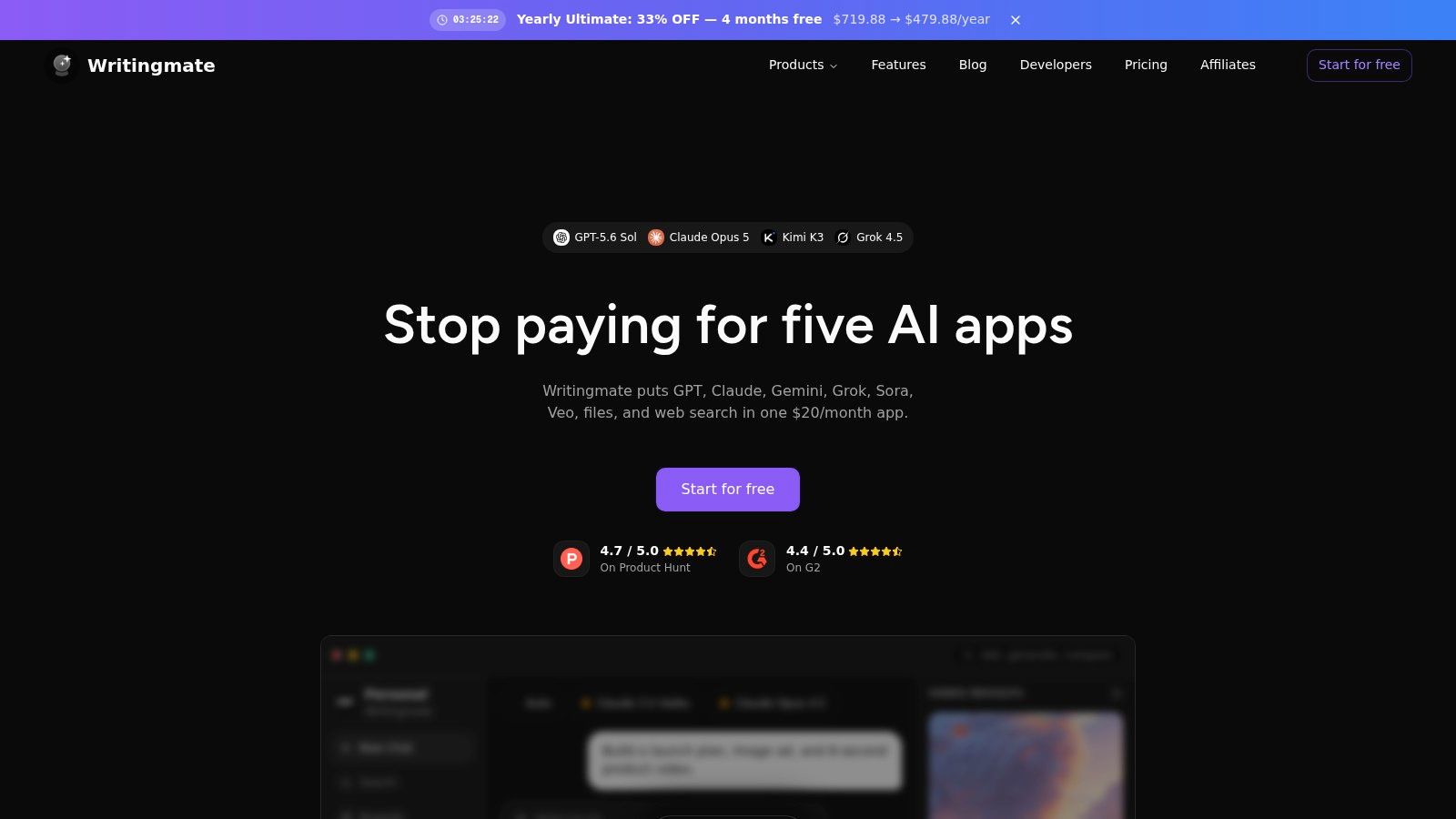
For comparison, below is Writingmate AI pricing which also includes Grok 4 Model in Pro plan (9 dollars per month, no API keys or advanced skills needed, beginner-friendly & feature-packed).
Known Issues and Odd Behavior
Grok models have had quirks. For example:
- It can produce very biased outputs from small changes in system prompts.
- Political tone shifts can appear depending on region or phrasing.
- Recently, it became much less politically correct, which resulted in a series of weird takes that surprised many.
- Weird historical overfocus, especially around South Africa, may reflect bias in training or instruction tuning. This is not unique to Grok, and GPT or Claude can also show bias, but Grok tends to make those moments more obvious.
These can also result from how xAI works with internal instruction tuning. Even with Grok 4, users should stay cautious and double-check outputs in sensitive domains.
Grok 4 and the Environment
To scale Grok, Elon plans to power 1 million GPUs using a specialized energy project. The first of these may be based in Memphis, according to leaks. And for many, this raises some questions:
- Will these be sustainable?
- How much energy will be used?
- Can xAI really afford the $1B/month burn rate?
- Will the time and effort saved by using Grok be worth it?

We don’t have clear answers yet, and this is not a new issue. But large-scale AI compute comes with serious environmental and financial costs and should probably be considered.
Grok 4 as a Gemini Alternative
If you don't need Gemini's vision skills for your work, Grok 4 may be a better option for reasoning tasks, and this one is also included on Writingmate.ai.
To me, Grok 4 vs Gemini is like logic over looks. Grok 4 consistently outperforms Gemini in logic puzzles, code benchmarks, and complex academic tasks. On reasoning-heavy challenges, such as ARC AGI or HumanEval-style tests, Grok 4 often produces more reliable output.
In contrast, Google’s Gemini models can still misinterpret some images and fail on certain multimodal tasks.
- If your work involves charts, photos, or diagrams, Gemini 2.5 and 3 are better choices.
- But for technical reasoning, math, or science workflows, Grok 4 is the stronger tool.
And let me return for a while to Grok 4’s Heavy mode. It is a system where multiple AI agents tackle the same problem independently and vote on the best answer. This often leads to higher accuracy and fewer hallucinations than traditional single-pass models.
If you think of Gemini as a well-rounded visual generalist, Grok 4 is more like a logic-first specialist. And for developers, analysts or researchers, that often makes a much bigger difference in real-world use cases. Here’s how Grok 4 behaves on benchmarks that matter most:
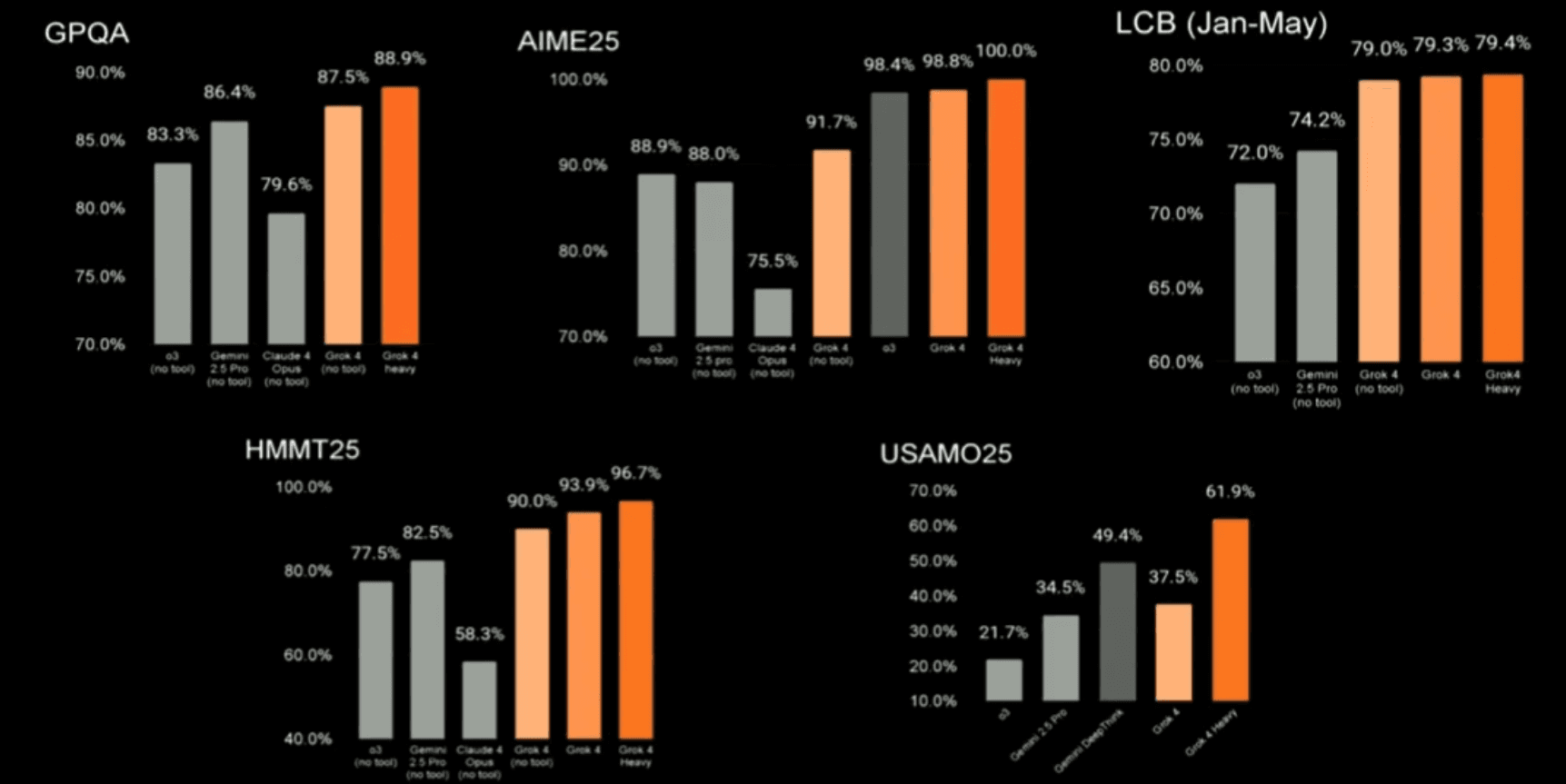
Those are, in my personal opinion, some key advantages of Grok 4 over Gemini:
- Superior coding performance - tops HumanEval benchmarks
- Better logic and reasoning - does decent work at academic-level problems
- Collaborative AI system - Grok 4 Heavy uses multiple agents for accuracy
- Strong in STEM fields - math, physics, and scientific analysis
On Writingmate.ai, you just click the model choice button, then set Grok 4 as a model. No API needed and a lot fewer caps and limits than in some other chatbots, including official ones. Starts at 9 dollars per month and a free version is available as well.

The main trade-off here is visual processing. Gemini can work with images, diagrams and mixed content much better than Grok 4, which focuses on text.
You can try both models side-by-side at https://writingmate.ai/ (WritingMate.ai), which includes Grok 4 together with other top AI models in one platform.
Llama 4 Scout, Maverick, Behemoth
Meta’s latest Llama 4 lineup is turning out to be one of the most balanced in 2026. It has mixed opinions but I find it to be a suitable comparison to Grok 4 in some tasks (check model comparison on writingmate). You gain efficiency, performance, and flexibility. This is true even for the smaller models.
Llama 4 Scout is the compact version, and it’s designed for speed. It runs on a single H100 GPU, uses 17 billion active parameters, and supports a 10 million token context window. That’s huge for its size.
From what I’ve tested and seen, Maverick is especially strong in more layered reasoning and multimodal tasks and is at least on par with Grok. Maverick does work with text, image, and other input types with deeper context awareness. Maverick provides the depth you need for research, AI development, or advanced content. Smaller models often don't measure up.
There’s also Behemoth, Meta’s enterprise-tier model, and as it seems, it still outperforms Grok 4 as of now. It is giant, it juggles billions of parameters and is targeted to work with large scale projects.
What's Next: Grok 5 and the AI Arms Race
Musk says Grok 5 is already in training. Meanwhile, OpenAI is working on GPT-5. Google is testing Gemini 3 internally. Anthropic is refining Claude 3.5.
The AI race is now focused on:
- Speed: Faster inference, quicker answers
- Reasoning: Better logic and consistency
- Multimodality: Smooth integration of text, image, audio, and video
Musk also hinted that Grok will generate video by fall 2025. If true, this could place Grok 4 (or Grok 5) back in competition with models like OpenAI’s Sora.
Should You Get Grok 4 Access?
Try using Grok 4 if:
- You need best-in-class logic and academic QA
- You work in law, math, or code-heavy fields
- You want to test Grok 4 Heavy and explore new agent frameworks
If you meet all three criteria, just access it instantly in links below. It may help you a lot and save time and effort.
In my opinion, just skip Grok 4 if:
- You’re focused on image, video, or real-world modeling
- You’re on a tight budget (GPT-4o and Claude are more affordable)
- You don’t need top-tier benchmark scores
To access Grok 4, visit x.ai or writingmate.ai, where you can use over 100 top-tier models in one chatbot.
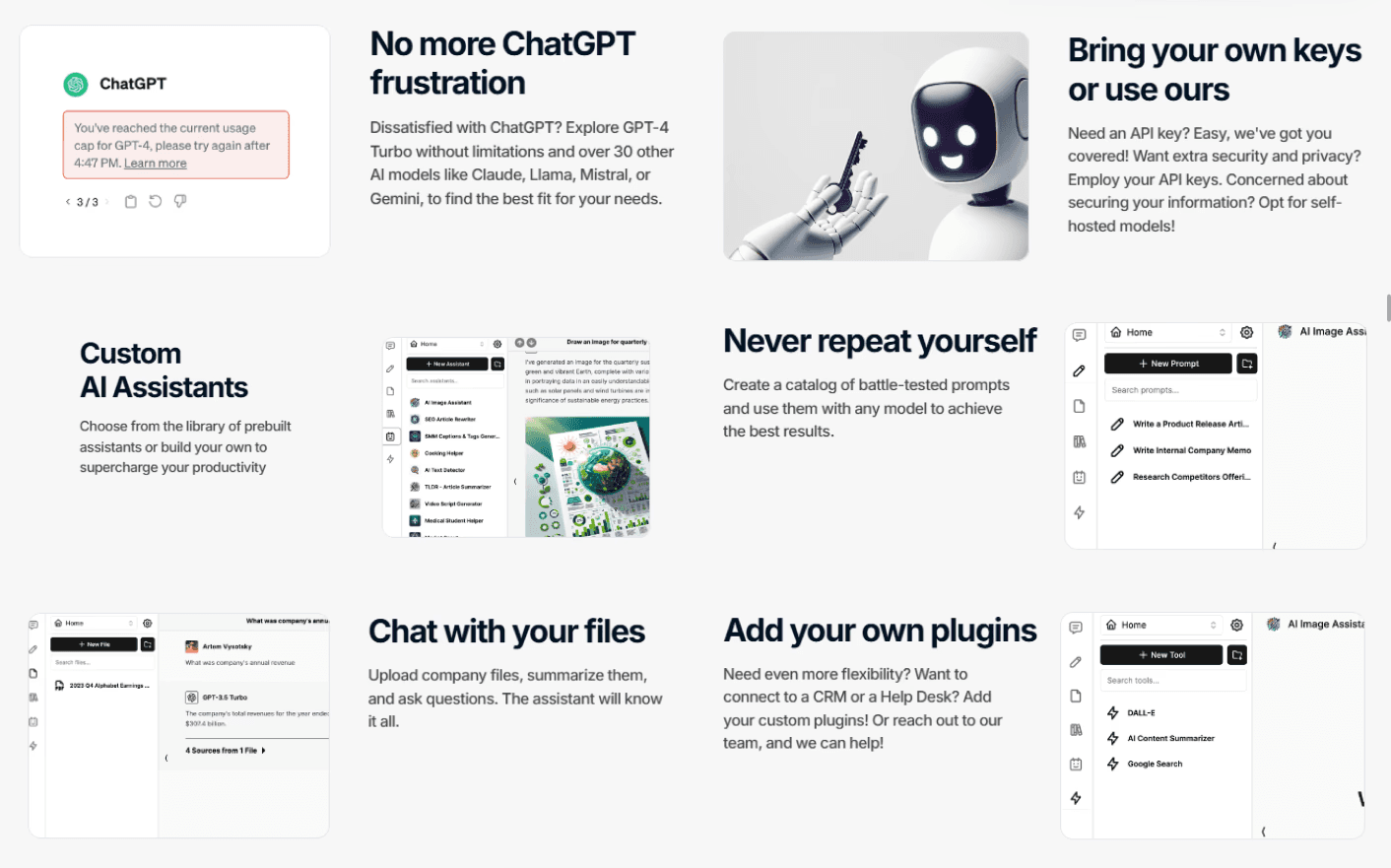
Using All the Top Models With Writingmate Labs
Why choose just one model? With Writingmate, you can run:
- Grok 4
- GPT-4o, GPT-4o mini, and GPT-4.1
- OpenAI o3-mini
- Claude Sonnet 4 and Claude Opus 4
- Mistral AI
- Llama 4 (Maverick & Scout)
- …and many others
All inside one clean and powerful platform that's ideal for research, document analysis, writing, coding, image generation, model comparison, prompt enhancement and more. You can also create images using Stable Diffusion, flux.ai, and GPT image tools, all in the same app.

AI Blog That Actually Helps
We write articles with a love of technology, people, and their real needs. Read more at our AI blog, we update it regularly and articles have fresh ideas, solutions and will be useful to many of you.
See you in the next article!
Artem
Frequently Asked Questions
Is SuperGrok the same as Grok Heavy?
No. SuperGrok usually refers to the subscription plan, while Grok 4 Heavy refers to the premium higher-compute mode or capability available through top-tier access. People often use the names interchangeably, but one is the plan and the other is the model behavior you are paying to access.
Is SuperGrok Heavy worth it?
Only for users with difficult, repeated reasoning work. If you are doing research, debugging complex code, or high-stakes analysis every week, the premium compute may pay for itself. For casual chat, studying, or general writing, the price jump is hard to justify.
How good is Grok Heavy?
It is meaningfully better on hard prompts than base Grok 4, especially when the task benefits from exploring multiple reasoning paths before answering. In my testing, it reduced some shallow first-answer mistakes, but it did not magically fix Grok’s weaker visual and real-world grounding areas.
What is the SuperGrok Heavy plan?
It is xAI’s highest-priced mainstream consumer tier, positioned above standard SuperGrok and associated with premium Grok 4 access. Public 2026 pricing references commonly put it around $300 per month, though live pricing can change by rollout or region.
Who can use Grok 4 right now?
That depends on the access route. Some users get it through X subscription tiers, others through direct xAI plans, API access, or platforms that bundle multiple models. If you want the simplest path without separate vendor setup, a multi-model service such as Writingmate.ai is usually easier than jumping straight to the highest official tier.
Sources
Written by
Artem Vysotsky
Ex-Staff Engineer at Meta. Building the technical foundation to make AI accessible to everyone.
Reviewed by
Sergey Vysotsky
Ex-Chief Editor / PM at Mosaic. Passionate about making AI accessible and affordable for everyone.
Frequently Asked Questions
Sources
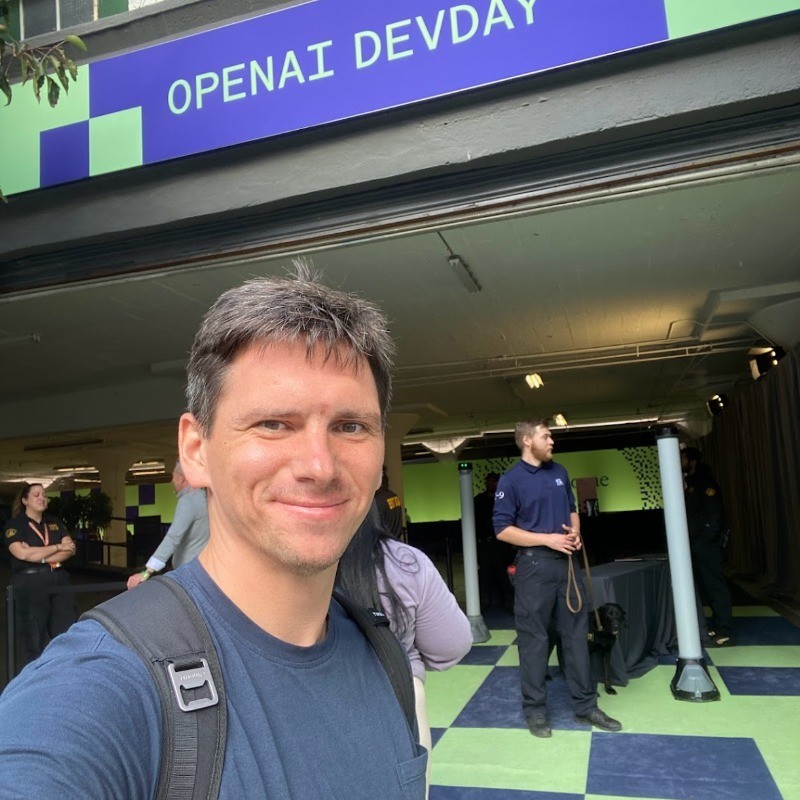
Written by
Artem Vysotsky
Ex-Staff Engineer at Meta. Building the technical foundation to make AI accessible to everyone.

Reviewed by
Sergey Vysotsky
Ex-Chief Editor / PM at Mosaic. Passionate about making AI accessible and affordable for everyone.