Claude is no longer stuck entirely at its training cutoff, but it is not a full browser either. In official Claude, web search can now be enabled for supported plans and regions so the model can pull in recent information and cite sources. In my tests, that changed the answer quality most on time-sensitive tasks, while static writing and reasoning tasks often looked similar with or without search.
I’m Artem, and for this refresh I re-tested Claude in the official app, with pasted links, inside Writingmate, and in a basic tool-assisted workflow. The short answer is simple: Claude can access the internet in some environments, but not as unrestricted open-web browsing by default. That distinction matters if you expect it to open any URL, crawl a site, or fetch live data inside code on its own.
How I Tested Claude Internet Access
I ran these checks in early 2026 across four situations: official Claude with web search toggled on, official Claude with search off, pasted URLs in chat, and Claude used through https://writingmate.ai with browsing enabled. I also checked one code-style scenario to see whether Claude-generated code could reach the internet by itself. For the official product behavior, I cross-checked Anthropic’s current help and product notes on where Claude is available and the rollout details in Anthropic’s web search announcement.
Success meant Claude could retrieve recent facts, surface sources, or accurately use a live page when the feature was enabled. A tool failed the test if it only answered from prior knowledge, hallucinated recent events, or treated a pasted link as plain text without using the page contents. My own most useful sanity check was simple: ask for a very recent product change with and without search enabled, then compare freshness, sourcing, and whether the answer admitted uncertainty.
One thing became clear quickly: “internet access” is not one feature. There is built-in web search, there is reading content from provided files or supported links, and there is full browser-style navigation through an external tool. Those are different capabilities and they should not be treated as interchangeable.
Make Claude Access Internet with Less Limits
Verdict first: yes, Claude now has limited internet access in official Claude, but that does not mean unrestricted browsing. Anthropic says Claude can use web search to retrieve current information and provide inline citations, and its rollout page shows web search first announced as a paid U.S. preview on March 20, 2025, then updated on May 27, 2025 to say it was globally available across Claude plans in Anthropic’s web search timeline. That is a real improvement, but it still differs from giving the model a full browser.
Official Claude web search
In the official Claude app, web search is the built-in way to get current information. When the feature is available on your plan and in your workspace, you enable it in a chat and Claude can fetch recent material from the web, then return an answer with source citations. Anthropic’s help documentation says Claude is available on the web at claude.ai and can use web search for current information through supported experiences in Claude availability and access.
In practice, I found the toggle matters most for anything time-sensitive: pricing, product launches, policy changes, company news, and market snapshots. With search on, Claude usually gave me linked sources and a more cautious answer. With search off, it often produced a plausible summary but could not reliably distinguish between older and current facts. That is useful web access, but it is still not the same as opening arbitrary pages, clicking through sites step by step, or interacting with web apps like a human browser session.
You may also find that the feature is unavailable in some enterprise settings, disabled by admins, or not exposed the same way across every surface. Anthropic also introduced API web search so Claude can access real-time web content in tool-enabled workflows, but that still depends on how the surrounding app or agent is configured rather than happening automatically in every API call.
Writingmate as an alternative
If you want a broader browsing workflow around Claude rather than only Claude’s native search toggle, https://writingmate.ai/ is the cleaner alternative in this article. Inside Writingmate, you can switch on browsing for Claude and also compare the result against other models in the same workspace. In my testing, that was the practical difference: official Claude gave me built-in search with citations when available, while Writingmate felt more like a multi-model layer where browsing is part of the workspace rather than a single vendor feature.
Here’s how to use it:
- Open Writingmate: Go to https://writingmate.ai/ and sign in.
- Choose a Claude model: Pick Claude Sonnet or Opus, depending on the task.
- Enable browsing: Click the globe icon before sending the prompt.
- Run the task: Ask for current information, page summaries, comparisons, or source-backed research.
My own reason to use Writingmate was not that official Claude failed entirely; it was that I wanted the same browsing-style workflow available across multiple models without rebuilding prompts every time. If you also evaluate tool access at the API layer, it helps to compare that with dedicated web-search endpoints such as API Direct, which makes the separation between model reasoning and external retrieval much more obvious.
Claude with Web Search. Comparison Table
Here is a comparison between different tools I tried that have ability to search the web with Claude 4 Sonnet.
| Platform / Tool | Web Access Availability | Pricing (indicative, Oct 2025) |
|---|---|---|
| Claude.ai (official) | Built-in Web Search (toggle). “Ability to search the web” on Free as well. | Free; Pro $17/mo annual ($20/mo monthly); Max from $100/mo; Team $30/user/mo (min 5); Premium seat $150/user/mo |
| Writingmate.ai | Integrated browsing (🌐button) on Claude; multi-model hub | Pro $20/mo monthly or $200/year ($16.7/mo) |
| Poe (Quora) | Claude variants with browsing via Anthropic’s tool | Free limited; paid bundles around $4.99–$20/mo |
| Slack (Claude for Work) | Org-level enablement; then users toggle | Team $30/user/mo (or $25 annual); Premium seat $150/user/mo |
Can Claude browse the web or access links? What’s supported and what isn’t
Claude can search the web in supported setups, but that is narrower than full browser access. The model does not behave like a desktop browser that can freely click through every page, log into services, or go through multi-step flows unless an external tool gives it that ability. That is why answers about link access often sound contradictory: people are mixing up search, reading a provided URL, and autonomous browsing.
What is usually supported:
- Built-in web search: Claude can retrieve recent information and cite sources when web search is enabled.
- Pasted links in chat: Claude may be able to use a pasted URL when the environment supports fetching that page, but a pasted link by itself is not a guarantee.
- Summarization of live pages: This works best when the page is publicly accessible, text-heavy, and not blocked by login walls or scripts.
- Tool-assisted workflows: In apps built around Claude, browsing can be provided by the product layer rather than by the base model alone.
What is not reliably supported:
- Open-ended crawling of any site on demand
- Clicking around private accounts or paywalled pages
- Accessing local network resources or your device automatically
- Internet-enabled code execution unless the runtime itself has network permission
One small but important testing observation: when I pasted a public URL into official Claude without search enabled, the model sometimes responded helpfully but did not always draw directly from the live page. When I repeated the task in a browsing-enabled setup, the answer was more likely to include details traceable to the page. So yes, Claude can read links in some circumstances, but no, you should not assume every pasted link is fetched unless the product explicitly supports that behavior.
Real-World Example: Search the Web with Claude in 2026
I tested one practical task twice: summarize the latest availability and rollout status of Claude web search, then explain whether a user should expect live citations. Success meant the answer included current rollout details, named the feature correctly, and pointed to sources rather than speaking with false certainty.
First run, with web search enabled: Claude returned a current answer that referenced Anthropic’s rollout notes, explained that web search moved from a limited preview to broader availability, and attached citations. Second run, with web search disabled: the answer was still coherent, but it was less precise about timing and lacked source support for recent changes. That difference is exactly why live retrieval matters for product, policy, and pricing questions.
My main takeaway from this test was not that Claude suddenly becomes a different model online. It stays good at structuring information either way. What changes is freshness and traceability. With search on, I could inspect sources and decide whether the answer was grounded. Without it, I had to trust the model’s prior knowledge much more.
I also hit one limitation worth mentioning: even with search enabled, source coverage was not always complete. Claude sometimes leaned on a small set of easily retrievable pages and missed niche documentation or secondary confirmations. In other words, it can search the internet, but for anything high-stakes I still verify the claims manually against the original source.
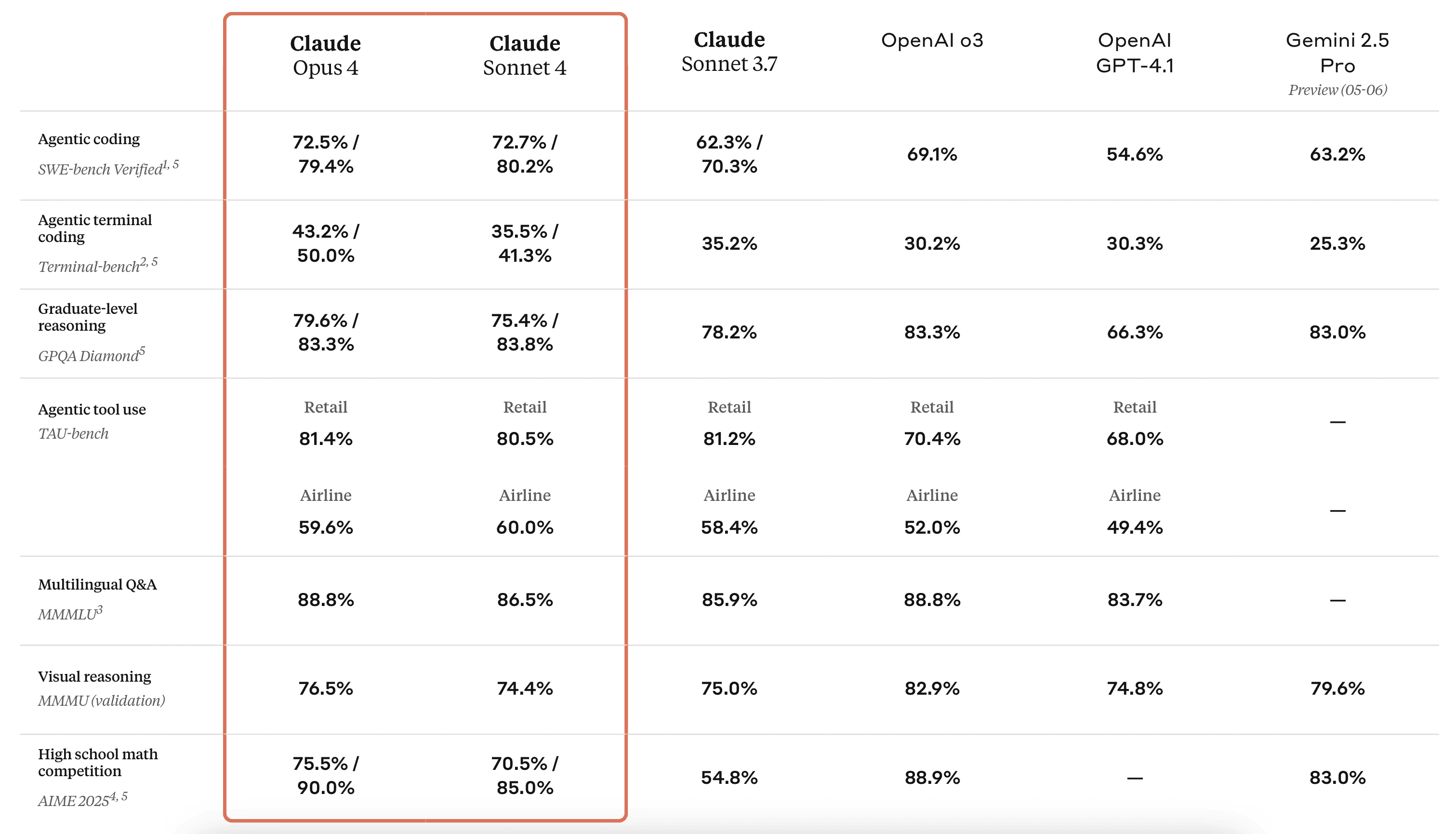
Claude Sonnet 4 Feature Comparison Table with Competitors
But why not use ChatGPT? Can ChatGPT access internet? Yes, it can. But Claude 4 Sonnet works better for some tasks, including reasoning, general knowledge, coding, multilingual math and more. That is precisely why you may want to choose it over other models. In my experience, when using Claude even against some of the very recent models like DeepSeek R1, Claude 4 proves to be more efficient and gives better answers to my queries and prompts.
I would also like to mention that Claude API also does not make searching the web easy by default, it is probably only possible if you can build your UI and connect all the web searching possibilities.
For most daily users, Claude 4 Sonnet will be sufficient for most daily and work tasks. Claude 3.5 is also nice, and both are available on https://writingmate.ai. Claude 4.1 Opus is more of an overkill option, but also available as part of the Ultimate plan of Writingmate.
Benefits of Using Claude AI with Internet Access
Internet access makes Claude much more useful for some tasks, but it does not remove the need for source checking.
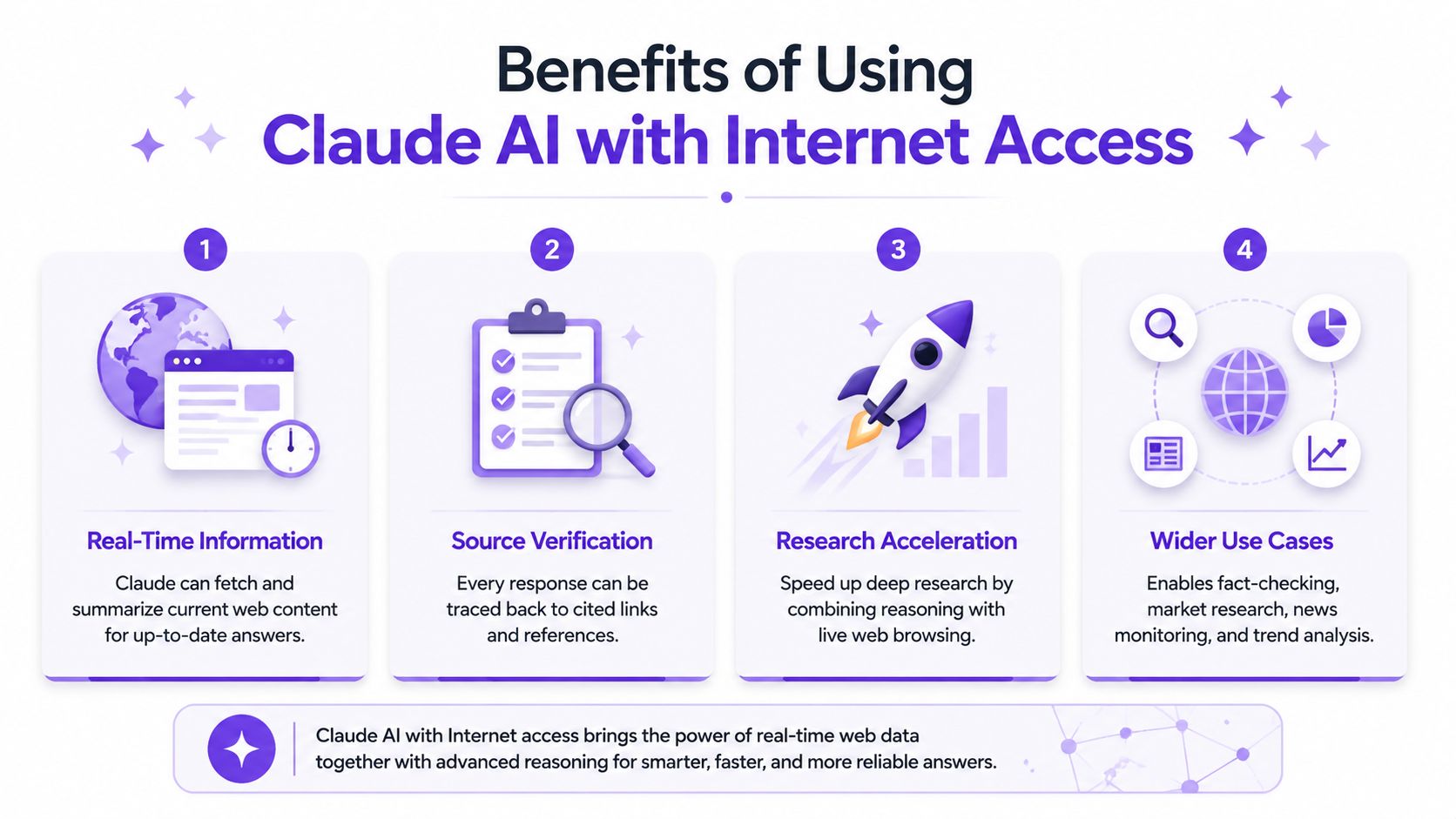
- Current-event research: With web access on, Claude can pull recent reporting, product announcements, and official updates instead of relying on older model knowledge. That provides a clear upgrade in usefulness. You should still verify dates, quotes, and breaking-news claims against the original publisher because retrieval can miss context.
- Market and company lookups: Claude becomes more useful for checking a company’s latest launch, leadership page, documentation, or public positioning. That helps with sales prep, competitor tracking, and quick business research. You should still confirm anything sensitive, especially pricing, headcount, financial claims, or policy details on the company’s own site.
- Fact-checking against live sources: Claude can compare a claim against current pages and tell you where the information appears. This is better than asking the model to answer from memory alone. Even then, I would not use one AI-cited answer as final proof; the safer workflow is to open the cited sources yourself.
- Link summarization when supported: If the product can fetch the page behind a URL, Claude is good at compressing long articles, docs, and help pages into a short brief. That saves time on first-pass reading. The manual check is simple: make sure the page was accessible and not partially blocked, because a neat summary can still be based on incomplete retrieval.
Best ways to use Claude with web search on Writingmate
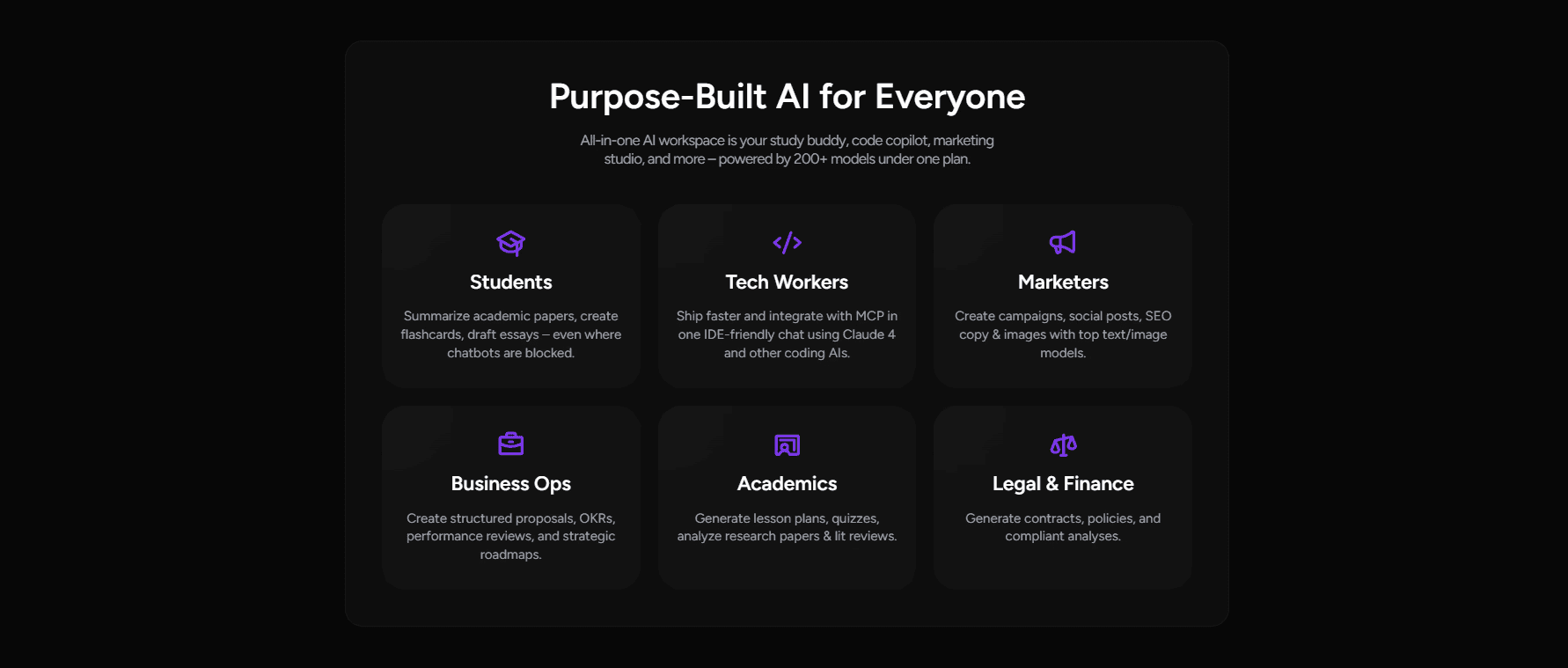
Here are some typical use cases and ways you can use Claude's new web capabilities inside Writingmate.
- Sales teams can improve account planning and have more informed conversations with prospects by analyzing industry trends, company updates, and public pain points.
- Researchers can build stronger literature reviews or early-source collections by searching across primary sources on the web and spotting newer developments.
- Shoppers can compare product features, prices, or reviews across multiple sources to make more informed purchase decisions.
- Financial analysts can use current market data, earnings reports, and industry trends to improve assumptions and speed up first-pass research.
Frequently Asked Questions
Can Claude AI access the internet?
Yes, but only in supported setups. Official Claude now has web search, which lets it retrieve current information and include citations, but that is limited internet access rather than unrestricted browsing. If search is off, Claude answers mainly from its existing knowledge and whatever content you provide in the chat.
Can I use Claude AI for web-dependent tasks?
Yes, for many of them. Claude works well for current research, checking recent product changes, summarizing public pages, and comparing sources when web search or browsing is enabled. I would still avoid treating it as the final authority for legal, medical, financial, or fast-moving news without checking the source documents yourself.
Does Claude 4 AI use online resources to generate responses?
Sometimes. Claude 4 can use online resources when the product you are using gives it web search or browsing access. In official Claude, that depends on the web search feature being available and enabled. In third-party tools, the app may provide its own browsing layer. Without that setup, Claude does not automatically pull fresh web content for every answer.
Can Claude AI learn from new online information?
Not in the permanent-training sense during your chat. Claude can use newly retrieved information to answer a current question, but that does not mean the base model instantly retrains itself on everything it reads. Think of web access as temporary retrieval for the session, not automatic long-term learning.
Does Claude have access to the internet? In general.
In general, no by default and yes conditionally. The safest way to think about it is this: Claude can be connected to the internet through features like web search or through external tools, but the model itself is not an always-on open internet browser in every environment.
Is the knowledge of Claude 4 AI restricted to its initial training data? Can Claude AI generate images?
Without web access, Claude is restricted largely to its training knowledge plus the context you give it. With web search enabled, it can go beyond that cutoff for current facts. As for images, Claude can analyze images in supported workflows, but image generation depends on the product and feature set you are using rather than being guaranteed in every Claude experience.
Can Claude access links or read a URL I paste?
Sometimes, but do not assume a pasted link will always be fetched. If the environment supports web retrieval and the page is public, Claude may read and summarize it. If browsing is unavailable, blocked, or the page requires login, Claude may only infer from the text around the link or tell you it cannot access it directly.
Can Claude code access the internet?
Only if the runtime around it has network access. Claude can write code that makes HTTP requests, but the code will not reach the web unless the execution environment, agent, notebook, or app allows outbound internet connections. This is the key difference between the model’s reasoning and the tools attached to it.
Can Claude access my data?
Claude can only use the data you provide to the extent allowed by the product you are using and its permissions. It does not automatically roam through your private files, accounts, or browser history. If you connect integrations, upload documents, or use an enterprise workspace, review the app’s permissions, retention settings, and admin controls before sharing sensitive material.
Sources
- ChatGPT
- cannot directly access the internet
- https://writingmate.ai
- got some internet access
Written by
Artem Vysotsky
Ex-Staff Engineer at Meta. Building the technical foundation to make AI accessible to everyone.
Reviewed by
Sergey Vysotsky
Ex-Chief Editor / PM at Mosaic. Passionate about making AI accessible and affordable for everyone.
Frequently Asked Questions
Sources
Written by
Artem Vysotsky
Ex-Staff Engineer at Meta. Building the technical foundation to make AI accessible to everyone.

Reviewed by
Sergey Vysotsky
Ex-Chief Editor / PM at Mosaic. Passionate about making AI accessible and affordable for everyone.