That "You've reached your GPT-5 limit" warning is frustrating mostly because it rarely tells you which limit you hit. In 2026, the answer can be a rolling model cap, a separate tool cap, a temporary traffic throttle, or a UI hiccup that looks like a hard stop. This guide focuses on the practical part: what the warning usually means, how limits differ by plan, and which legit alternatives work without breaking terms.
My name is Artem and I have been using GPT models from the very start, with dozens of hours of experience inside of OpenAI models.
- OpenAI’s limit language has changed a lot since the old GPT-4o-era “X messages per 3 hours” framing. The biggest shift is that free access is now described more broadly, while advanced tools and premium models are still capped separately.
- I rewrote this guide around the questions that actually matter after you hit a cap: how resets work, whether paying helps, what model you fall back to, and when a third-party tool is a better fit than repeatedly retrying ChatGPT.
How I Verified These ChatGPT Limits and Alternatives
I checked OpenAI’s current Help Center and pricing pages first, because they are the only sources that reliably describe what each plan is supposed to include. For free-plan behavior, I used OpenAI’s own explanation that ChatGPT Free now includes unlimited everyday text chats with safeguards and separate tool limits. For historical context on fallback behavior, I also used OpenAI’s earlier note that free users could hit a GPT-4o cap and then continue on a lighter model in the same chat flow via OpenAI’s GPT-4o free-tier announcement.
I also compared those official docs with current plan pages, rollout notes, and a small amount of secondary reporting only where OpenAI was vague or actively testing limits. In my own use, the most consistent pattern was not a simple “daily prompt number,” but a mix of rolling windows, weekly limits for heavier reasoning modes, and separate caps on tools like image generation or file analysis. I only kept workarounds that stay within platform rules. Anything that depended on account farming, ban-evasion, scripted retries, or other obvious abuse was excluded on purpose.
Message Limits Updates
The hardest part about explaining ChatGPT limits in 2026 is that there is no single universal counter anymore. OpenAI now mixes plan-level access, model-specific caps, and tool-specific caps. On the free tier, the company describes access as unlimited everyday text chats, but that does not mean unlimited use of every model or tool. File uploads, image generation, voice, and data analysis are capped separately, and heavier models can still trigger a fallback.
Historically, limits were easier to describe because OpenAI openly framed free usage around message caps. In 2024, the company said free users would get a limited number of GPT-4o messages and then be switched to GPT-3.5 once that cap was reached, as described in OpenAI’s rollout note. That matters because many older guides still quote fixed rolling windows as if they were the whole story. They are not.
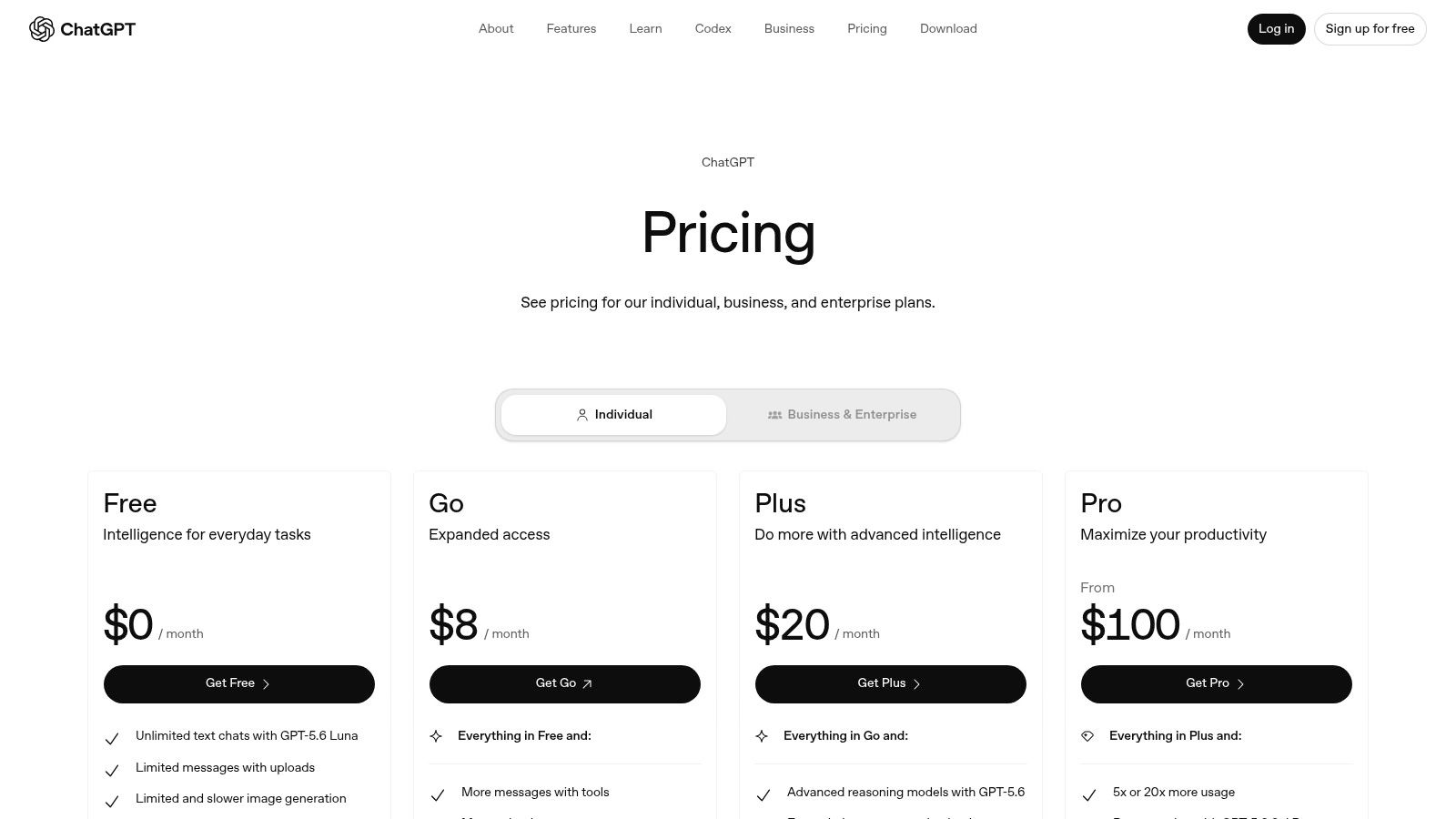
Here is the simplest way to think about it now: Free is fine for ordinary text chat until you lean on premium models or heavy tools; Plus buys you much larger rolling windows and better fallback behavior; Pro, Team, and Enterprise are for people who hit those ceilings often enough that fair-use access is worth paying for. If you want another product’s interpretation of current cap behavior and model access, 1chat's page is one reasonable secondary resource to compare against OpenAI’s own docs.
| Plan | How limits work in practice | Reset pattern | What happens after you hit the cap | Separately capped tools |
|---|---|---|---|---|
| Free | Basic access for everyday chat, but not full-speed access to every premium model all day. OpenAI now describes this tier as unlimited for normal text use, with safeguards and separate restrictions on advanced features. | Usually a rolling reset by feature or model, not a clean once-per-day allowance. Exact timing can vary with demand. | Chat may continue on a fallback model or lighter mode; some tools simply stop until they reset. | File uploads, image generation, voice, and data analysis are limited separately according to the Free Tier FAQ. |
| Plus | Higher message capacity, better access to premium models, and more room for long sessions before fallback. Some advanced reasoning modes may still have weekly or rolling limits. | Commonly a mix of rolling windows for standard chat and slower weekly replenishment for heavier reasoning features. | You may be switched to a smaller model, lose access to a premium mode temporarily, or see specific tools greyed out while base chat still works. | Tools are still capped, just at meaningfully higher levels than Free. Check current ChatGPT pricing and the relevant Help Center overview. |
| Pro / Team / Enterprise | Highest practical access in ChatGPT, generally marketed around generous or fair-use limits rather than a tiny visible message bucket. Best fit for people who repeatedly hit caps during work. | Typically fair-use based, with some model- or feature-specific controls still possible behind the scenes. | Usually fewer forced fallbacks, but not a promise of infinite unthrottled usage. Abuse controls still apply. | Advanced tools are available at much higher thresholds; enterprise workspaces may also have distinct admin and model controls in the Enterprise limits article. |
The practical tradeoff is straightforward. On Free, you can often keep chatting, but the experience changes first: weaker fallback models, missing tools, stricter upload/image limits, and more sensitivity to peak traffic. On Plus and above, the main benefit is not just “more messages,” but fewer interruptions when you need longer sessions, reasoning-heavy work, file analysis, or repeat tool use. In my own testing, that difference showed up most clearly during long editing sessions: basic chat kept going, while uploads and heavier analysis hit ceilings much sooner.
| Plan | GPT-5 Standard | GPT-5 Thinking | Context Window |
|---|---|---|---|
| Free | ~5-8 msgs/hour; after that, switches to mini | 1 message/day | 8,000 tokens (mint, OpenAI Help Center, The Register) |
| Plus | Initially ~80/3 hrs, now doubled to ~160/3 hrs | ~200 msgs/week, testing raised to ~3,000 | 128,000 tokens (mint, OpenAI Help Center, BleepingComputer, TechRadar, The Register) |
| Pro / Enterprise | Unlimited (subject to fair-use) | Full access to GPT-5 Pro | 128,000 tokens (or more for Enterprise) (OpenAI, OpenAI Help Center, The Times of India) |
Why Do You See "You've reached your GPT-5 limit"?
That warning usually falls into one of three buckets: you hit a model or tool cap, OpenAI is temporarily throttling usage because of load, or the app is misreporting your state. The wording is often similar across all three, which is why people assume they are fully blocked when sometimes they are only being moved to a different model.

1. You hit a real cap
This is the most common case. On Free, the cap may be tied to premium-model access or tool use rather than ordinary text chat. On Plus, it is more likely to appear after a long burst with a heavier model, a reasoning mode, or repeated tool calls in one session.
What to do next:
- Wait for the reset window. If the cap came from a rolling model window, access often returns after a few hours. If it was tied to a weekly reasoning bucket, the reset can take much longer.
- Check whether the chat still works on a fallback model. I’ve seen sessions continue normally after the warning, but with a smaller model handling the next replies. The clue is usually a changed model label, weaker answers, or disabled tools.
- Open a fresh chat and look at the model picker. If a premium option is greyed out but a mini model is available, you hit a specific model cap, not a total account ban.
2. You are being throttled because traffic is high
During peak periods, free accounts are the first to feel it. The message can look like a hard usage limit even when the issue is temporary capacity control.
What to do next:
- Wait 10–30 minutes and try again. In my use, a genuine traffic throttle usually clears faster than a true weekly reasoning cap.
- Try at an off-peak time. Late-night or early-morning sessions have been noticeably more reliable for free access.
- Do not hammer retry. Repeatedly resubmitting the same heavy prompt tends to waste whatever quota remains and can make the session feel more unstable.
3. The app or session glitched
Sometimes the message is wrong. I’ve had the warning appear, refreshed the tab, and immediately regained access to the same conversation without waiting for any meaningful reset.
What to do next:
- Refresh the tab or restart the app.
- Log out and back in if the model picker looks frozen.
- Open the same account in another browser to tell the difference between an account limit and a local session bug.
- Check OpenAI status pages or current support chatter before assuming you personally hit a wall.
How to confirm whether ChatGPT switched you to a fallback model
The easiest signs are practical, not technical. The selected premium model may disappear or grey out, tools like uploads or image generation may become unavailable, or the assistant may suddenly answer faster but with shallower reasoning. In one of my test sessions, the most obvious clue was that file analysis stopped working even though plain text chat continued.
What not to do if you want to stay within terms
Do not create throwaway accounts to chain extra free usage, do not use automated retry loops, and do not rely on “unlimited” tools that hide billing or violate OpenAI’s usage rules. Those tricks are unreliable at best and account-risky at worst.
Habits that reduce limit hits
- Batch related questions into one structured prompt instead of sending five near-duplicates.
- Avoid repeated retries when one request stalls.
- Save file analysis, image generation, and deep research for the final pass.
- Switch models intentionally instead of rerunning the same task on the same premium mode.
- Start drafts in a lighter model, then use the heavier model only for the parts that need it.
If you keep hitting caps because ChatGPT is your daily work environment, upgrading can help. A paid plan reduces throttling and raises the ceiling, while alternatives like Writingmate.ai spread your work across multiple model providers instead of tying everything to one ChatGPT window.
More Ways to Use GPT-5 Limit-Free
“No limit” usually means no tiny visible message counter in the chat UI, not infinite unrestricted access forever. Every legitimate product still has some combination of fair-use controls, spend limits, model-specific caps, or feature throttles. That distinction matters because many readers are not really looking for piracy or loopholes; they just want a way to keep working when ChatGPT’s front-end limits get in the way.

1. Use the fallback model on purpose
If your task is drafting, summarizing, or basic Q&A, the fastest fix is often to continue on the lighter model ChatGPT offers after the cap. This is the least glamorous option, but it is fully supported and often good enough. I do this for cleanup passes and save premium reasoning for final reviews.
2. Move up a tier only if the limit is a real workflow bottleneck
If you hit the cap once a month, paying probably is not worth it. If you hit it every workday, Plus or Pro can be cheaper than the time lost waiting for resets. The right reason to upgrade is not “more AI,” but fewer interruptions during long sessions, file work, and tool-heavy tasks.
3. Use API-based tools when the bottleneck is the ChatGPT interface
Sometimes the issue is not model access itself, but the ChatGPT product limits around sessions, uploads, or UI-based routing. In that case, API-based tools can be a better fit because they meter by usage and balance cost differently. If you already work with your own API keys, the relevant ceiling becomes spend rather than a chat-window message bucket. OpenAI’s current API pricing page is the place to check that tradeoff.
4. Explore Writingmate
Writingmate is useful when you want access to multiple top models without juggling separate subscriptions. Instead of treating one ChatGPT cap as a dead end, you can switch among OpenAI, Claude, Gemini, and other models inside one workspace.
- Beginner-friendly interface
- Access to hundreds of AI models without API setup
- Paid plans start below a standalone ChatGPT Plus subscription
- Helpful if your real problem is provider concentration rather than one specific OpenAI model cap
Use this and compare your options at writingmate.ai
5. Use third-party wrappers only if billing and fair-use rules are clear
A wrapper can be useful when it clearly explains pricing, limits, providers, and what happens after you exhaust included credits. A bad wrapper hides all of that behind “unlimited” marketing. Before paying, check whether it discloses model availability, speed tiers, upload limits, and refund terms. If those details are fuzzy, assume the “no limit” claim is marketing shorthand, not a real guarantee.
Recent ChatGPT Updates (March - June 2025)
A shorter version is more useful here, because only a few changes still matter for today’s limit questions.
| Period | What changed that still affects limits now |
|---|---|
| 2024 rollout history | Free access was clearly explained as a limited number of premium-model messages followed by fallback to a lighter model, which shaped how many users still think about “daily caps” today. |
| March–June 2025 | OpenAI expanded the model lineup inside ChatGPT and introduced more tool-heavy workflows, which made limits less about one chat counter and more about model-specific and tool-specific ceilings. |
| Late 2025 | GPT-5 became the flagship experience, and users started seeing more routing, fallback behavior, and tier differences across standard chat vs. reasoning-heavy modes. |
| 2026 reality | The key shift is that free access is described more broadly for everyday text chat, while uploads, images, voice, analysis, and premium reasoning remain the places where hard caps are most noticeable. |
These changes explain why older posts can feel contradictory. They were often accurate at the time, but the current question is less “How many total prompts do I get today?” and more “Which model or tool did I just exhaust, and what does ChatGPT let me do next?”
| Month | Updates |
|---|---|
| March 2025 | GPT-4o replaced GPT-4 as the default ChatGPT mode. Free users now get ~10 GPT-5 messages per 3 hours; Plus users have higher limits. GPT Image 1 launched inside GPT-4o, replacing DALL·E 3 as the default image generator. Available to Plus users and rolling out to Free users. |
| April 2025 | GPT-4.1 launched with API access and 32K token context — optimized for coding and long-form editing. OpenAI o3 and o4-mini models released for advanced reasoning and multimodal tasks, with Tools: Web Search, Canvas, and Codex. Limits: ~100 o3/week and ~300 o4-mini/day for Plus; “almost” unlimited for Pro. Deep Research launched — lightweight for Free, full for Plus/Pro. |
| May 2025 | GPT-4.1 and GPT-4.1 mini added to the ChatGPT interface. GPT-4.1 mini replaced GPT-4o-mini as fallback after hitting usage caps. GPT-4.5 “Orion” released to Plus & Pro — improved accuracy and long-context handling. |
| June 2025 | o3-pro launched for Pro/Team — most accurate reasoning across tools (Python, Codex, visual inputs), though slower due to higher compute. o1-pro retired and replaced by o3-pro in the picker. |
| July 2025 | ChatGPT Agents launched — persistent assistants with multi-tool workflows. Available to Pro, Plus, and Team tiers. |
| August 2025 | GPT-5 launched, replacing most older models as the flagship. Introduced mode routing, tiered usage limits, and a 196K token context window for devs. API offers multiple size variants. Microsoft Copilot integration has, too, deepened. GPT-4o reinstated for certain tasks after mixed reception to GPT-5 tone and features. |
Access to Reasoning with GPT-5
You can now enjoy the access to all reasoning models and GPT‑5 in one place with Writingmate, an all-in-one AI tool.
Starting at just $9.99/month, Writingmate gives you access to nearly 200 AI models at once. That includes GPT‑5, o-series, Claude 4 Sonnet & Opus, Gemini Flash and Pro, DeepSeek R1, Grok, and more, as simple as every of them under one subscription.
- That’s up to 75% savings compared to subscribing to separate AI platforms;
- You no longer need to switch between different GPT wrappers or deal with Telegram bots.
- o3-mini and other reasoning models, new Llama, Claude, Deepseek R1 & more.
- Instead, you get a unified, centralized workspace where you can compare outputs, scale usage, and explore models based on any of your coding, reasoning, or creative needs.
- Chatgpt plus and gpt5 limits are gone as well. Instead, you get dozens of top models even if you start using the tool for free and with no card attached. If you like how the tool works, you can have a most affordable 9 dollar plan and it will let you do much more than generic GPT chatbot by openAI can ever do.
Try it here: writingmate.ai

"Discontinued" Models and Understanding of OpenAI Legacy Models.
AI models are like different tools, each with its own strengths and weakneses. While GPT-5 is powerful, it's not the only one out there. You might come across other models, like a good old GPT-3.5, on various platforms.
Inside generic GPT chatbot, most of the old models are gone now, but, because of users requested it, OpenAI brought back some of the models in API mode. Read more about it here.
Let's now break down the differences in simple terms:
- GPT-3.5: quite old but very fast model. Was replaced by GPT-4o mini. Not relevant as of now, but easy to build your own model with this example in mind.
- GPT-4 and 4 Turbo: the older generations of top-tier models. Was replaced by GPT-4o and o1 back in 2024.
- GPT-4o: Advanced model and the most popular one. ChatGPT default model since Spring 2025. Great at coming up with creative ideas, being accurate, and handling tough or complex questions.
- GPT-4o mini: the younger brother of the 4o. It works much faster than bigger 4o and great for everyday task, unless you don't to find the answer to The Ultimate Question of Life, the Universe, and Everything.
- O1 and O1 mini: the models for reasoning tasks, very complex calculations and multi-tasking. They are no longer available in ChatGPT, but still available in Writingmate.ai.
- O3 and O3 mini: new, fast, and the cost-efficient reasoning models dropped in 2025. The o3-mini is faster and cost-efficient, while o3 research is deeper but has lower weekly cap. Available through both ChatGPT and Writingmate.
- GPT‑4.5 “Orion”: the largest OpenAI's model so far, accessible as a research preview and with a probable release in late 2025.
Our recommendation: it’s worth trying different models and define which one works best for your needs.
If you got your own OpenAI API keys installed, you will be limited only with the money you have on your account. In this case, you will not be having message limits until your account is above zero. Check the pricing for API access.
Frequently Asked Questions
Is there a daily limit on ChatGPT Free?
Not in the old simple sense of “you get X prompts per day and then you are done.” OpenAI now describes Free as offering everyday text chat, but advanced tools and premium-model access are still capped separately. In practice, the limit is reached when uploads, image generation, analysis, or premium reasoning stop working before plain chat does.
Is there a daily limit on ChatGPT Plus?
Plus is better understood as a higher-cap plan, not an unlimited one. Some access resets on rolling windows, while heavier reasoning features can have slower weekly-style replenishment. The exact threshold can change as OpenAI adjusts capacity, so the Help Center is more reliable than old screenshots or social posts.
What are the message limits for ChatGPT Plus in 2026?
There is no single number that covers all Plus usage anymore because limits depend on model, tool, and current rollout state. Standard chat usually lasts much longer than Free before fallback, but reasoning-heavy modes and tools can still have their own caps. If you need hard certainty for production work, assume “higher but not infinite” is the correct mental model.
Do ChatGPT limits reset automatically?
Yes, but not all on the same schedule. Some limits reset after a rolling window of hours, while others behave more like weekly buckets for heavier features. If the warning appears, the best clue is whether all chat stops or only one model/tool disappears.
What should I do right after the “you’ve hit your limit” warning appears?
First, check whether basic chat still works and whether ChatGPT moved you to a fallback model. Then refresh once, reopen the chat, and wait a bit before trying again. If you keep sending the same heavy prompt repeatedly, you usually make the experience worse rather than better.
Why pay $20 for ChatGPT at all?
Value comes from fewer interruptions, not just access to a logo or a faster model. Paying helps if you regularly need long sessions, file uploads, advanced tools, or premium reasoning during work hours. If your usage is light and occasional, Free plus a backup tool may be the better value.
Final Words
The useful takeaway is simple: most “gpt limit solutions” are really about choosing the right fallback path. Sometimes that means waiting for a rolling reset, sometimes it means accepting a lighter model for one task, and sometimes it means moving to a plan or workspace that fits your actual volume better.
If your use is occasional, ChatGPT Free is more usable in 2026 than older message-cap guides suggest. If your use is professional and tool-heavy, a paid tier or multi-model workspace like Writingmate is usually the cleaner answer than chasing fake “unlimited” loopholes.
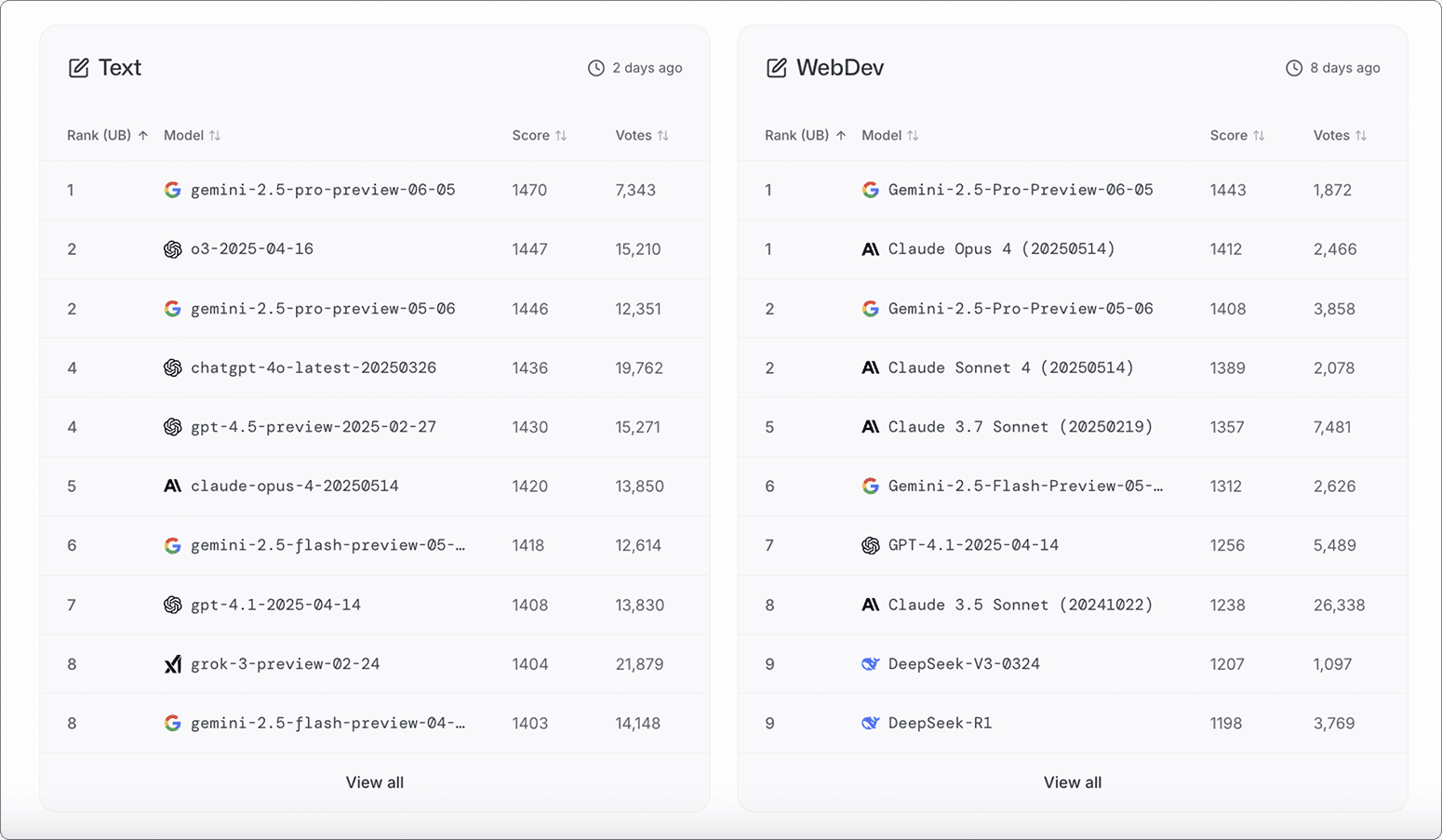
AI Models Leaderboard by Chatbot Arena, as of June 2025.
Sources
- OpenAI Research
- Pricing
- ChatGPT Plus
- Model list
- writingmate.ai
- Pricing and limits per plan
- Supported models
- Up-to-date Leaderboard of best AIs
- another perspective on limits
- mint
- OpenAI Help Center
- The Register
- BleepingComputer
- TechRadar
- OpenAI
- OpenAI Help Center (Enterprise models)
- The Times of India
- “GPT-5 wasn’t for use — it was to get rid of the older models.”
- telegram.org
- here
- openai.com (O1)
- O3 mini
- openai.com (o3 and o4-mini)
- GPT‑4.5 “Orion”
- pricing for API access
- ChatGPT Free Tier FAQ
- GPT-4o and more tools to ChatGPT Free
Written by
Artem Vysotsky
Ex-Staff Engineer at Meta. Building the technical foundation to make AI accessible to everyone.
Reviewed by
Sergey Vysotsky
Ex-Chief Editor / PM at Mosaic. Passionate about making AI accessible and affordable for everyone.
Frequently Asked Questions
Sources
- ChatGPT Free Tier FAQ
- GPT-4o and more tools to ChatGPT Free
- 1chat's page
- Pricing
- OpenAI Help Center
- OpenAI Help Center (Enterprise models)
- mint
- The Register
- BleepingComputer
- TechRadar
- OpenAI
- The Times of India
- writingmate.ai
- pricing for API access
- here
- openai.com (O1)
- O3 mini
- openai.com (o3 and o4-mini)
- GPT‑4.5 “Orion”
- OpenAI Research
- ChatGPT Plus
- Model list
- Pricing and limits per plan
- Supported models
- Up-to-date Leaderboard of best AIs
- another perspective on limits
- “GPT-5 wasn’t for use — it was to get rid of the older models.”
- telegram.org
Written by
Artem Vysotsky
Ex-Staff Engineer at Meta. Building the technical foundation to make AI accessible to everyone.

Reviewed by
Sergey Vysotsky
Ex-Chief Editor / PM at Mosaic. Passionate about making AI accessible and affordable for everyone.