Type "best AI image generator" into Google right now and you'll get ten listicles that all rank the same six tools in a slightly different order, with no real explanation of why. You still won't know which one to actually open for the job sitting in front of you. I watched a friend burn two hours last week trying three different subscriptions before she got a product photo she could actually use for her Etsy listing. That's the real cost of a bad pick — not the subscription fee, the hours you lose guessing.
My name is Artem. I run the Writingmate blog, and because our product ships a text-to-image tool that gives people access to most of the major models in one place, I spend a lot of my week watching which models people actually reach for once the novelty wears off — not which one wins a benchmark chart. This piece isn't another ranked list. It's the decision process I actually use, plus the criteria that matter more than "quality" when you're picking a tool for a real job.
Here's the thing nobody says out loud: "best" is the wrong question. The right question is "best for what." A model that nails photoreal portraits can be genuinely bad at readable text in a poster. A model that's cheap per image can be the wrong call if you need four megapixel commercial output. So instead of one winner, you're going to walk out of this with a way to match the job to the model in a couple of minutes.
What "Best AI Image Generator" Actually Means for You
When people search that phrase, they're usually in one of four situations, and each one has a different right answer:
- "I need one good image today" — you want speed and a low-friction free or cheap option, not the theoretically best model.
- "I need consistent output for a brand or client" — you care about repeatability, commercial licensing, and character or style consistency across many images.
- "I need text baked into the image" — logos, posters, thumbnails, memes. Most models still get this wrong more often than they get it right.
- "I want the most artistically impressive result" — you're not optimizing for accuracy, you're optimizing for how the image feels.
Notice none of these situations point at the same tool. That's why the "top 10 AI image generators" format is kind of useless on its own — it answers a question nobody actually asked.
The Criteria That Actually Matter (Not Just "Quality")
Every roundup talks about "quality" like it's one number. It isn't. When I'm picking a model for a specific job, I'm weighing five separate things, and I'd encourage you to do the same instead of chasing whichever model topped an arena leaderboard this month:
- Prompt adherence — does it actually generate what you typed, or does it take creative liberties?
- Text rendering — can it spell your company name correctly inside the image?
- Consistency — if you need the same character or product across five images, does it hold?
- Resolution and speed — do you need print-ready 4K, or is a fast draft enough?
- Licensing — can you actually sell or ship what you generate, or is it personal-use only?
Here's how the models people ask about most often actually stack up on those five things, based on official specs and the pattern I see in daily use as of July 2026:
Model | Best for | Text rendering | Max resolution | Commercial rights |
|---|---|---|---|---|
Nano Banana Pro (Gemini 3 Pro Image) | All-around consistency, infographics, multi-image blending | Strong | 4096×4096 | Paid tiers, check plan terms |
FLUX.2 Pro/Flex | Photoreal skin, fabric, lighting; fast turnaround | Good | 4MP | Paid API tiers |
Midjourney v7 | Artistic style, mood, illustration | Weak | 2048×2048 default | Paid plans ($10-120/mo) |
Ideogram 3 | Posters, thumbnails, anything with text | Best in class | Varies by plan | Paid tiers |
GPT Image 2 | General-purpose quality, editing | Strong | Up to 4K | Paid API |
Adobe Firefly | Lowest-risk commercial and client work | Moderate | Up to 2K | Trained on licensed content only |
If you only remember one row from that table, make it Firefly's licensing note. It's the only major model built exclusively on licensed and public domain data, which matters a lot more than people realize once a client's legal team asks where an image came from.
Free vs. Paid: When Free Is Genuinely Enough
I'll be straight with you — you don't need a paid tool for most casual use. Google's free-tier Gemini app gives you a daily quota of Nano Banana generations, Bing Image Creator runs DALL-E and Microsoft's own MAI-Image-1 model at zero cost, and Stable Diffusion 3.5 is free if you're willing to run it locally or through a free host. For a birthday card, a meme, or a rough concept sketch, free is fine. Don't pay for anything until you hit one of these walls:
- You need to generate more than a handful of images a day.
- You need commercial usage rights spelled out clearly.
- You need consistent characters, products, or brand style across a batch.
- You need resolution above what the free tier caps you at.
Once you hit any of those, paying for access stops being optional. The question becomes which paid tool, and that's where testing the same prompt across a couple of models actually pays off — most people skip this step and just pick whatever they read about first.
"Midjourney is better for style, visual taste, and artistic output, while Nano Banana is stronger for controllable editing, character consistency, multi-image workflows, and production-oriented tasks." — a widely echoed take across r/StableDiffusion threads comparing the two head-to-head, r/StableDiffusion
That split shows up constantly in my own testing too. If you're making something for a mood board, style wins. If you're making something for a product page that has to look the same next week, consistency wins.
How I'd Pick in Under 5 Minutes
Here's the actual sequence I walk through, and it works whether you've never touched an AI image tool or you've been burned by picking the wrong one before:
- Does the image need readable text in it? If yes, start with Ideogram 3 or Nano Banana Pro. Skip Midjourney for this job — it still spells things wrong more often than it should.
- Is this for a paying client or a product listing? If yes, check licensing before you generate anything. Adobe Firefly or a paid tier with explicit commercial rights, not a free tool with vague terms.
- Do you need the same character, product, or scene across multiple images? Nano Banana Pro handles this better than most — it can hold consistency across up to five people and blend up to 14 reference images.
- Is speed the priority over everything else? FLUX.2 generates roughly ten times faster than some rivals, which matters if you're iterating fast on concepts.
- Is this purely about how it looks, with no functional requirement? Midjourney v7 remains the reference point for pure visual taste.
Notice this framework never asks "which one is ranked #1 this month." Rankings shift every few weeks as labs ship updates. Your job — text, commercial use, consistency, speed, or style — doesn't shift nearly as often. Pick by job, and you'll rarely need to redo the work.
Testing the Same Prompt Across Models Before You Commit
The fastest way to avoid a wrong pick is running one prompt through two or three models before you settle on a subscription. I do this constantly through Writingmate's text-to-image tool, which currently includes the FLUX.2 family, Nano Banana and Nano Banana Pro, GPT Image, and several other models under one account, so switching between them for a comparison takes seconds instead of four separate logins and four separate credit cards.
That single check — same prompt, two or three models, five minutes — has saved me from more bad calls than any leaderboard ever has. A model that scores well on an arena benchmark can still be the wrong pick for your specific product shot or your specific character design. You won't know until you actually compare outputs side by side.
Where a Multi-Model Setup Actually Helps
I'm not going to pretend one subscription magically makes every image perfect — it doesn't. What it does is remove the friction of switching. If you're working across different jobs in the same week (a client mockup on Monday, a social graphic on Wednesday, a concept sketch on Friday), you're going to want a different model for each one, and paying for three separate tools to cover that gets expensive fast. Checking the pricing page against what you'd pay for three separate model subscriptions is usually the moment this becomes an easy call. If you want to see the full lineup of models available before committing to anything, the models directory lists what's currently supported alongside the text and chat models on the same account.
The community reaction to how fast this space moves says a lot about why flexibility matters more than loyalty to one brand:
"🍌 @GeminiApp just passed 5 billion images in less than a month. What a ride, still going! Latest trend: retro selfies of you holding a baby version of you. Can't make this stuff up!" — @joshwoodward on X, Google VP of Gemini and Google Labs
Five billion images in a month, for one model, is a reminder that this market doesn't hold still. The model you pick as "the best" today will likely have a faster or cheaper competitor within a couple of months. That's exactly why picking by job — not by brand loyalty — holds up better over time.
My Actual Recommendation
If you want one tool to learn and you don't want to think about it again for a while, start with Nano Banana Pro — it's the most well-rounded across text, consistency, and resolution, and Google's free tier lets you try it before paying anything. If you're doing client or commercial work, don't skip the licensing check, even if that means picking Adobe Firefly over a flashier model. And if you're not sure which job you're actually optimizing for yet, run the same prompt through two or three models before you commit to a subscription — it takes five minutes and it's the single habit that's saved me the most rework.
See you in the next one!
Artem
Frequently Asked Questions
Sources
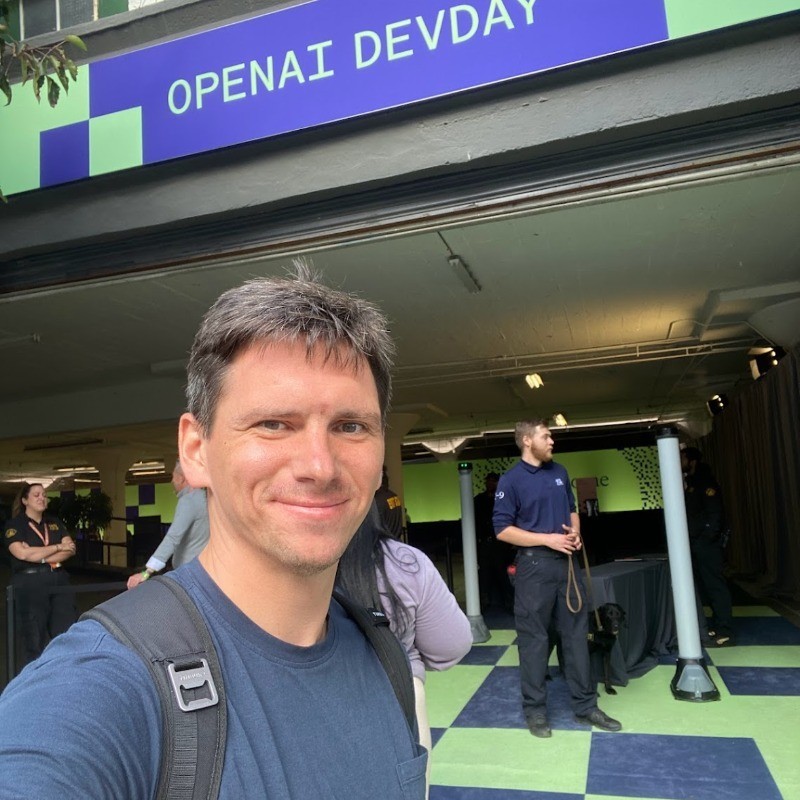
Written by
Artem Vysotsky
Ex-Staff Engineer at Meta. Building the technical foundation to make AI accessible to everyone.
Reviewed by
Sergey Vysotsky
Ex-Chief Editor / PM at Mosaic. Passionate about making AI accessible and affordable for everyone.