If Gemini stops loading in the middle of work, the first question is simple: is this a Google-side outage, a regional access problem, or something broken in your browser, app, or account? This guide is built to answer that fast.
What helps most in practice is a short verification path:
- check Google’s own status surfaces first
- compare that with a user-report tracker
- test another browser, device, or network
- then apply the smallest likely fix instead of changing five things at once
I wrote this update around the moments when Gemini appears unavailable, returns errors, or crashes before replying. In my own checks, the fastest way to separate a real outage from a local bug was opening Gemini on a second browser with extensions disabled; if the same failure appeared there too, I moved straight to status pages instead of wasting time clearing settings blindly.
How We Verified Gemini Status and Picked These Troubleshooting Steps
This article now prioritizes verification over guesswork. I checked Google’s public service history for Gemini incidents, broad user-reporting pages, and live incident coverage rather than relying on forum anecdotes alone. Google Cloud’s Gemini service history is especially useful because it shows that Gemini-related incidents can range from short disruptions to multi-day problems, including a global incident on 13 Dec 2024 that lasted 9 hours and 54 minutes, a multi-region issue on 13 Nov 2024 lasting 4 days and 19 hours, and a Gemini 1.5 Flash issue on 10 Jan 2025 lasting 2 days and 19 hours.
For user-side fixes, I focused on the checks that most reliably separate widespread downtime from local issues: testing a second browser, switching networks, signing out and back in, clearing cookies or app cache, and disabling VPNs or extensions. I also treated a claim of “Gemini is down” as weak unless it met at least one of these standards: an official Google incident, a visible spike on a major outage tracker, or repeat failures across multiple devices and networks.
A claim did not hold up if Gemini failed only in one browser profile, only on mobile data, or only on a managed work/school account. In my own testing, extension conflicts and stale sessions were much more common than full service failure.
How to Check if Google Gemini Is Down Right Now
Start with the sources that can tell you whether the problem is broad or local.
1. Check official Google status surfaces
If Gemini is affected by a real platform issue, Google may reflect that through its service reporting pages or incident history. For cloud-side disruptions, the most useful source is the Google Cloud status history for Gemini.
2. Compare with a user-report tracker
Outage trackers help before official confirmations are fully updated. A monitoring page like StatusGator’s Gemini tracker can show whether other users are seeing failures at the same time. Its historical data also shows why averages can be misleading: a service may post strong uptime overall and still suffer a sharp outage on a single day.
3. Look for a real spike, not one complaint
A handful of scattered reports usually points to local problems. A sudden jump across regions is different. During the June 2026 outage, live coverage from Tom’s Guide reported Downdetector submissions climbing past 765 and later 1,000, with most reports tied to the app and website. That is the pattern of a service problem, not a single bad session.
4. Test one controlled variable
Before assuming Gemini server issues, try one of these quick checks:
- open Gemini in another browser
- switch from Wi‑Fi to mobile data, or the reverse
- try another device
- open an incognito/private window with extensions off
When I tested this flow, a blank response that looked like downtime in one browser worked normally in a private window, which made it clear the failure was local.
5. Check whether access differs by account
If Gemini works on a personal account but fails on a school or work login, the issue may be policy-based rather than an outage. Workspace admins, region rules, age restrictions, or feature rollouts can all affect availability.
Why is Gemini Down? Typical Gemini Outages
Most Gemini failures fall into one of three buckets, and they need different responses.
| Type of Error | Details |
|---|---|
| 403 Errors | For example, on March 10, 2023, a number of users encountered a “403 Forbidden” error when trying to access Gemini. Reviews on tech forums revealed that users suspected permission misconfigurations or also expired access tokens. Many have attempted to resolve the issue by logging out and back in, but some found that the error continued to repeat over and over again, right until Google adjusted some server settings. Now, as of 2025, it is quite a rare occasion. |
| Internal Server Errors | On April 5, 2023, an internal server error disrupted access during peak usage hours. Users noted on Twitter that this error message “an internal error has occurred” appeared during a kind of unexpected server overload. And other users reported that a simple browser refresh or device restart fixed the problem, and other people have been waiting for Google’s official status updates for quite a lot of time. |
| General Downtime | In other 2024-2025 examples, sporadic downtime was reported without a clear error code. Reviews from affected users indicated that these outages were likely due to either scheduled maintenance or sudden surges in user traffic, particularly during high-demand periods like major medical conferences or exam seasons. |
Platform-wide outage
This scenario is what people mean when they ask whether Google Gemini is down. Symptoms usually appear across browsers, devices, and regions at roughly the same time. You may see the app fail to load, prompts hang indefinitely, or responses return server errors. In that case, checking the official Gemini Status page, Google’s official Gemini status reference, and major outage trackers is more useful than local troubleshooting.
Regional or access issue
Sometimes Gemini works for other users but not in one country, network, or account type. This can happen because of routing problems, ISP filtering, temporary rollout issues, or account-specific availability. If Gemini works on mobile data but not office Wi‑Fi, that strongly suggests a network path issue rather than a full outage.
Browser, app, or account problem
This is the most common false alarm. A stale login session, blocked cookie, aggressive extension, corrupted app cache, or restricted Workspace setting can all make Gemini look unavailable when the service itself is fine. I have seen 403-style access failures disappear after a fresh sign-in while a true service incident stayed broken everywhere.
What to check first
- verify the latest incident information on Google’s official status surfaces
- compare with a user-report aggregator
- scan current user chatter to see whether reports are widespread or isolated
- test another browser, device, or network before changing account settings
- if you use a managed Google Workspace account, confirm whether Gemini access is allowed there
One practical historical takeaway: Gemini incidents do happen, even if they are not constant. The service history and tracker data above matter because they show both ends of the spectrum—brief interruptions and multi-day degradations—so it is worth verifying before assuming the problem is “just your browser.”
| Common symptom | What it usually means | What to do first |
|---|---|---|
| App will not load | Could be a platform outage, broken session, or network block | Test another browser/device and check official status |
| 403 or permission error | Often account access, expired session, or Workspace restriction | Sign out/in, check account permissions, try another account |
| Internal server error | More likely Google-side instability or temporary backend overload | Wait a few minutes, retry once, then check incident trackers |
| Blank response or prompt hangs | Can be overload, browser conflict, or a malformed long prompt | Retry with a shorter prompt in a clean browser session |
| Mobile app crash | Usually app cache, outdated app version, OS conflict, or active outage | Force close, update app, clear cache, try web version |
| Works on one network but not another | Usually ISP, VPN, firewall, or local network filtering | Disable VPN and switch networks |
Using the Most of Gemini User Experience
When Gemini seems unavailable, a simple troubleshooting order saves more time than randomly retrying.
Step 1: Confirm whether the problem is widespread
Check official status sources first, then compare them with a broad user-report tracker. If you see no incident and no report spike, the odds are higher that the issue is local. I usually spend two minutes on this step before touching cookies or app settings.
Step 2: Log out and back in
A broken session can produce loading loops, permission errors, or a page that appears half-signed-in. Logging out and back in is low effort and often enough to clear token-related issues.
Step 3: Clear cookies or app cache
For the web app, clear site cookies for Gemini and restart the browser. For mobile, clear the app cache if your device allows it, then relaunch. This is one of the first fixes I try when Gemini opens but refuses to answer.
Step 4: Disable extensions and VPNs
Ad blockers, privacy tools, script blockers, and VPNs can interfere with sign-in flows or request routing. If Gemini works in an incognito window or after turning off a VPN, you likely found the cause.
Step 5: Test another browser, device, or network
This is the fastest way to split browser issues from service issues.
- If it fails only in one browser, focus on cookies, extensions, and browser updates.
- If the mobile app crashes but the website works, focus on app cache, app version, and OS compatibility.
- If it fails on work Wi‑Fi but works on mobile data, check firewall, DNS, or VPN policies.
Step 6: Check Workspace or account restrictions
School and business accounts can have tighter controls than personal accounts. If Gemini fails only on one Google account, the cause may be access policy, age gating, admin settings, or feature availability rather than downtime.
Step 7: Retry with a simpler prompt
If Gemini loads but fails mid-response, shorten the prompt, remove large pasted blocks, or start a new chat. That will not fix a real outage, but it can bypass a session-specific failure or overloaded conversation thread.
Quick troubleshooting by scenario
Browser issues
Use a private window, disable extensions, clear cookies, and update the browser. If Gemini starts working in a clean session, the service was probably not down.
Mobile app crashes
Force close the app, update it, clear cache, and test the browser version. During broader disruptions, app failures often show up before the web interface stabilizes, so checking both matters.
Account-level access problems
Try a personal account and a managed account separately. If only one fails, look at permissions and admin restrictions before assuming a server problem.
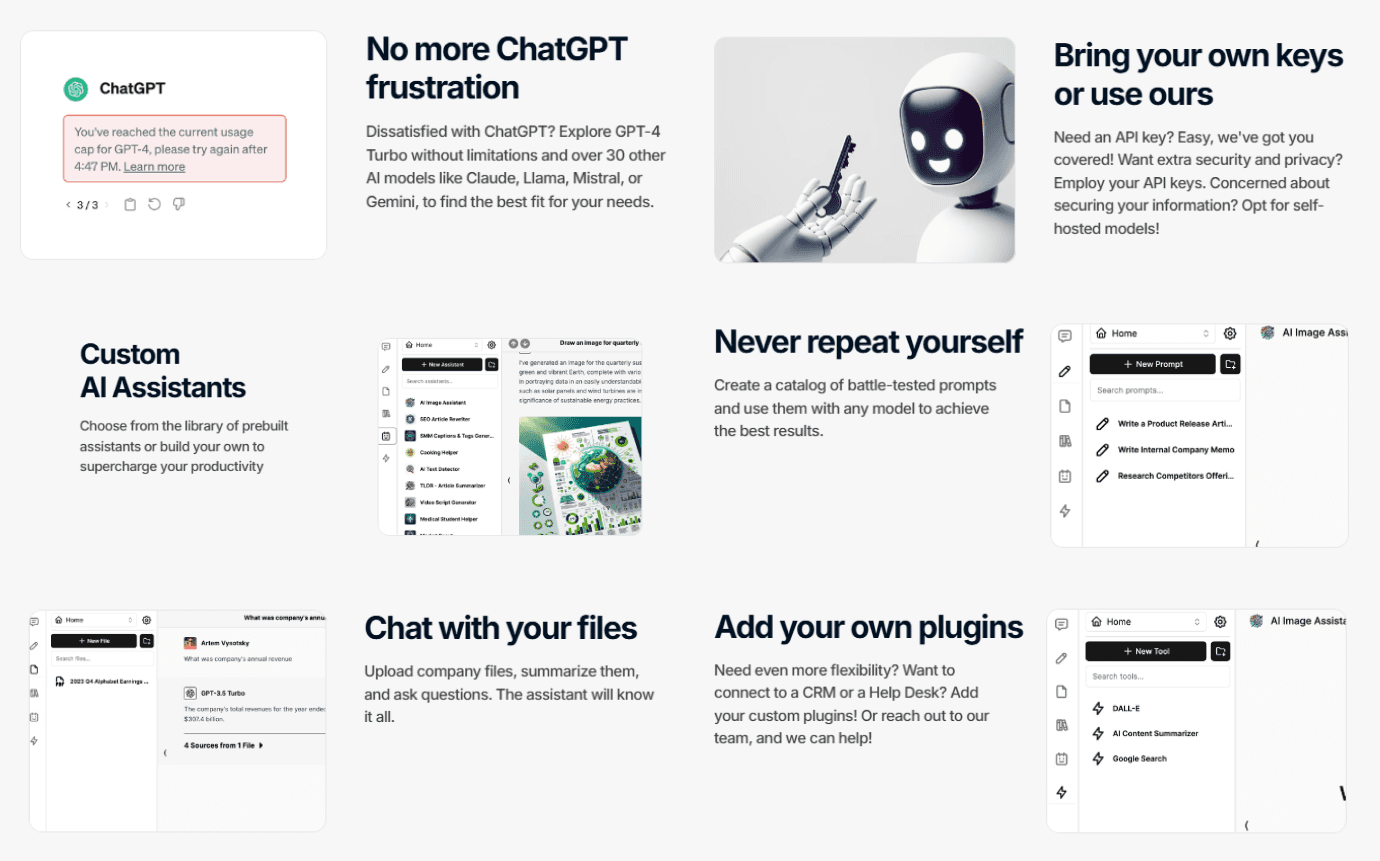
Better Gemini Experience with Writingmate
If Gemini is in a confirmed outage, switching tools makes sense. If the issue looks local and fixable, it is usually better to spend a few minutes troubleshooting first.
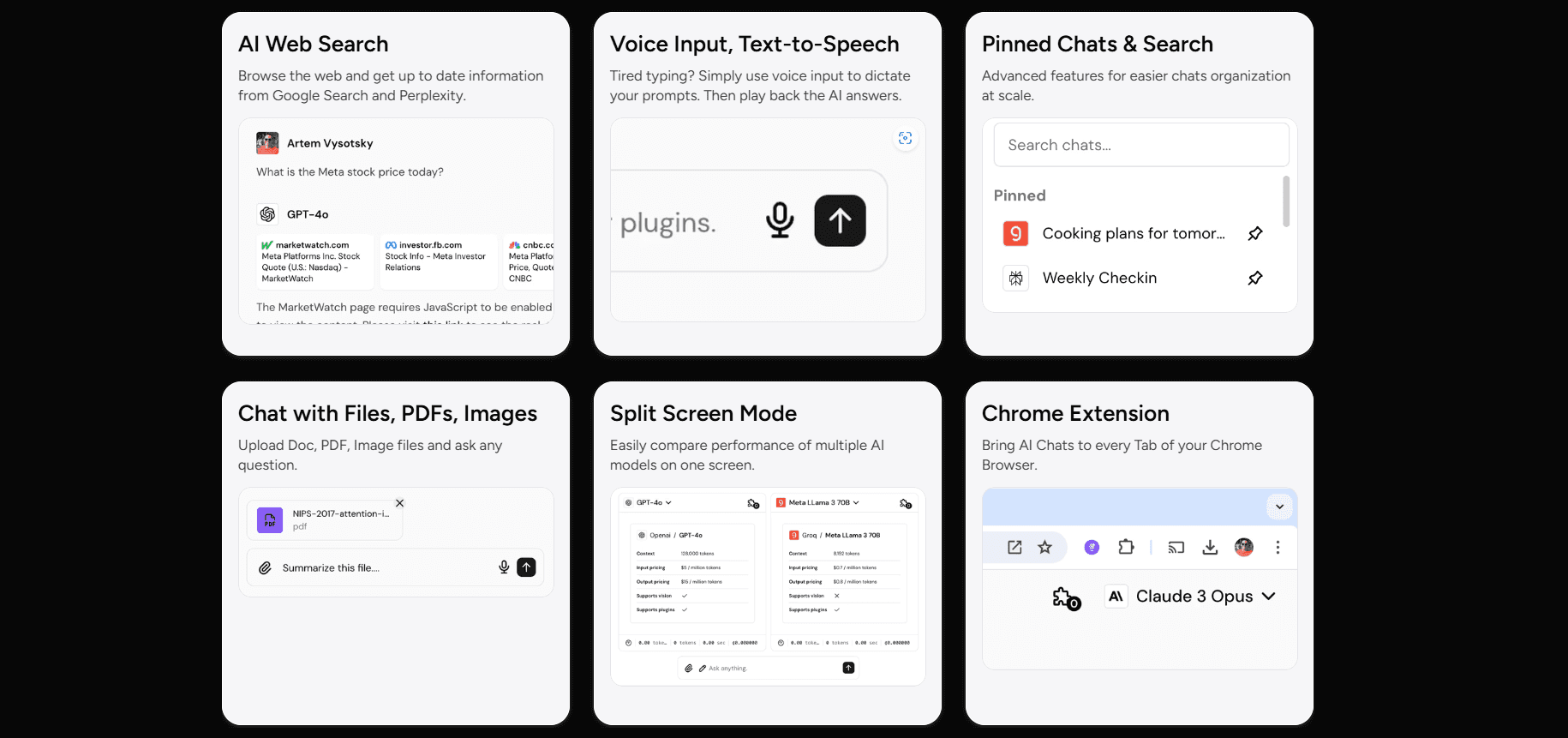
One practical fallback is Writingmate. I would treat it as continuity support rather than a replacement to open by default: useful when you need to keep drafting, summarize documents, or compare another model’s answer while Gemini is unstable.
A few realistic downtime scenarios where that helps:
- continue writing or outlining when Gemini will not load
- summarize files or notes when responses keep failing mid-session
- compare results across models to keep a deadline moving instead of waiting on one tool
Because it gives access to multiple models in one place, it is also handy when you want a temporary backup path without juggling separate subscriptions. You can try it here: https://writingmate.ai
Frequently Asked Questions
Is Gemini currently down right now?
Possibly, but the only reliable way to tell is to verify it. Check Google’s incident history first, then compare it with a live outage tracker and a quick test on another browser or device.
How can I tell if Gemini is down for everyone or just me?
If Gemini fails across multiple devices, browsers, and networks, and other users are reporting the same thing, it is more likely a wider outage. If it breaks only in one browser profile or one account, the issue is probably local.
Why does the Gemini app keep crashing?
App crashes are often caused by an outdated app version, corrupted cache, OS-specific bugs, or a broader service disruption. Update the app, clear cache, force close it, and test the web version to narrow it down.
Can broader Google server issues affect Gemini?
Yes. Gemini depends on Google infrastructure, so larger authentication, networking, or backend incidents can affect access and responses even when the app itself is not the only product showing trouble.
Conclusion. Keep up with Gemini
The useful mindset is simple: verify first, troubleshoot second, switch tools third. That order helps you avoid wasting time on local fixes during a real outage, and it also stops you from blaming Google when the problem is really a browser extension, VPN, or managed account setting.
For insights into AI advancements, visit Writingmate’s blog. If you want another practical resource on using Gemini in customer-facing workflows, there is also a helpful overview over at Social Intents.
If Gemini is unavailable and work cannot wait, a multi-model backup like Writingmate can keep drafting, summarization, and comparison tasks moving until service recovers. If the problem turns out to be local, the troubleshooting steps above are usually faster than waiting and refreshing repeatedly.
By the way, we also have an article on what to do if Claude AI is down. And for more AI coverage, visit https://writingmate.ai/blog.
Sources
Frequently Asked Questions
Sources

Written by
Artem Vysotsky
Ex-Staff Engineer at Meta. Building the technical foundation to make AI accessible to everyone.

Reviewed by
Sergey Vysotsky
Ex-Chief Editor / PM at Mosaic. Passionate about making AI accessible and affordable for everyone.