
I'll be honest — when DeepSeek V3 0324 first showed up in benchmark tables in early 2025, my reaction was somewhere between skeptical and genuinely surprised. A 671-billion-parameter open-weight model that trades blows with GPT-4o at a tenth of the API cost? That sounds like marketing copy until you actually run it on real tasks.
My name is Artem, and I run the Writingmate blog. I've been working with AI models daily for years — testing them for coding, writing, research, and the kind of messy real-world tasks that benchmark tables don't capture. DeepSeek V3, and specifically the 0324 update, ended up earning a permanent spot in my toolkit, which I wasn't expecting. Let me tell you what I actually found after months of using it.
This article covers what DeepSeek V3 0324 actually is, how it compares to ChatGPT across real tasks, what the DeepSeek V3 technical report reveals about why it performs the way it does, and how to run your own side-by-side comparisons using Writingmate's model comparison tool without juggling five browser tabs.
What Is DeepSeek V3 0324?
DeepSeek is a Chinese AI research lab that has been quietly releasing models that compete directly with frontier Western models — often at dramatically lower inference costs. DeepSeek V3 was their flagship chat model, first released in December 2024. The 0324 suffix is simply a date stamp: March 24, 2025, when they pushed a significant update that substantially improved coding performance across the board.
Under the hood, it's a 671-billion-parameter Mixture-of-Experts (MoE) model. The MoE architecture means only around 37 billion parameters are actually active during any given inference — which is why it's so computationally efficient despite its enormous total size. The context window sits at 128,000 tokens (matching GPT-4o), and it supports function calling, JSON output, and structured tool use patterns that work well with standard agent frameworks.
One thing that sets it apart from ChatGPT in a fundamental way: DeepSeek V3 0324 is open-weight with an MIT license. You can download the weights and self-host it if you have the hardware. ChatGPT has no self-hosting option — you use it through OpenAI's API or their web interface, full stop.
If you've seen search queries like deepseek v3 1 or comparisons like deepseek v3 1 vs deepseek r1 0528 qwen3 roleplay wise floating around, those typically refer to either subsequent update iterations building on the 0324 base, or people comparing the general V3 series against DeepSeek's separate reasoning model (R1). Sound like a confusing landscape? It is — I'll clear up the V3 vs R1 distinction later in this article.

DeepSeek V3 0324 vs ChatGPT: The Honest Head-to-Head
I've run both models through dozens of real tasks over several months. Here's what the actual results look like, without the hype from either camp:
Capability | DeepSeek V3 0324 | ChatGPT (GPT-4o) |
|---|---|---|
Code generation | Excellent — 49.2% on SWE-bench Verified | Very good, better at explaining code in prose |
Math & multi-step reasoning | Strong across most problem types | Comparable, slightly stronger on edge cases |
Creative writing | Capable but less stylistically flexible | Better tone control and voice matching |
Instruction following | Very reliable on structured tasks | Reliable with better built-in formatting options |
Context window | 128K tokens | 128K tokens |
API pricing (input / output) | ~$0.27 / $1.10 per 1M tokens | ~$2.50 / $10.00 per 1M tokens |
Open-weight / self-hostable | Yes (MIT license) | No |
Real-time web search | No (base model) | Yes (ChatGPT Plus) |
Vision / image input | No | Yes (GPT-4o) |
The pricing gap is what surprises most people first. At roughly 10x cheaper per token via API, DeepSeek V3 0324 isn't just good for the price — it's genuinely competitive on raw performance while being dramatically cheaper to run at any real scale. For developers building products, that difference isn't a footnote, it's a core product decision.
"Been running DeepSeek V3 0324 for backend code generation the past few weeks. Legitimately fewer hallucinated function signatures than GPT-4o on the same prompts. The price difference just makes it obvious which one to default to for high-volume tasks." — u/embeddings_guy on r/LocalLLaMA
What the DeepSeek V3 Technical Report Actually Tells You
Most people skip the technical report entirely. That's a mistake, because it explains a lot about why the model performs the way it does — and where it'll predictably fall short.
The DeepSeek V3 technical report (published on arXiv in December 2024) describes a training approach that uses multi-token prediction — the model is trained to predict multiple future tokens simultaneously rather than just the next one. In practice, this produces more structurally coherent long-form outputs. If you've noticed that DeepSeek V3 tends to write cleaner functions and maintain consistent variable naming across an entire code file, the training methodology is a big part of why.
The paper also covers how the MoE routing is structured. Rather than using naive top-k expert selection, DeepSeek V3's routing includes a load-balancing mechanism to prevent expert collapse — a problem where some model components get heavily overused while others atrophy during training. The result is more consistent capability across a wide range of input types, rather than being exceptional on a narrow slice of prompts and mediocre everywhere else.
One thing the report is upfront about: the training data skews heavily technical. This explains the performance profile clearly. DeepSeek V3 0324 is exceptional at code and mathematics, strong at structured reasoning, and somewhat weaker at creative tasks that require deep stylistic range or cultural nuance in casual English — the kind of thing OpenAI has spent years tuning for.
"DeepSeek-V3-0324 scores 49.2% on SWE-bench Verified — no scaffolding, pure model performance. Open weights, MIT licensed." — @deepseek_ai on X
For context: SWE-bench Verified measures whether a model can actually resolve real GitHub issues from open-source projects — not write toy code samples or pass contrived puzzles. A 49.2% score without agentic scaffolding is legitimately impressive and explains the benchmark buzz that followed the 0324 release.
When to Use DeepSeek V3 vs ChatGPT: A Practical Decision Guide
Here's how I actually think about which model to reach for on any given task, after months of using both:
Use DeepSeek V3 0324 when:
- You're writing, debugging, or reviewing code — especially Python, TypeScript, SQL, or Rust
- You need structured data transformations: JSON manipulation, regex generation, schema validation
- You're building a product and API cost matters at even moderate request volume
- You want to run the model locally or in a self-hosted infrastructure environment
- You need accurate, detailed summaries of long technical documents or large code files
- You're doing batch processing where closed-model rate limits create friction
Use ChatGPT (GPT-4o) when:
- You need creative writing, marketing copy, or precise voice and tone matching
- Your workflow involves images, screenshots, or diagrams as inputs
- You need real-time web search integrated into the conversation
- You're building something customer-facing where a warm, conversational feel matters
- You need tight integration with OpenAI's broader product ecosystem (DALL-E, voice mode, etc.)
The honest version: most serious AI users end up running both depending on the task type. The question isn't which one replaces the other — it's how to make the context-switch fast enough that it doesn't slow your workflow down. Which is exactly what the Writingmate comparison tool is built to solve.
DeepSeek V3 vs DeepSeek R1: Don't Confuse These Two
A lot of deepseek v3 searches come from people who are actually trying to decide between V3 and R1 — two related but fundamentally different models. Worth clearing up before you pick the wrong one.
DeepSeek R1 is a reasoning model. Like OpenAI's o1 or o3 series, it's designed to work through complex problems step by step, making its internal reasoning visible before arriving at a final answer. It's slower and more deliberate, and considerably better on hard logic problems, mathematical proofs, and deeply analytical tasks that benefit from extended thinking. The R1 0528 update — the one that shows up in searches like deepseek v3 1 vs deepseek r1 0528 qwen3 roleplay wise — specifically tuned the model for better performance on creative reasoning and character roleplay scenarios.
DeepSeek V3 0324 is the faster general-purpose model. It doesn't use extended chain-of-thought reasoning — it's built for broad capability at low latency, handling a wide range of inputs quickly and reliably.
The mental model I use: V3 0324 is the everyday driver. R1 is what you reach for when the problem is hard enough that you genuinely want the model to slow down and think before answering. For most people, most of the time, V3 0324 is the right call.
How to Compare DeepSeek V3 Against Any Model on Writingmate
Here's a workflow change that's saved me hours of frustration: instead of running the same prompt against different models in separate browser tabs and trying to remember which response was actually better, Writingmate has a direct comparison tool built for exactly this problem.
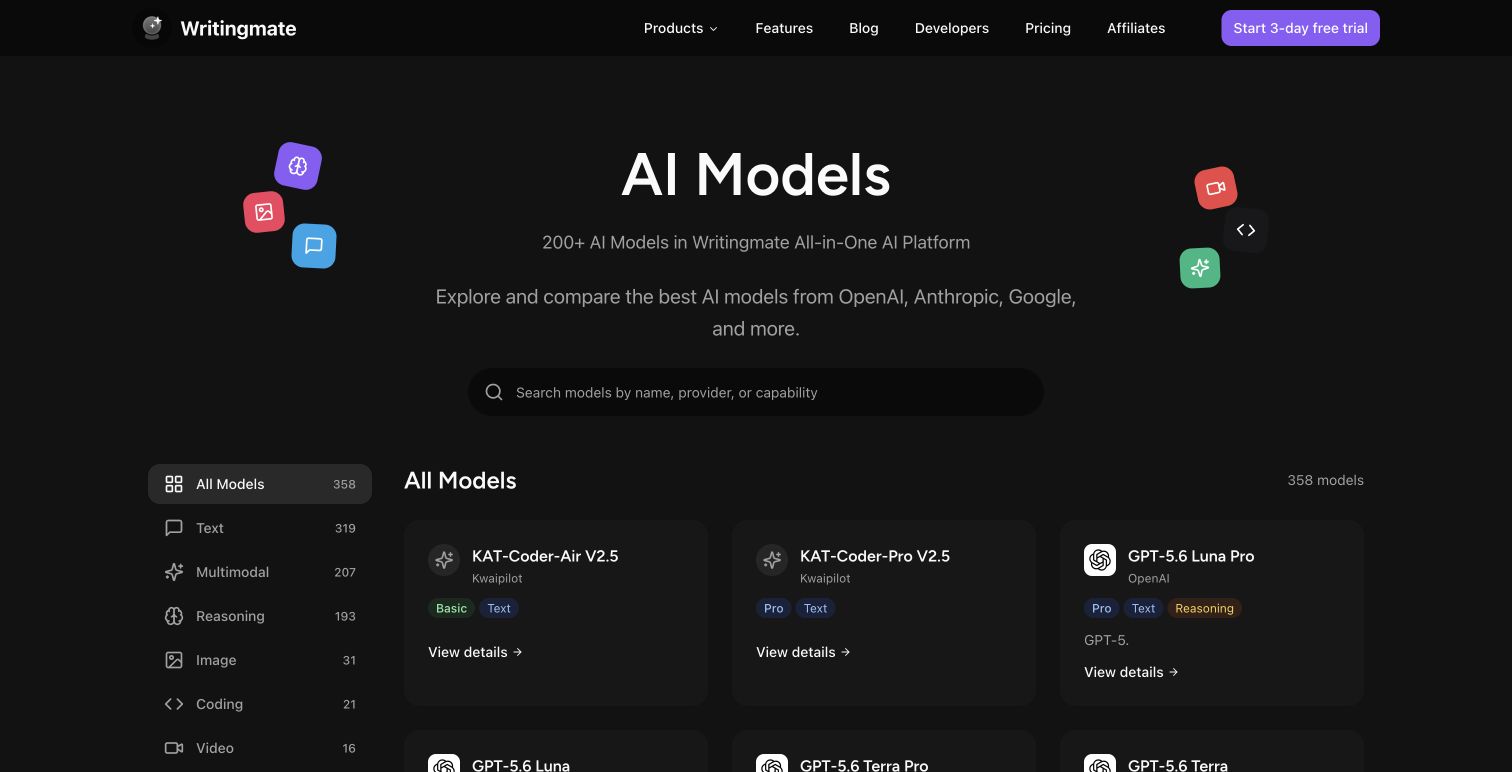
The DeepSeek V3 0324 comparison page on Writingmate lets you run it against any other model in the directory — GPT-4o, Claude Sonnet 4.6, Gemini 3 Flash, Grok 4 Fast, DeepSeek R1, or any of 200+ other options. Enter your prompt once, and both models respond in parallel. Same input, side-by-side output, with response timing so you can judge both quality and speed differences in a single view.
You can compare DeepSeek V3 0324 against:
- ChatGPT (GPT-4o, o3, o4-mini)
- Claude Sonnet 4.6 and Opus 4.7
- Gemini 3 Flash and Gemini 3 Pro
- Grok 4 Fast and Grok 4 Heavy
- DeepSeek R1 and R1 0528
- 200+ additional models, all in one interface with one subscription

If you've been manually testing models one at a time and losing track of which one actually gave you the better output, this comparison view is the fix. It's the fastest way to develop a real intuition for which model works best for your specific prompts — not someone else's benchmarks.
The Bottom Line on DeepSeek V3 0324
If you're a developer, there's genuinely no reason not to have DeepSeek V3 0324 in your toolkit. The coding performance is legitimately strong, the API pricing makes it practical for production use at scale, and the MIT license gives you deployment options that simply don't exist with closed models like ChatGPT.
If you're primarily a ChatGPT user focused on creative work, customer-facing applications, or workflows that involve images and real-time search, you probably don't need to switch your primary model. But you'd be leaving real capability on the table by not having DeepSeek V3 available for the technical tasks where it has a clear advantage.
The right move isn't picking one over the other — it's having both available and routing tasks to whichever model handles them best. Writingmate makes that practical by putting all of them in one interface with one subscription. Try the comparison with your own prompts and see where it lands for your actual use case — 30 seconds of testing beats reading a dozen benchmark tables.
See you in the next one!
Artem
Frequently Asked Questions About DeepSeek V3 0324
Sources
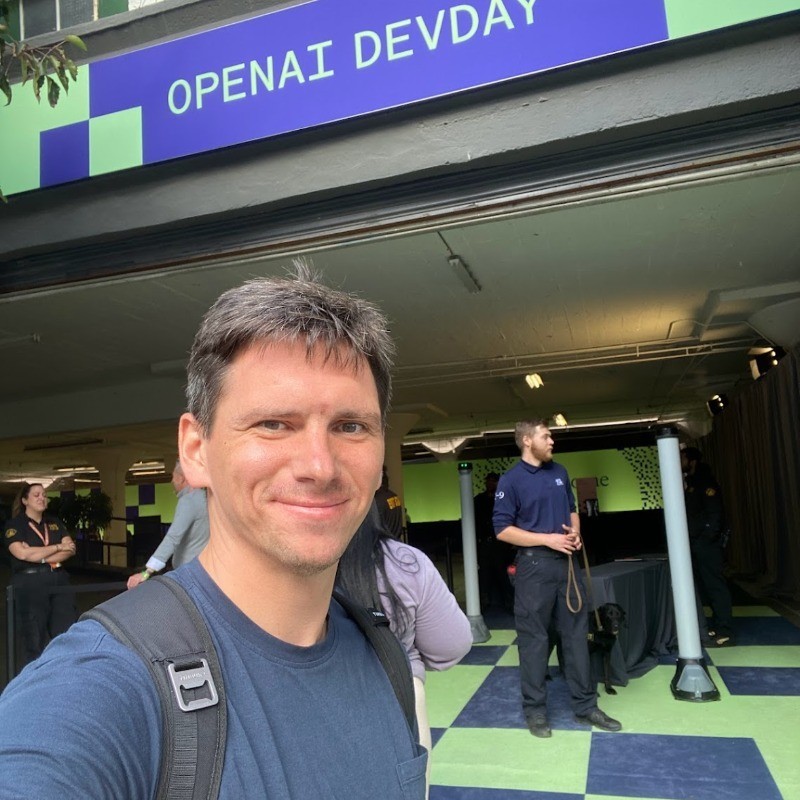
Written by
Artem Vysotsky
Ex-Staff Engineer at Meta. Building the technical foundation to make AI accessible to everyone.

Reviewed by
Sergey Vysotsky
Ex-Chief Editor / PM at Mosaic. Passionate about making AI accessible and affordable for everyone.