You've seen "Grok" everywhere lately — on X, in tech headlines, probably from someone who switched away from ChatGPT and won't stop talking about it. If you're still asking yourself "what is Grok, actually?" you're not alone. The name is confusing, the product has changed fast, and most explainers either skip the practical details or go way too deep into benchmarks nobody cares about.
My name is Artem, and I run the Writingmate blog. I've been testing AI models since the GPT-3 days, with hundreds of hours across every major product that's shipped in the last three years. Grok is one of the genuinely interesting stories right now — not because it's obviously better than ChatGPT across the board (it isn't), but because it occupies a real niche that the other tools don't fill as well. Most comparisons miss that framing entirely.
Here's what this article covers: what Grok actually is and why xAI built it, the real difference between Grok 4 Fast and Grok 4 Heavy, what the Grok app for iOS gives you in practice, how much it all costs in 2026, and an honest head-to-head against ChatGPT. I'll also show you how Writingmate's side-by-side comparison tool lets you test Grok on your own prompts without juggling multiple subscriptions.
What Is Grok, and Why Did xAI Build It?
Grok is an AI assistant built by xAI, the artificial intelligence company Elon Musk founded in 2023. The name comes from a Robert Heinlein sci-fi term meaning to understand something so deeply it becomes part of you. Whether the model lives up to that framing is debatable — but the product itself has evolved quickly, and the use case is clearer now than it was at launch.
xAI's core differentiator from day one was real-time integration with X (formerly Twitter). Grok can search live posts, pull trending topics, and give you context on what's actually happening right now — not what was indexed six months ago when a model's training data closed. That's a genuine edge over ChatGPT for anything time-sensitive: breaking news, live sports, market movements, cultural moments. GPT-4o can search the web, but it doesn't have native access to the X firehose the way Grok does.
Beyond the data advantage, Grok has a more direct, opinionated personality compared to ChatGPT's careful, hedge-everything tone. Some people find this more useful and natural to work with. Others find it less reliable for professional output. Both reactions make sense depending on your use case.
As of April 2026, Grok is available through:
- The Grok app — standalone iOS, Android, and web app at grok.com
- X.com — embedded in the platform for Premium subscribers
- The xAI API — developer access, billed per token
The two main variants you'll encounter are Grok 4 Fast (speed-optimized for everyday tasks) and Grok 4 Heavy (slower, built for complex reasoning and large-context work). Understanding that distinction is the most important thing to get right before you pay for anything.

Grok 4 Fast vs Grok 4 Heavy: Which One Do You Actually Need?
This is the question I see most in r/LocalLLaMA and r/ChatGPT right now, and it deserves a straight answer instead of the usual "it depends" non-response.
Feature | Grok 4 Fast | Grok 4 Heavy |
|---|---|---|
Response speed | Very fast — 1–2s first token | Slower — 3–8s for complex tasks |
Everyday chat quality | Excellent | Excellent |
Multi-step reasoning | Good | Excellent |
Complex coding tasks | Good | Noticeably stronger |
Long document analysis | Decent | Stronger context handling |
Real-time X integration | Yes | Yes |
API cost per token | Lower | Higher |
Best for | Chat, drafts, quick research | Analysis, hard coding, big docs |
The practical rule: for 80% of daily tasks — drafting, brainstorming, summarizing, casual research, quick Q&A — Grok 4 Fast is the right pick. You won't feel the quality gap on short-form work, and the speed difference is meaningful when you're using AI throughout the day.
Grok 4 Heavy starts to pull ahead on tasks that require holding a lot of context across many reasoning steps: debugging a hairy codebase, analyzing a long contract, building a complex argument from multiple sources. Heavy handles edge cases more carefully and is noticeably more precise with factual claims in those contexts. It's also slower and costs more per query, so you don't want to default to it for everything.
"Grok 4 Heavy is genuinely impressive for long-context reasoning. Fast is totally fine for quick stuff but Heavy is a different tier when you need actual analysis." — u/inference_lab on r/LocalLLaMA
Grok 4 Fast vs ChatGPT: An Honest Head-to-Head
Here's the comparison that actually matters for most people deciding whether to try Grok. I've tested both extensively, and I'll skip the benchmarks and give you the practical picture.
Capability | Grok 4 Fast | ChatGPT (GPT-4o) |
|---|---|---|
Response speed | Excellent | Good |
Real-time web search | Yes (X-native + web) | Yes (Bing-powered) |
Live X/Twitter data | Yes — native feed access | No native feed access |
Writing polish | Good | Excellent |
Code generation | Good | Excellent |
Image generation | Aurora (built-in) | DALL-E 3 (built-in) |
Third-party integrations | Limited | Extensive GPT ecosystem |
Tone and personality | Direct, casual, opinionated | Neutral, thorough, careful |
Voice mode | Yes | Yes (Advanced Voice) |
Grok's most meaningful edge is its X integration, full stop. If you're tracking breaking news, live markets, sports scores, or what the tech community is actually talking about today — Grok knows. It can pull specific posts, surface trending discussions, and give you context that GPT-4o simply doesn't have natively, even with web search enabled.
ChatGPT's edge is consistency, polish, and ecosystem depth. GPT-4o still produces more reliably polished long-form writing. Its custom GPTs and plugin integrations are far more mature. And for serious software development work, GPT-4o with code interpreter remains the more dependable tool. If you're writing client-facing copy, building something complex in code, or relying on third-party integrations, ChatGPT is still the safer bet.
My honest take after testing both daily: Grok is a real alternative, not a novelty. But "Grok vs ChatGPT" is the wrong frame. These models are good at different things. The smartest AI users in 2026 aren't loyal to one — they reach for whichever tool fits the task.
"I switched from ChatGPT to Grok for morning market research and it's so much better for that. For writing client emails I still use GPT. Different tools, different jobs." — @productivityai_ on X
How Much Does Grok Cost in 2026?
"How much does Grok cost" is one of the most searched questions about the product, and the answer is a little tangled because xAI distributes Grok across multiple pricing tiers.
Here's the breakdown as of April 2026:
- Free tier — Limited daily messages through the Grok app and X.com. Good enough to test the product, not enough for regular use.
- X Premium ($8/month) — Higher Grok message limits through X. Best for casual X users who want Grok as a secondary tool rather than a primary AI assistant.
- X Premium+ ($22/month) — More generous Grok access including some Grok 4 Heavy queries per day, plus the full X Premium feature set.
- SuperGrok ($30/month) — Dedicated Grok subscription independent of X. High limits, API access, both Fast and Heavy without X dependency.
- xAI API — Pay-per-token developer access. Grok 4 Fast is meaningfully cheaper per token than Heavy.
For most regular users who want unrestricted Grok access, you're looking at $22–$30/month. That's in the same ballpark as ChatGPT Plus ($20/month), though ChatGPT Plus offers more flexibility at that price point for the average user today.
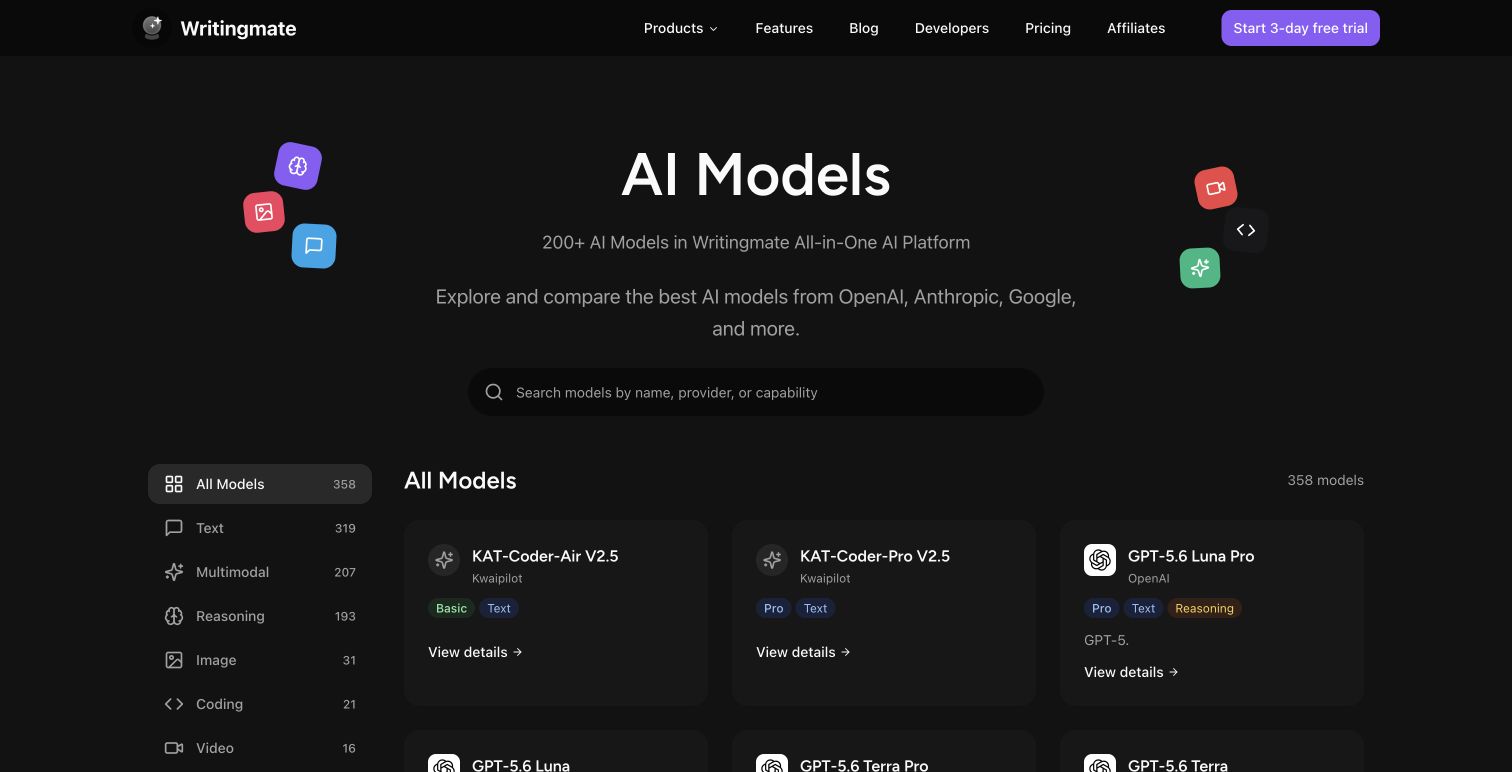
One option worth knowing: Writingmate includes Grok 4 Fast alongside 200+ other models through a single subscription. If you're already paying for an AI platform and want Grok access without a separate SuperGrok plan, it's the most cost-effective path. You can use the Writingmate model comparison to run Grok 4 Fast side-by-side against GPT-4o, Claude, or Gemini on your own prompts before committing to anything.
The Grok App for iOS: What You're Actually Getting
xAI launched a standalone Grok app for iOS (and Android) in early 2024, completely separate from X. If you've only used Grok through X.com, the standalone app is a noticeably cleaner experience — basically a ChatGPT-style interface with the Grok engine behind it and no social media distractions around the edges.
The iOS app includes:
- Access to Grok 4 Fast (and Heavy on higher tiers)
- Real-time X search — still the headline feature
- Aurora image generation — xAI's in-house image model
- Voice mode for hands-free use
- Conversation history and memory on newer builds
- File and image uploads
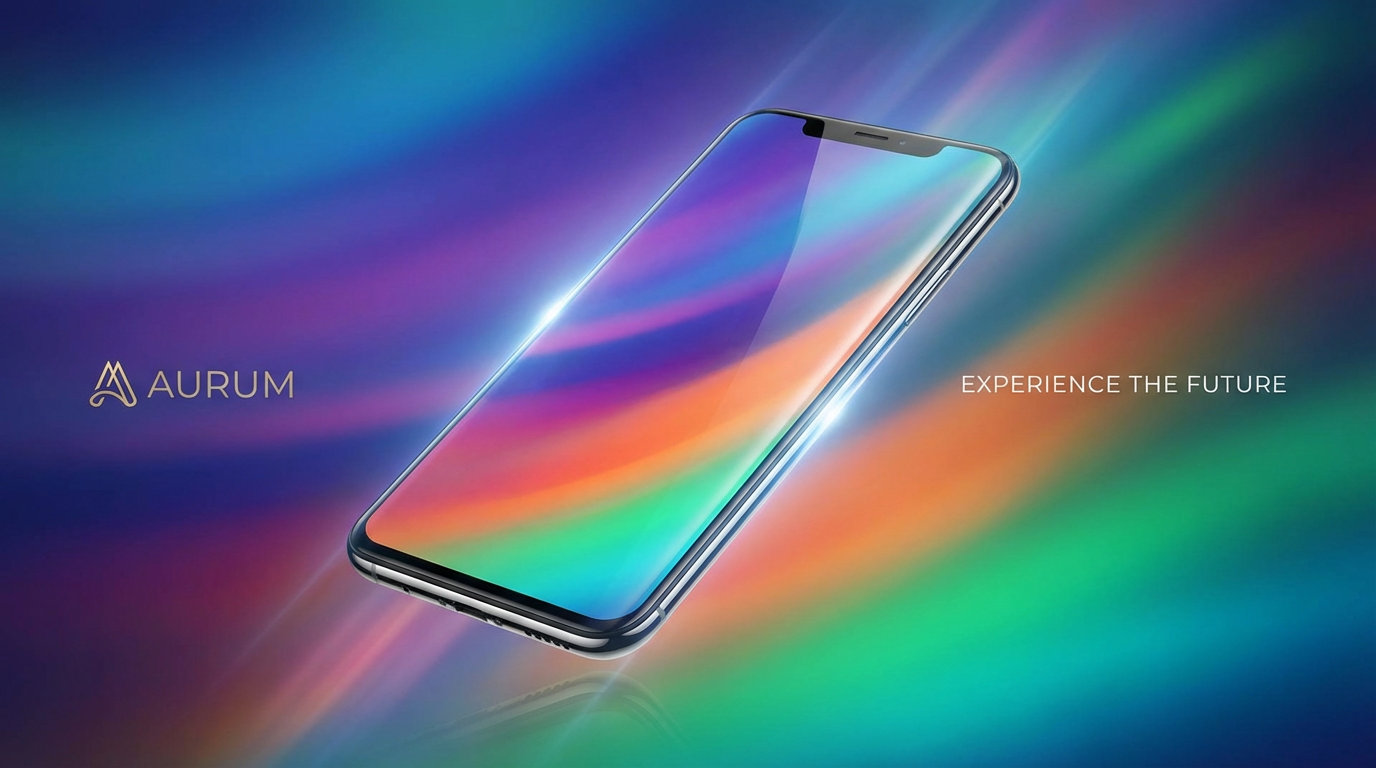
The app is solid but trails ChatGPT's iOS app in polish — ChatGPT has had years of UX iteration, and it shows in small ways like response formatting, memory management, and the smoothness of Advanced Voice. Grok is catching up quickly, though, and the core chat experience is genuinely good. The real-time X search that surfaces live posts inline in a response still feels like something none of the other apps have matched.
If you're on the fence about the Grok app, the free tier is a reasonable starting point. You'll hit daily limits, but you'll get a real feel for whether Grok's speed and tone fit your workflow before spending anything.
How Writingmate Lets You Test Grok Without the Subscription Juggle
Here's the practical problem with every AI model comparison: to really know which one works better for your tasks, you need to test both on your actual prompts. That usually means managing two or three subscriptions and manually copying text between apps — which nobody actually does.
Writingmate's model comparison tool lets you run the same prompt through Grok 4 Fast and any other model simultaneously. You can benchmark it against GPT-4o, Claude 3.7 Sonnet, Gemini 2.5 Pro, or any of the 200+ models in the platform — all side by side, in one interface, with one subscription.
Beyond the compare feature, Writingmate gives you access to all the major models through a single plan. Instead of paying separately for Grok, ChatGPT Plus, and Claude Pro, you can route each task to whichever model handles it best. Fast research and news context? Grok. Polished client copy? GPT-4o. Nuanced analysis? Claude. No app switching, no duplicate subscriptions.
So here's the bottom line: Grok is real, it's good, and it has a genuine edge for real-time X context and speed. It's not a universal ChatGPT replacement — but for the right use cases, it's the better tool. The move in 2026 isn't picking one model and staying loyal. It's having access to all of them and knowing when to use which.
Try the Grok comparison on Writingmate and see how it performs on your actual prompts.
See you in the next one!
Artem
Frequently Asked Questions About Grok
Sources
Written by
Artem Vysotsky
Ex-Staff Engineer at Meta. Building the technical foundation to make AI accessible to everyone.

Reviewed by
Sergey Vysotsky
Ex-Chief Editor / PM at Mosaic. Passionate about making AI accessible and affordable for everyone.