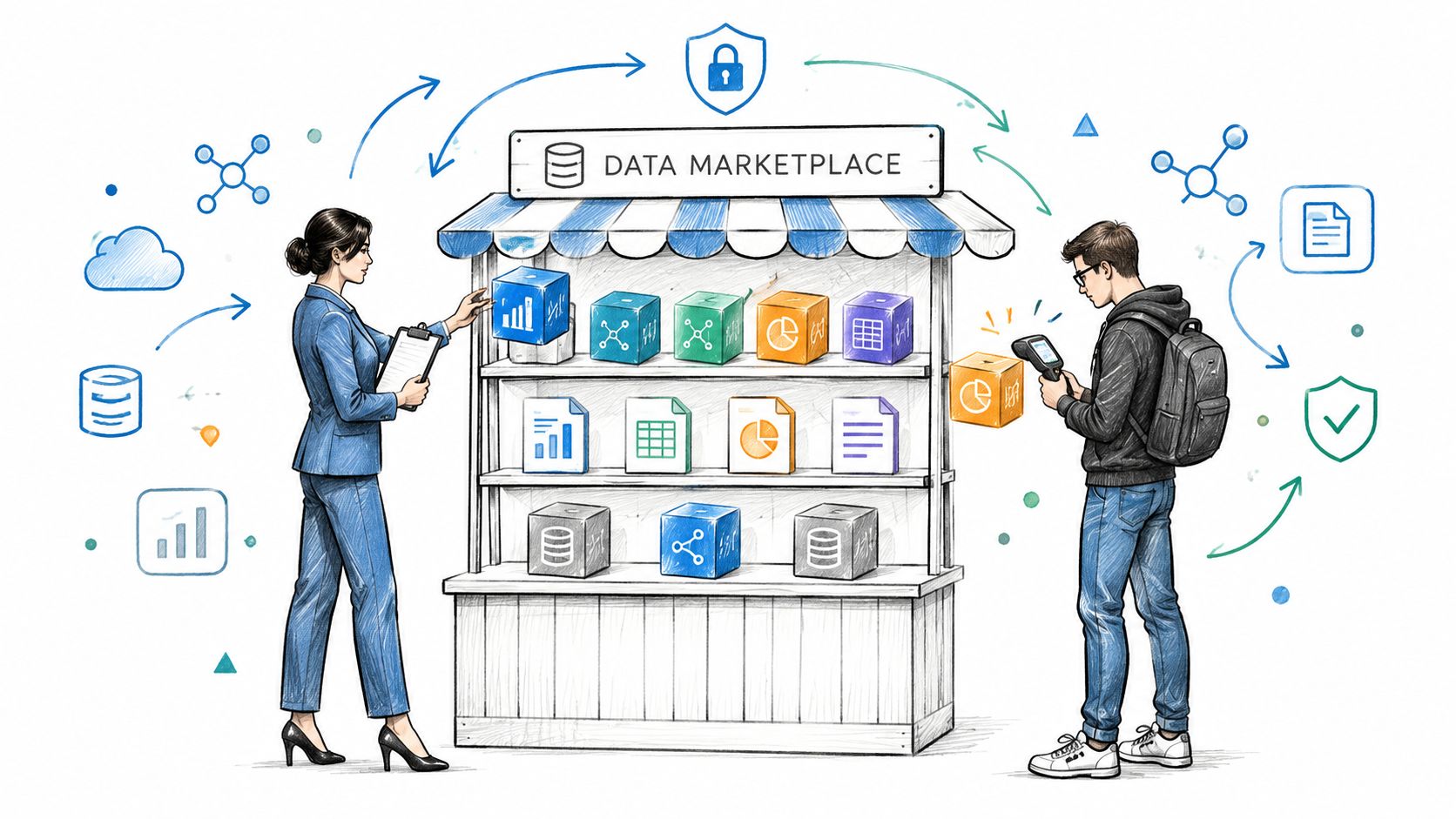
Monday morning, your performance team needs ten new UGC-style hooks for a Meta campaign by Wednesday, and the studio is booked through next month. That's the daily reality for performance marketers in 2026. The seven AI video generators for ads below are the ones I'd open to solve it.
Rather than dump a generic feature list, I'll map each tool to a practical workflow, including when it fits, where it breaks, and how to pair it with the rest of your stack. By the end, you'll know which option matches your ad format, budget, and creative velocity. You can also use generate hashtags with AI to support the distribution work around each new creative.
Table of Contents
- 1. Writingmate for Multi-Model Ad Production
- 2. Synthesia for Brand Avatars and Localized Presenter Ads
- 3. HeyGen for Multilingual UGC-Style Ads
- 4. Runway for Cinematic Concepts and Premium Product Visuals
- 5. Creatify for UGC Hook Testing
- 6. Pencil for Performance Iteration
- 7. Waymark for TV and CTV Spots
- Top 7 AI Video Generators for Ads, Comparison
- Pick by Goal, Not by Feature List
1. Writingmate for Multi-Model Ad Production
Writingmate is the strongest starting point when your ad workflow doesn't fit inside one model or one production style. It brings text, image, video generation, web research, file analysis, prompt management, and reusable AI helpers into one workspace, so you can move from brief to script to visual concept without opening several subscriptions.
For ad teams, the practical advantage is model choice. You can generate a product concept with video models such as Sora, Veo, Seedance, Kling, or PixVerse, compare outputs, and switch when a model's visual behavior doesn't suit the brief. Built-in fallbacks and cross-region access also help reduce interruptions when a preferred provider is busy or unavailable. Writingmate's AI video generation workflow lets you describe the scene, select a model, choose the aspect ratio and duration, then generate a clip for an ad concept or short-form variation.

Where it fits best
Writingmate works particularly well at the early and middle stages of ad production:
- Brief development: Turn product documents, customer research, and campaign notes into scripts, hooks, and shot lists.
- Visual exploration: Test several video models against the same product direction instead of committing to one engine.
- Creative systems: Store prompts, build repeatable helpers, and create consistent workflows for recurring campaigns.
- Research and compliance: Search the web with citations or upload brand documents before generating copy and creative.
The trade-off is credit usage. Heavy video and high-resolution image production can consume allowances quickly, so teams should monitor expensive media jobs instead of treating every generation as free experimentation. Some capabilities also depend on third-party model availability, which means the experience can vary by provider or region.
Practical rule: Use Writingmate as the control room for ad ideation, model comparison, and production handoffs. Add a specialist only when a specific format needs deeper automation.
Writingmate's Pro plan starts at about $19.99 per month, while the Ultimate plan is about $39.99 per month when billed yearly, with a free trial tier and a 14-day money-back guarantee. Those figures come from the platform details supplied for this comparison. Its privacy approach, including keeping chats in the account and not using them to train AI, is useful when prompts contain internal campaign information.
2. Synthesia for Brand Avatars and Localized Presenter Ads
Synthesia is built for teams that want a polished presenter without organizing a shoot. Its 240-plus stock and custom avatars make it a natural fit for branded explainers, product announcements, direct-response presenter ads, and B2B campaigns where a consistent spokesperson matters.
The workflow is straightforward. Start with a script, choose an avatar and scene design, apply the brand kit, and produce a version for each market or audience. One-click translation and AI dubbing support 80-plus languages, depending on the plan, which makes localization much easier than recording every market separately. Enterprise features add variable-driven personalization, role controls, team collaboration, and governance.

What works
Synthesia performs best when the ad needs:
- A stable presenter: The same avatar can deliver multiple messages while preserving the campaign's visual identity.
- Fast localization: Translate the core script and adapt voice and captions for different markets.
- Governance: Brand teams can work from templates and controlled assets rather than rebuilding every video from scratch.
- Repeatable variants: Variable-driven content can support audience, offer, or product-level personalization on enterprise plans.
The weakness is also obvious. Avatar-led ads can look templated if the script, framing, and editing are generic. They're less convincing for campaigns that depend on spontaneous UGC behavior, tactile product use, or a visibly human testimonial. Viewers may also expect advertisers to disclose AI-generated presenters, especially as disclosure expectations become more visible.
For developers building repeatable production pipelines, the AI video generation API guide is useful context when deciding whether to keep avatar production inside a visual platform or connect it to a broader application workflow. Synthesia remains the better choice when governance and presentation quality matter more than raw creative weirdness.
Access Synthesia at its official AI video platform.
3. HeyGen for Multilingual UGC-Style Ads
HeyGen sits between presenter production and social-native creative. It's a good choice when you need talking-head ads, product explainers, or localized social videos quickly, but you don't want the production process to depend on an editor.
Its template library includes ad, explainer, and social formats, with platform-specific cuts that help teams start from a usable structure. The Brand Kit applies fonts, colors, and logos across scenes. Voice cloning, multilingual voiceovers, and lifelike lip-sync support a workflow where one approved script becomes several market or audience variants.

A practical social workflow
For a paid social campaign, the process can look like this:
- Write several hooks around one product benefit.
- Build each hook into a short presenter-led template.
- Apply the brand kit and adjust captions for the target placement.
- Translate the strongest concepts into new languages.
- Export platform-specific versions for testing.
HeyGen supports localization in 170-plus languages, according to the product details supplied for this article. That breadth is helpful for global teams, but translation quality still needs human review. Product names, claims, humor, and calls to action often require market-specific edits rather than literal conversion.
The main creative limitation is sameness. A presenter-led format can feel less native when the audience expects handheld footage, creator personality, or product-first storytelling. Voice cloning and avatars also create disclosure and consent questions, particularly when the viewer could reasonably mistake synthetic delivery for a real customer or employee.
Use HeyGen when speed, localization, and brand consistency are the priority. Don't use it as the only format in a campaign that depends on organic-looking creator behavior. Its official platform is best suited to teams that want a fast script-to-talking-ad workflow and enough control to keep each variant recognizable as the same brand.
4. Runway for Cinematic Concepts and Premium Product Visuals
Runway is the right tool when the visual idea is the ad. It's less about assembling a conventional presenter template and more about directing motion, atmosphere, product behavior, and camera language from a prompt or reference image.
Its text-to-video and image-to-video tools support cinematic concepting, while Gen-3 features such as camera control, motion brushes, and keyframing give creative teams more direction than template-first platforms. Runway also provides access to multiple models, including partner models such as Kling O3, so teams can explore different visual looks and output behavior within the same environment.

The trade-off is control versus speed
Runway rewards a team that can think in shots. A useful workflow starts with a storyboard, reference frames, and a clear description of camera movement. Generate short clips, keep the strongest shots, then assemble and finish them in an editor. Don't expect one prompt to deliver a complete, campaign-ready spot with perfect product geometry, typography, dialogue, and continuity.
The more a campaign depends on exact product details, the more important the finishing stage becomes.
Runway is strong for:
- Hero concepts: Turn a campaign direction into a visual treatment before committing to production.
- Product mood films: Explore light, texture, motion, and scale around a product.
- Motion design: Create backgrounds, transitions, and visual sequences for a human-edited ad.
- Creative references: Give a production team a concrete visual target instead of a written description alone.
It's weaker for high-volume, low-touch variant production. Credit-based generation can make costs difficult to predict for new teams, and the best results often require several rounds of iteration. Non-creatives may also find the control surface heavier than a template tool.
For a practical production framework, this guide to using an AI video generator provides a useful complement to Runway's more directed workflow. Visit Runway when you need visual control and cinematic texture, not just a fast talking-head ad.
5. Creatify for UGC Hook Testing
Creatify is purpose-built for the first question performance teams usually need to answer: which hook deserves more production and media budget? Paste a product URL, and the platform can use the page's product information to build short ad drafts with scripts, AI actors, voices, and platform-oriented cuts.
That makes it especially useful for e-commerce teams testing Meta, TikTok, and YouTube concepts before booking creators or producing polished footage. The URL-to-video workflow can generate five to ten ad drafts from one product link, based on the supplied product information. Its actor and avatar library ranges from 300 to 700-plus options, depending on the plan, giving teams room to test different presenter profiles and tones.

Use it for the first testing pass
A sensible Creatify workflow is:
- Start with the product URL: Check that the page clearly states the product benefit, audience, and offer.
- Generate contrasting hooks: Test problem-led, benefit-led, objection-led, and demonstration-led openings.
- Change the actor and delivery: Avoid assuming one avatar represents the whole audience.
- Finish the winners: Add approved product footage, stronger captions, and human-edited pacing before scaling spend.
Creatify's speed is its value, but the output still has limits. Credit consumption matters when you generate many variants, and avatar realism or lip-sync can become distracting during longer talking segments. The platform can get a paid-social concept moving quickly, but a higher-polish brand ad often needs finishing in a conventional nonlinear editor.
It's also important not to confuse a generated hook with validated creative strategy. Early performance testing can tell you which message earns attention, but it doesn't automatically prove that synthetic UGC will build trust or improve brand perception. Use Creatify to narrow the field, then bring human judgment into claims, product demonstrations, and final edits.
Explore the Creatify AI ad generator when your workflow begins with a product page and ends with several short-form test candidates.
6. Pencil for Performance Iteration
Pencil is for teams that already have a meaningful creative testing operation. Rather than treating video generation as a standalone production task, it connects creative development with ad-account data, prediction, editing, deployment, and tracking.
The platform's prediction and insight layer is trained on ad-spend data, while integrations can bring performance data and existing creatives into the workspace. That creates a feedback loop: generate a variant, refine it, launch it, observe the result, and use that information to guide the next creative round.
Where the feedback loop earns its keep
Pencil makes the most sense when your team can answer these questions:
- Which accounts can connect? Confirm that the relevant ad platforms and permissions work before building the process around them.
- What data will guide decisions? Define whether the team is optimizing for clicks, conversions, cost efficiency, or another approved goal.
- Who reviews the creative? Prediction can support prioritization, but it doesn't replace brand, legal, or product review.
- How will winners be recycled? Plan how strong concepts become new openings, edits, offers, or audience versions.
The platform's limitation is fit. Prediction tends to be more useful when a team has enough historical creative and spend data to create a meaningful feedback loop. Smaller advertisers may get more value from a simpler generator until their measurement process is mature. Pricing and plan structure can also be less transparent, so confirm quotas and connected-account limits before committing.
Pencil shouldn't be your first tool if you're still trying to discover your basic ad format. It becomes more useful after you have a repeatable testing process and need to reduce the distance between creative production and media results. This comparison of AI video generation software can help place Pencil alongside broader production platforms rather than treating it as a direct substitute for them.
See the Pencil marketing platform when your priority is performance iteration, not just generating another video file.
7. Waymark for TV and CTV Spots
Waymark addresses a different production problem from the other tools on this list. It's designed for broadcasters, agencies, media companies, and multi-location brands that need ready-to-air TV, CTV, OTT, and digital spots from business information or a campaign brief.
The platform can turn a business website or supplied information into an on-brand video ad, then provide broadcast-quality downloads and digital placements. That makes it useful for local sales teams that need to turn advertiser information into a finished spot without sending every project through a traditional production pipeline.

Why the channel changes the shortlist
A tool that excels at TikTok hooks isn't automatically suitable for a CTV workflow. TV and connected-TV buyers need dependable delivery, usable brand matching, and assets that can move through sales and ad-operations processes. Waymark's enterprise options and playbooks are built around that operational reality.
The trade-off is customization. Template structure helps teams produce turnkey spots quickly, but it can limit a highly bespoke concept unless an editor takes over afterward. Custom or volume-based pricing also makes Waymark less attractive for solo creators and casual testing.
Waymark is a strong fit when the brief sounds like:
- “Turn this local business website into a sellable spot.”
- “Create a broadcast-ready version and digital cutdowns.”
- “Give the sales team a repeatable production workflow.”
- “Keep multiple locations visually consistent.”
It's not the obvious choice for a performance marketer testing dozens of social hooks. It is the more relevant choice when distribution includes TV or CTV and the production team needs a dependable bridge between advertiser information and finished media.
Review the Waymark TV and CTV ad platform if your creative workflow has to satisfy broadcast, agency, or local media requirements.
Top 7 AI Video Generators for Ads, Comparison
| Tool | Implementation complexity 🔄 | Resource requirements ⚡ | Expected outcomes ⭐ | Ideal use cases 📊 | Key advantages & tips 💡 |
|---|---|---|---|---|---|
| Writingmate | Moderate, unified multi‑model workspace; some feature discovery | Low–Medium subscription + credit tiers; scales with media use | ⭐⭐⭐⭐, versatile, reliable multi‑modal outputs | Small teams, creators, devs wanting one app for text/image/video + API | Consolidates many models, built‑in fallbacks & privacy; monitor credits for heavy media |
| Synthesia | Low (template-driven) for basic use; Medium with enterprise governance | Medium–High, plan/enterprise pricing for custom avatars & localization | ⭐⭐⭐, fast, consistent presenter videos at scale | Enterprise marketing, localized campaigns, e‑learning & training | Rapid localization and governance; can feel template‑like without heavy customization |
| HeyGen | Low, template + script workflows, easy for non‑editors | Medium, higher tiers/API for heavy customization & voice cloning | ⭐⭐⭐, quick script‑to‑talking‑ad and strong localization | Social/UGC ads, multilingual ad variants, fast iteration | Strong localization and brand kits; heavy customization may need higher plan |
| Runway | High, advanced editor, keyframing and camera controls | High, credit‑based for high‑res outputs; GPU/model costs | ⭐⭐⭐⭐, cinematic, high‑fidelity video and motion control | Premium product ads, concept films, motion design with fine control | Excellent creative control and fidelity; steeper learning curve and careful credit planning |
| Creatify | Low, URL→video automated workflow for rapid drafts | Medium, credits and avatar variations; plan limits affect volume | ⭐⭐⭐, very fast concepting for multivariate ad testing | Paid social testing, rapid hook generation, UGC‑style drafts | Fast multivariate drafts from a product link; may need NLE for final polish |
| Pencil | Medium, connects ad accounts and prediction layer; some setup | High, most valuable with significant ad spend to feed predictions | ⭐⭐⭐⭐, data‑driven creative with performance insights | Performance marketers testing creatives and scaling winning variants | Prediction layer ties creative to performance; best value at scale, confirm pricing/quotas |
| Waymark | Low–Medium, turn‑key broadcast workflows; enterprise playbooks | High, custom/volume pricing for TV/CTV and broadcast outputs | ⭐⭐⭐, broadcast‑ready, brand‑matched spots quickly | Broadcasters, agencies, multi‑location brands needing turnkey TV/CTV ads | Purpose‑built for broadcast quality and scale; less suited to solo creators or bespoke work |
Pick by Goal, Not by Feature List
If I had to compress this into a rule of thumb, use Creatify or Writingmate's video models for rapid UGC hook testing, HeyGen or Synthesia for branded presenter ads at scale, Runway when the ad concept itself is the differentiator, Pencil when you have real spend data to close the loop, and Waymark when the buy is TV or CTV.
The broader market is moving quickly. The Interactive Advertising Bureau's reported research found that 86% of ad buyers were using or planning to use generative AI to build video ad creative in 2025. The same source reported that 22% of video ad creative had already been built or enhanced with generative AI in 2024, with a projection of 39% by 2026. That shift points to a production model built around faster versioning, localization, and iterative development, not the end of human creative direction.
The adoption picture also comes with a trust problem. IAB research cited by eMarketer's coverage of AI video disclosure found that more than half of consumers want advertisers to disclose fully AI-generated ads, AI video, or AI images. Nearly half want disclosure for AI voices or AI avatars and virtual characters. Before launch, decide what your disclosure language will be, where it will appear, and whether the market has additional requirements.
Performance should be judged by objective, not by novelty. A 2026 analysis of more than 500 million ad impressions reported comparable click-through performance between AI and human creative, with AI ads at 0.76% CTR and human ads at 0.65% CTR, according to IAB's analysis of the AI gap. The same coverage noted that 83% of viewers could identify AI video and 36% said it would lower their opinion of a brand, so synthetic cues may be acceptable for some response-led tests but risky for high-trust or brand-lift-sensitive work.
Start with one product, run a tight test on a single ad set, and add a second tool only when you hit a clear wall. A stack that grows from a real workflow always beats one assembled from a feature comparison. For guidance on turning concepts into finished assets, use this practical video ads production guide alongside your chosen generator.
Writingmate gives marketers one workspace for text, image, and video models, plus web research with citations, file analysis, reusable prompts, agents, and model comparison. Use it to develop ad briefs, test video engines, and move from a product idea to multiple creative directions without juggling separate subscriptions. Visit Writingmate to build a faster, more flexible ad production workflow.
Frequently Asked Questions
Sources
- generate hashtags with AI
- Writingmate
- AI video generation API guide
- official AI video platform
- official platform
- guide to using an AI video generator
- Runway
- Creatify AI ad generator
- comparison of AI video generation software
- Pencil marketing platform
- Waymark TV and CTV ad platform
- Interactive Advertising Bureau's reported research
- eMarketer's coverage of AI video disclosure
- IAB's analysis of the AI gap
- practical video ads production guide
Written by
Artem Vysotsky
Ex-Staff Engineer at Meta. Building the technical foundation to make AI accessible to everyone.

Reviewed by
Sergey Vysotsky
Ex-Chief Editor / PM at Mosaic. Passionate about making AI accessible and affordable for everyone.