Everyone asks which free AI is the best, and everyone gets a different answer, because the question is missing half its words. Best for what? The free plan that writes a clean cover letter can be useless for sourced research, and the one that handles a coding question will quietly refuse to draw you a picture.
My name is Artem and I run the Writingmate blog. I spend an embarrassing number of hours each month running the same prompt through different models, mostly on free plans first, because that's where the limits show up fastest. This post defines "best free AI" by task, tells you what free tiers typically allow, gives you a 10-minute test to pick your own winner, and shows the point where staying free costs you more than paying.
If you've already read our look at free AI apps worth installing, think of this as the task-level version: less about which app deserves a home screen slot, more about which job you can actually finish without a card.
Why "best free AI" changes by task
Free tiers aren't a smaller version of the paid product. They're a sampler designed to let you finish a few small things and then hit a wall at the exact moment the work gets serious. Where that wall sits depends on how expensive the task is to run.
Text is cheap to serve, so writing and general chat are where free plans feel generous. Sourced research costs more because it runs searches. Code with long files eats context. Images cost the most, which is why they're usually the first thing capped or removed. Roundups published in 2026 mostly agree on this shape: a capable chat model with a rolling cap, a handful of "deep" searches, a daily image trickle, and a smaller model once you pass the threshold. They disagree on exact numbers, which tells you something. Independent testers and vendors give different caps for the same product, and vendors change them without announcement.
So I won't hand you a table of daily message counts that will be wrong by November. I'll give you the pattern, and a test that produces the real number for your account in ten minutes.
What free tiers typically allow, by task
Here's the pattern I see across the major free plans as of October 2026. Treat the "usual lock" column as the thing to check on the provider's own plan page before you commit a workflow to it.
Task | What free usually covers | The usual lock | What to watch for |
|---|---|---|---|
Writing | Drafts, rewrites, tone changes, short documents | Rolling message cap, then a smaller model | Quality drop mid-session; long documents truncated |
Research with sources | Quick cited answers | Few "deep" or multi-step searches per day or month | Links that don't support the claim next to them |
Coding help | Snippets, debugging a function, explaining errors | Context limits on pasted files; weaker model after the cap | Confident code that doesn't run |
Images | A few generations per day, if any | Daily cap, watermark, lower resolution, or no image generation at all | Text rendered wrong inside the image |
One example of how much the numbers wander: several 2026 guides describe Gemini's free tier as roughly 30 prompts a day on a Flash-class model, a small number of Deep Research reports a month, and a limited image allowance, while Claude doesn't publish exact free limits at all and estimates float between 15 and 40 messages per five-hour window. Grok's free caps are described as unpublished by a late-September 2026 pricing summary, with older launch figures of about 10 messages every two hours still circulating. I can't tell you which of those is correct for your account today, and neither can the roundups. That's why you test.
How I tested: the 10-minute same-prompt method
Here's the exact process I use. It takes ten minutes and works on any free plan, including ones launched after I publish this.
- Pick four prompts, one per task. Use real work, not a demo. My set: rewrite a 200-word product update for a skeptical customer; answer a question that needs two or three current facts with sources; fix a function that fails on an empty list; generate an image of a product on a desk with a short sign that reads "Open Late".
- Send the identical prompt to each candidate. Don't tweak wording per tool, or you're testing yourself.
- Score each answer 0 to 2 on three questions: Is it usable without edits? Is it correct where you can check? Did it hit a limit, a downgrade notice, or a paywall?
- Count how many messages you got before the first cap or downgrade. Keep sending short follow-ups until something changes. Write the number down with the date.
- Pick one winner per task, not one overall. A 7 out of 8 in writing and a 3 out of 8 in images is a result, not a contradiction.
Score the sourced research prompt harder than the rest. Click every link. A free research answer with three footnotes that don't contain the stated fact is worse than no answer, because it looks verified. In my own runs, the failure I see most often isn't a wrong answer, it's a right-sounding answer pointing at a page that never said it.
Writing: free is usually enough
For emails, summaries, rewrites, and first drafts, free plans are genuinely good. The gap between a free chat model and a paid flagship is small on a 300-word task and wide on a 6,000-word one. If your writing is short and occasional, you likely never need to pay.
Where it breaks: long documents that need consistent voice, repeated brand-style edits, and anything where you re-run the same task all day. That's when the rolling cap bites and you get moved to a smaller model mid-draft, which shows as flatter sentences and more filler. My tell is simple. If the third paragraph of a reply suddenly sounds like a different person, you've been downgraded.
Research with sources: free helps you start, not finish
Free research modes are fine for "what is X" and "what changed in Y this month." They struggle with multi-step questions that require comparing several pages, because the deeper search modes are the ones that get rationed to a handful per day or month.
My workflow: use the free tier to build a list of candidate sources fast, then open the sources yourself. Never paste a free-tier citation into something you'll publish without clicking it. If you do more than a couple of deep research jobs a week, this is the first task where free runs out.
Coding help: context is the real limit
Debugging a single function, writing a regex, or explaining a stack trace works on every free plan I've tried. The wall is context. Paste three files and a long error log and you either hit the input limit or get a model that forgets the first file by the time it answers.
Two habits help. Paste only the failing function plus the exact error, and ask for a minimal fix rather than a rewrite. And run the code. A free model that writes plausible but broken code costs you more time than a slower one that's right. If you code daily on files larger than a screen, plan on paying or routing coding to a stronger model.
Images: the first thing to run out
Images are where "free" is thinnest. Expect a small daily allowance at best, watermarks or lower resolution, queue waits at peak hours, and no image generation on some plans at all. The same prompt test above includes a sign reading "Open Late" for a reason: rendering readable text inside an image is the fastest way to separate models.
On Writingmate specifically, image and video generation are paid-only as of our October 2026 changelog, so I'd rather say that plainly than pretend the free plan covers it. If images are your main job, our text-to-image page shows what's available, and a separate image comparison is worth reading before you pay for anything.
When a free plan stops being enough: the break-even table
Here's the rough math I use. These are triggers, not prices, because plan prices shift. Match your week against the middle column.
Task | Free is fine if you... | Time to consider paying |
|---|---|---|
Writing | Draft under ~500 words, a few times a day | You hit the cap before lunch, or need consistent voice over long documents |
Research | Ask 1 to 2 sourced questions a day | You need 3+ deep, multi-source reports a week |
Coding | Fix single functions and explain errors | You paste multiple files, or code every working day |
Images | Make 2 to 3 casual images a week | You need watermark-free, repeatable, or text-accurate images |
A simple rule: if you hit a cap more than twice a week on the same task, that task has outgrown free. Then ask whether paying for one full subscription beats paying for the one task. That's what pay-as-you-go is for. Our latest product update covers it: a card on file lets you continue past plan limits and pays provider cost plus 50%, with a monthly cap you set. If you only exceed free limits on one or two tasks a month, that's usually cheaper than a full plan. See Writingmate pricing for current plan details.
What people actually say about juggling free tools
The real complaint isn't that one tool is bad. It's the switching. Here's the thread I keep coming back to, titled "Claude vs ChatGPT vs Perplexity - I use all three":
"Claude vs ChatGPT vs Perplexity: I use all three" — thread title on r/ChatGPT
And from someone who builds with this stuff for a living:
"Start with agentic workflows, not agents. When people say they want an agent, more often than not they just want an agentic workflow. The latter gives you more determinism…" — Peter Yang on X
His point applies here too: you usually don't need the fanciest tool, you need a predictable routine. A routine that sends writing to one model, research to another, and code to a third is predictable. The problem is it means three accounts, three histories, and three sets of limits to track.
A workflow for combining free models in one place
This is where I use Writingmate myself, so weigh this section accordingly. Writingmate puts 200+ models behind one chat, so the 10-minute test above becomes one conversation instead of four logins. The routine:
- Run your four test prompts in one place. Switch models mid-conversation and compare answers on the same thread, using the models list to pick candidates.
- Save the winner per task. Writing goes to the model that scored best on tone, coding to the one whose code ran.
- Keep one history. Your research notes, drafts and code questions sit in one place instead of five apps.
- Know where free ends. The free plan limits paid models, so use the test to find which task actually needs an upgrade rather than guessing.
I'm not saying never use the provider's own app. Some features, like a vendor's native voice mode, only live there. I'm saying the comparison step is where multiple accounts waste the most time, and it's the step that decides everything else.
Decision checklist: pick your free AI in five questions
- What is the task: writing, research, coding, or images?
- Did the same-prompt test produce a clear winner for that task?
- How many messages did you get before the cap or downgrade, and when did you last check?
- Did you click every source and run every snippet?
- Do you hit a cap on this task more than twice a week? If yes, price paying for that task alone before buying a bundle.
The bottom line
The best free AI in 2026 isn't one product. For short writing, almost any major free chat is fine. For research, free gets you to the source list and you finish by hand. For coding, free handles single functions and chokes on big context. For images, free is the thinnest, so expect to pay first there. Run the ten-minute test, write down your cap counts, and let the numbers tell you when to upgrade instead of an ad or a listicle. If you want to run that test across many models without opening a pile of tabs, try Writingmate.
See you in the next one!
Artem
Frequently Asked Questions
Sources
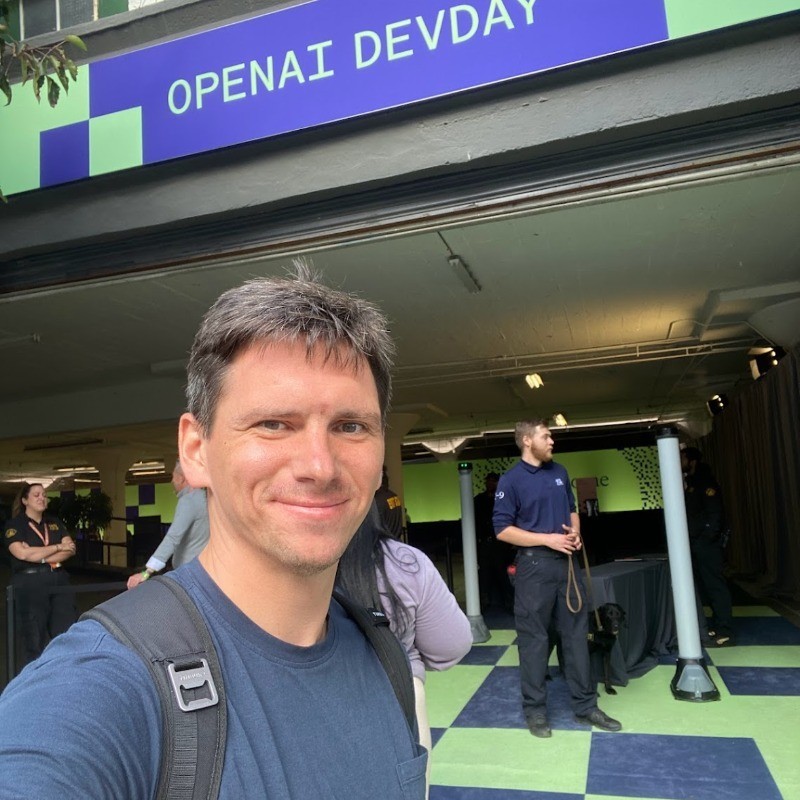
Written by
Artem Vysotsky
Ex-Staff Engineer at Meta. Building the technical foundation to make AI accessible to everyone.
Reviewed by
Sergey Vysotsky
Ex-Chief Editor / PM at Mosaic. Passionate about making AI accessible and affordable for everyone.