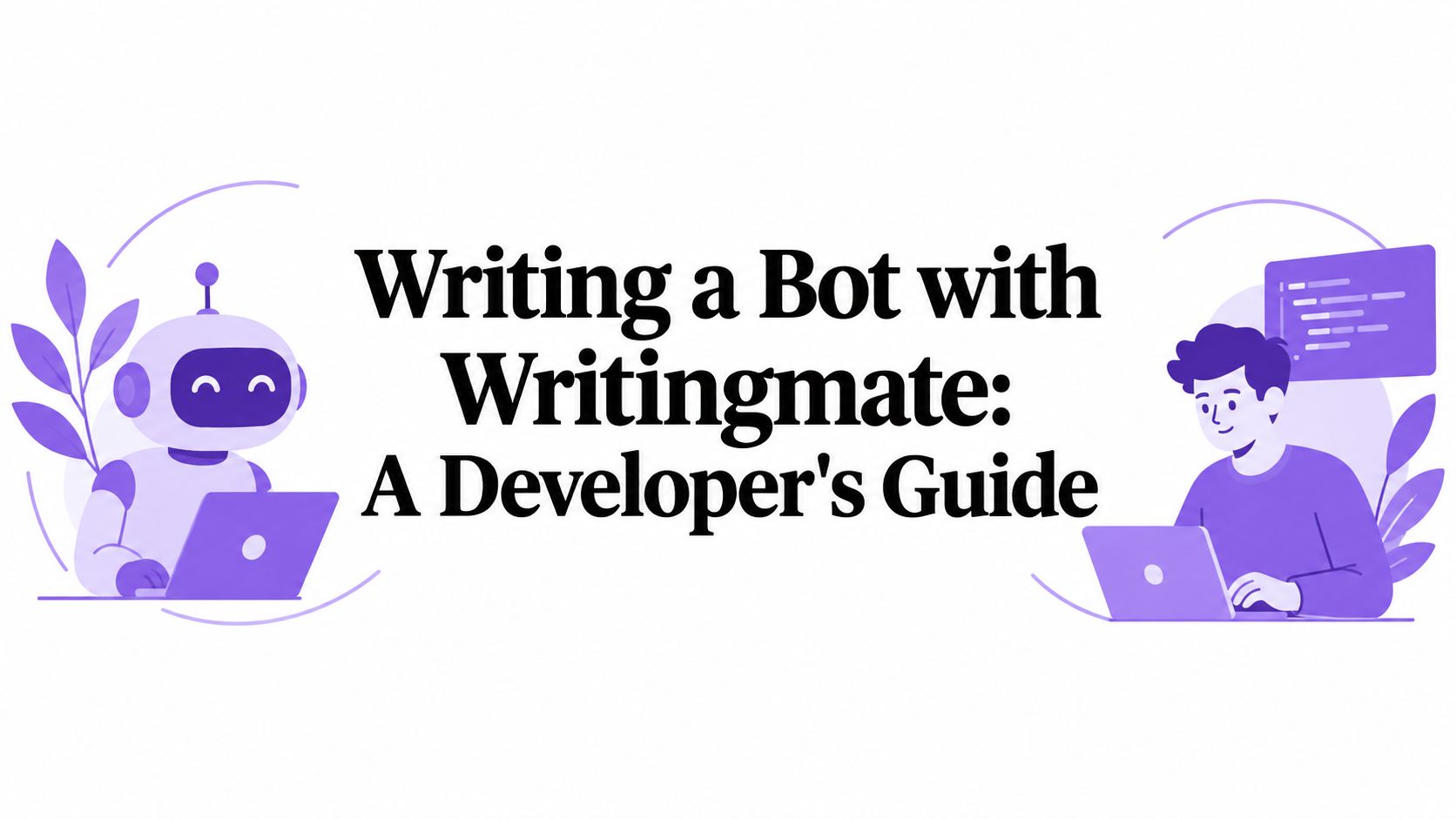
A bot that looks good in a prompt box can still fail the first time a real user asks for something messy. The common failure pattern is simple. The bot sounds smart in a demo, then loses context, ignores tone, calls the wrong tool, or produces output no one on the team would publish. I have seen this happen most often when the build starts with prompt wording instead of system design.
Inside Writingmate, the first decision is not the personality of the bot. It is the job boundary. A bot that drafts LinkedIn posts, rewrites support replies, and researches competitors may sound like one assistant, but those are different workloads with different failure modes. Research needs retrieval and source handling. Rewriting needs strong style control. Action-heavy workflows need tool permissions, retries, and logs you can inspect later.
That is why architecture comes first.
Start by sorting the bot into one of four patterns:
- Prompt-first bot for narrow tasks with low risk, such as summarizing notes or turning bullets into copy
- Retrieval bot for tasks that depend on private docs, brand guidance, or changing reference material
- Tool-using agent for actions like querying apps, updating records, or chaining steps across systems
- Multi-step production bot for workflows that need approvals, test cases, fallback behavior, and stable formatting
Writingmate supports each layer, but the trade-offs are different. A simple prompt-first bot is faster to ship and cheaper to run. It also breaks sooner once users leave the happy path. An agent with MCP integrations and an OpenAI-compatible API setup can reach into real systems and do useful work, but every added capability creates another place where reliability can slip. Tool choice, auth scope, timeout handling, and model verbosity all matter.
Model selection belongs in the same conversation. Strong reasoning models help when the task involves planning, multi-constraint writing, or deciding which tool to call. Faster models are often better for repetitive transforms where latency matters more than nuance. For brand-sensitive work, I usually test at least two models against the same inputs because voice preservation is uneven. One model may follow instructions well but flatten the writing. Another may keep the tone but invent transitions or over-explain.
The practical move is to define the minimum bot that can succeed in production. Specify the input shape, the allowed tools, the required output format, and what the bot should do when it is unsure. Then test with ugly inputs, not polished ones. Paste in half-written briefs, conflicting instructions, outdated references, and vague requests from coworkers. That is where prompt quirks show up, and where a bot starts to feel less like a demo and more like a collaborator.
Teams that stop at prompt design usually end up rebuilding later. Teams that map the architecture first can choose the right model, wire the right integrations, and set reliability checks before the bot reaches users.
Frequently Asked Questions
Sources
Written by
Artem Vysotsky
Ex-Staff Engineer at Meta. Building the technical foundation to make AI accessible to everyone.

Reviewed by
Sergey Vysotsky
Ex-Chief Editor / PM at Mosaic. Passionate about making AI accessible and affordable for everyone.